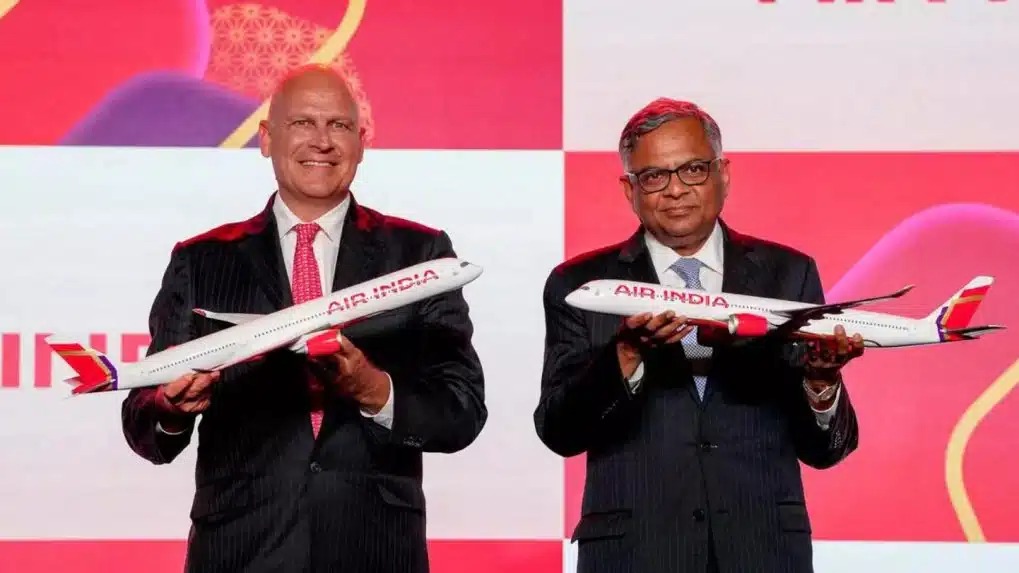
Tata Sons Chairman N Chandrasekaran has stepped into an active oversight role at Air India, conducting weekly operational reviews to preserve stability ahead of CEO Campbell Wilson's exit in September. The airline is actively mitigating localized geopolitical routing extensions while executing its long-term widebody fleet transformation strategy.
MUMBAI — Tata Sons Chairman N Chandrasekaran has assumed direct strategic oversight of Air India, initiating intensive weekly departmental audits to stabilize the flagship carrier as it navigates operational headwinds and an upcoming leadership transition. The intervention follows the announced resignation of Chief Executive Officer and Managing Director Campbell Wilson, who is slated to officially vacate his post by September 2026.
According to internal corporate briefs, Chandrasekaran has requested direct reporting lines from flight operations, finance, and commercial strategy teams. This hands-on restructuring arrives at a challenging juncture for the airline, which has faced steep financial losses, aircraft delivery bottlenecks driven by global supply-chain disruptions, and route diversions linked to regional geopolitical conflicts. To reinforce institutional stability, the board has also appointed former civil aviation secretary Pradeep Singh Kharola as Executive Advisor to the Chairman.
Direct Reporting Replaces Standard Management Channels
The structural change marks a temporary departure from traditional hands-off holding company practices. Sources within the conglomerate indicate that the weekly reviews are designed to prevent decision paralysis during the search for Wilson’s successor. Major capital outlays, route expansions, and multi-billion-dollar widebody cabin retrofitting initiatives are now subject to direct review by the Tata Sons Chairman.
The leadership restructuring coincides with significant regional challenges. Air India has been heavily impacted by the ongoing West Asia conflict and the prolonged closure of neighboring Pakistani airspace following localized tensions last year. These closures have forced international flights to North America and Europe to take significantly longer routes, driving up fuel burn and crew logistics expenses. Concurrently, rising global jet fuel prices have forced the airline to rationalize domestic and regional schedules.
Appointing Familiar Hands for Leadership Transition
As Campbell Wilson enters the final months of his four-year tenure, the integration of Pradeep Singh Kharola as Executive Advisor to the Chairman signals a push for regulatory and operational alignment. Kharola previously served as Chairman and Managing Director of Air India from 2017 to 2019 before transitioning to Civil Aviation Secretary, where he directly managed the legal frameworks surrounding the airline’s privatization in 2022.
A consensus on a permanent successor to Wilson remains pending within the top echelons of the Tata group. Chief Commercial and Transformation Officer Nipun Aggarwal and former Vistara chief executive Vinod Kannan remain primary internal candidates, though board-level deliberations continue. The upcoming executive appointment will inherit a massive backlog of nearly 600 aircraft on order, alongside the ongoing consolidation of operations with minority shareholder Singapore Airlines.
Official Sources Section
Corporate statements and executive filings highlight the ongoing transition roadmap:
Air India Press Release: Officially confirmed the constitution of a board committee tasked with selecting a successor to oversee the company's next expansion phase.
Singapore Airlines Financial Filing: Revealed that while Air India continues its large-scale fleet modernization and narrowbody cabin retrofits, the entity experienced an estimated annual loss of nearly $3 billion for the fiscal year ending March 2026 due to macroeconomic factors.
Internal Corporate Communication: Outlined the immediate integration of Pradeep Singh Kharola into the airline’s core management committee.
Executive Quotes
"In addition to the progress mentioned above, it is also worth acknowledging the numerous external challenges navigated by the Air India team, including prolonged post-Covid supply chain constraints that have impacted delivery of new aircraft and retrofit programs as well as major geopolitical and other headwinds."
— N Chandrasekaran, Chairman, Tata Sons and Air India
"With these foundational blocks now settling and a brief window until deliveries from the nearly 600-strong aircraft orderbook commence in earnest from 2027, the time is right for me to hand over the reins for the next phase of Air India's rise."
— Campbell Wilson, Outgoing CEO and MD, Air India
Why It Matters
For travelers and institutional investors, Chandrasekaran’s direct intervention ensures that the airline's multi-billion-dollar fleet overhaul and service modernization remain funded and on track. While rising operational routing costs continue to strain financial balances, the centralization of executive power ensures immediate continuity in contract execution with aircraft manufacturers. For the wider Indian aviation sector, the transition highlights the immense operational complexity of shifting an entrenched public-sector legacy brand into an efficient, competitive global premium carrier.
Key Facts at a Glance
Interim Leadership: Tata Sons Chairman N Chandrasekaran has introduced direct weekly operational audits across flight operations, finance, and commercial divisions.
Transition Timeline: Outgoing CEO Campbell Wilson is working closely with the management committee until his planned exit in September 2026.
Strategic Advisory: Former Civil Aviation Secretary Pradeep Singh Kharola has been brought on board as Executive Advisor to streamline the transition.
Financial Scale: Fleet modifications and external airspace disruptions contributed to an estimated loss of close to $3 billion for the fiscal year ending March 2026.
FAQ Section
Q: Why is Campbell Wilson leaving Air India?
A: Campbell Wilson conveyed his intention to step down in 2026 to Chairman Chandrasekaran as early as 2024, citing the completion of foundational privatization blocks, airline mergers, and foundational fleet modernization milestones.
Q: What changes occur under N Chandrasekaran’s direct review?
A: To minimize leadership transition delays, key division heads must now file weekly progress reports directly to the Chairman, centering on cost control, operational efficiency, and route management.
Q: Who are the frontrunners to take over as the next CEO?
A: While a board search committee is active, internal candidates include Chief Commercial Officer Nipun Aggarwal and former Vistara CEO Vinod Kannan.
Sources: