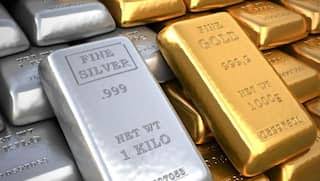
Gold and silver rates corrected sharply across India today, with 24-carat gold consolidating near ₹1,40,022 per 10 grams and 22-carat jewelry gold settling at ₹1,28,260. Driven by international market triggers, this decline has lowered acquisition costs, prompting a surge in retail consumer activity ahead of the festive season.
MUMBAI — Retail bullion prices across India registered a sharp downward correction today, Friday, June 26, 2026, extending a multi-session sell-off that has pulled both commodities significantly below their recent historical peaks. According to official commercial metrics tracking individual jewelry corridors, the standard national retail baseline for 24-carat fine gold consolidated near the ₹1,40,022 mark per 10 grams, highlighting an aggressive single-week compression.
Concurrently, macro-market dynamics heavily corrected the silver sector, pulling standard 999 industrial-grade silver prices down to an average baseline between ₹2,22,000 and ₹2,35,000 per kilogram, depending on regional state-level value-added tax applications.
Macro Factors Driving the Bullion Correction
The sharp correction observed in domestic precious metal rates stems directly from institutional movements on the global stage. Bullion analysts indicate that a combination of hawkish monetary policy indicators from the US Federal Reserve, a strengthening US Dollar Index, and profit-taking by major exchange-traded funds (ETFs) triggered a breach of crucial support thresholds.
According to global commodities research summaries, spot gold technically breached its major international support floor, sparking extended long-liquidation across global derivatives registries. The international momentum immediately cascaded down to domestic spot pricing setups monitored by the Indian Bullion and Jewellers Association (IBJA), driving high single-digit percentage price contractions within retail showrooms nationwide over the course of late June trading cycles.
Breakdown of Gold Rates by Carat and Purity
The national baseline updates published by bullion verification networks reveal a uniform compression across various purity levels. For physical jewelry purchases, the market averages for pure gold derivatives have adjusted as follows:
24-Carat Fine Gold (999 Purity): Trading at approximately ₹14,002 per single gram, or ₹1,40,022 per 10 grams.
22-Carat Gold (916 Purity): The primary benchmark utilized for traditional retail jewelry fabrications structured at ₹12,826 per gram, or ₹1,28,260 per 10-gram baseline.
18-Carat Gold (750 Purity): Typically utilized for diamond-encrusted jewelry variants, holding an average value of ₹10,502 per gram, or ₹1,05,017 per 10 grams.
14-Carat Gold (585 Purity): Retaining a lower operational cost structure, valued at ₹8,191 per gram, or ₹81,913 per 10 grams.
City-Wise Retail Price Matrix Across India
Due to localized octroi rules, state-level freight dynamics, regional logistics operations, and localized jeweller-specific association policies, final retail quotes vary across individual metropolitan markets. The table below represents the retail breakdown for 10 grams of gold across major urban hubs:
| Major City | 24-Carat Gold (per 10g) | 22-Carat Gold (per 10g) |
| New Delhi | ₹1,44,992 | ₹1,32,813 |
| Mumbai | ₹1,40,022 | ₹1,28,260 |
| Bengaluru | ₹1,45,482 | ₹1,33,262 |
| Chennai | ₹1,45,622 | ₹1,33,390 |
| Hyderabad | ₹1,45,622 | ₹1,33,390 |
| Kolkata | ₹1,45,482 | ₹1,33,262 |
Concurrently, localized physical silver rates reflected similar regional variations. In New Delhi, retail silver settled near the ₹2,55,000 per kilogram mark, whereas physical retail pricing across alternative high-volume consumption hubs like Mumbai and Ahmedabad adjusted downward to track near ₹2,35,000 per kilogram.
Official Sources Section
The underlying statistical breakdowns, purity classifications, regional variations, and retail billing indices featured in this market report are compiled from statutory updates published by the Indian Bullion and Jewellers Association (IBJA), alongside live terminal spot metrics aggregated by the Multi Commodity Exchange of India (MCX) and major national jewelry chains.
Quote Section
Analyzing the practical implications of the sudden price decline on festive demand patterns, a senior retail operations director at a prominent national jewelry brand observed:
"According to officials, the sudden multi-session plunge has created an immediate wave of foot traffic across major showrooms. While the rapid price correction initially caused institutional hesitation among speculative investors, retail consumers are viewing this correction as a highly favorable window to lock in purchases ahead of the upcoming seasonal wedding calendar."
Why It Matters
For retail consumers and households planning major lifecycle events, the sudden price drop lowers making charges and baseline acquisition costs for gold and silver ornaments. For portfolio managers and commodity investors, this correction serves as an asset-rebalancing indicator, shifting momentum from overextended precious metals back toward equity structures or high-yielding debt markets.
Key Facts at a Glance
Gold Plunge: 24-carat fine gold rates corrected significantly to close near the ₹1,40,022 per 10-gram marker.
Jewelry Benchmark: Traditional 22-carat gold declined to an average baseline of ₹1,28,260 per 10 grams across central clearing registries.
Silver Freefall: Industrial silver rates faced heavy downward pressure, with wholesale prices landing between ₹2,22,000 and ₹2,35,000 per kilogram.
Global Catalysts: The domestic price drop mirrors international market trends, driven by a stronger US Dollar Index and shifting global asset allocations.
Retail Demand: Major showrooms report a sharp increase in consumer inquiry volumes as buyers take advantage of the lower entry points.
FAQ Section
Why are gold and silver rates falling sharply across India today?
The primary triggers include international market corrections, where gold and silver breached key technical support levels, alongside a strengthening US dollar and shifting global commodity ETF strategies.
Why do gold and silver rates differ across cities like Mumbai, Delhi, and Chennai?
Precious metal prices vary by state due to localized transportation costs, varying state-level structural taxes, octroi inputs, and local bullion association policies.
Do the listed rates include GST and jewelry making charges?
No. The indicative market rates represent raw bullion baselines. Final consumer invoices will include an additional 3% Goods and Services Tax (GST), along with specific making charges applied by individual retailers.
Source: Indian Bullion and Jewellers Association (IBJA), Multi Commodity Exchange of India (MCX), Retail Bullion Trackers.