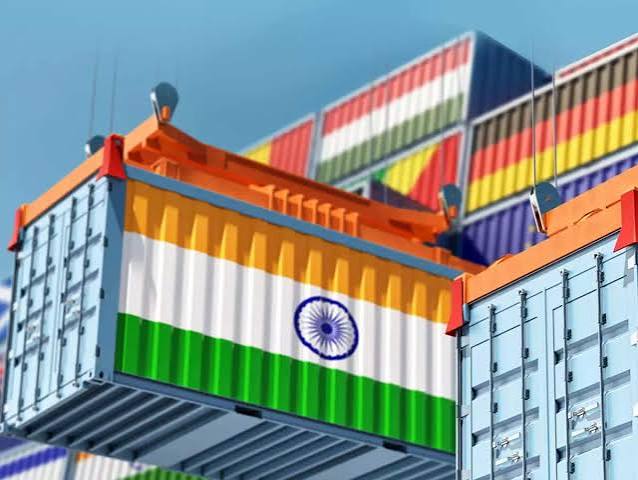
NITI Aayog member Arvind Virmani stated that finalizing India's FTAs with US, EU is essential for boosting exports and securing trusted supply chains. He emphasized that these agreements will help eliminate tariff barriers, counter global carbon taxes, and position India as a premier alternative for global manufacturing investments.
NEW DELHI — In a strategic policy assessment on the future of India's integration into global trade networks, NITI Aayog full-time member Arvind Virmani stated on Friday that negotiating and finalizing India's FTAs with US, EU remain the country's most critical pathways for accelerating retail and industrial growth. Speaking at an economic forum in New Delhi, Virmani emphasized that as multinational corporations actively restructure their manufacturing footprints away from concentrated single-source hubs, securing comprehensive free trade agreements (FTAs) with Western economies is imperative for boosting exports and embedding domestic enterprises into trusted supply chains.
The policy directive comes at a time when global trade architectures are undergoing deep adjustments, driven by geopolitical shifts and protective carbon adjustment taxes. According to Virmani, statutory trade pacts will provide Indian manufacturers with stable, tariff-free access to the world's most lucrative consumer markets, directly supporting the government's long-term manufacturing growth targets.
Strategic Imperative for Global Trade Realignments
The push to accelerate progress on India's FTAs with US, EU reflects a deliberate effort to leverage the global "China plus one" strategy. While India has recently concluded bilateral trade pacts with nations like the United Arab Emirates and Australia, Virmani noted that the scale of demand in the United States and the European Union makes them indispensable partners for India's export-driven economic strategy.
According to economic assessments compiled by the governmental policy think tank, high-volume export categories such as textiles, apparel, leather, electronics, and engineering goods face competitive tariff disadvantages in Western markets compared to goods from nations like Vietnam or Bangladesh. Virmani argued that resolving these discrepancies through formal trade architecture is no longer just a commercial choice but a structural necessity to safeguard the long-term viability of India's special economic zones and manufacturing corridors.
Boosting Exports and Strengthening Domestic Manufacturing
A core objective of advancing India's FTAs with US, EU is to lower barriers for labor-intensive industries, which are vital for domestic job creation. The agricultural, pharmaceutical, and automotive components sectors stand to benefit significantly from integrated market access agreements.
The structural advantages extend beyond outbound goods. Virmani highlighted that deep integration via trade pacts facilitates the seamless transfer of dual-use technologies, high-end capital goods, and specialized industrial machinery into India. By reducing import duties on critical inputs through these agreements, domestic factories can optimize production costs, thereby making final Indian products more price-competitive on global store shelves.
Building Resilient and Trusted Supply Chains
In the current geopolitical climate, global buyers are increasingly prioritizing geopolitical alignment and data security over pure cost-optimization. Virmani pointed out that establishing trusted supply chains requires deep regulatory harmony with major consumption blocs. By aligning standards on intellectual property, cross-border data flows, and labor transparency, India can position itself as the primary alternative for Western firms looking to relocate critical manufacturing pipelines.
Furthermore, a formalized agreement with the European Union is viewed as a vital mechanism to navigate incoming non-tariff barriers, such as the EU's Carbon Border Adjustment Mechanism (CBAM). Sector analysts suggest that an integrated trade framework would provide Indian steel, aluminum, and fertilizer exporters with a clear path to align with European environmental mandates without being penalized by sudden border tariffs.
Official Sources Section
The policy viewpoints, trade statistics, and economic recommendations outlined in this analysis are based on official policy briefs and public forum disclosures released by NITI Aayog, alongside foreign trade data sets archived by the Ministry of Commerce and Industry of the Government of India.
Quote Section
Underscoring the critical timeline for India's integration into international trade frameworks, Arvind Virmani stated during his address:
"If India wants to become a global manufacturing hub, we must go where the markets are. Developing India's FTAs with US, EU is the most effective approach to ensure our industries achieve scale, sustain high-velocity export growth, and secure an unassailable position inside the trusted supply chains of the future."
Why It Matters
For domestic businesses and industrial exporters, the realization of these trade agreements means long-term policy certainty and lower cross-border transaction costs. For everyday consumers and citizens, an export boom driven by Western market access directly correlates with expanded employment opportunities across semi-skilled and highly skilled manufacturing sectors. For international investors, formalized trade pacts reduce regulatory risks, making India a far more attractive destination for long-term foreign direct investment.
Key Facts at a Glance
Strategic Priority: NITI Aayog's Arvind Virmani identifies India's FTAs with US, EU as the most critical trade goals for the country.
Export Catalyst: Seamless market access is projected to neutralize tariff disadvantages currently faced by Indian textiles, electronics, and engineering sectors.
Supply Chain Security: Aligning trade policies with Western economies helps establish India as a reliable partner for critical manufacturing pipelines.
Regulatory Alignment: Formal agreements offer a framework to address complex challenges like the EU's Carbon Border Adjustment Mechanism (CBAM).
FDI Attraction: Comprehensive trade treaties give multinational corporations the long-term regulatory clarity needed to commit significant capital to Indian manufacturing plants.
FAQ Section
Why are FTAs with the US and EU considered more crucial than other regional trade pacts?
The US and EU represent the world's largest consumer markets with immense purchasing power. Securing preferential access to these regions provides Indian exporters with far greater economic scale and long-term volume stability than smaller regional agreements can offer.
What are the main obstacles to finalizing India's FTAs with the US and EU?
Negotiations often require navigating complex discussions around intellectual property rights, agricultural market protections, work visa mobility, digital data localization laws, and stringent environmental and labor standards required by Western partners.
How do these trade agreements help build trusted supply chains?
By harmonizing regulatory frameworks, data protection standards, and corporate governance compliance, these agreements provide Western companies with the institutional confidence to diversify their essential manufacturing and technology operations into India.
Source: NITI Aayog Official Portals, Ministry of Commerce and Industry Trade Disclosures.