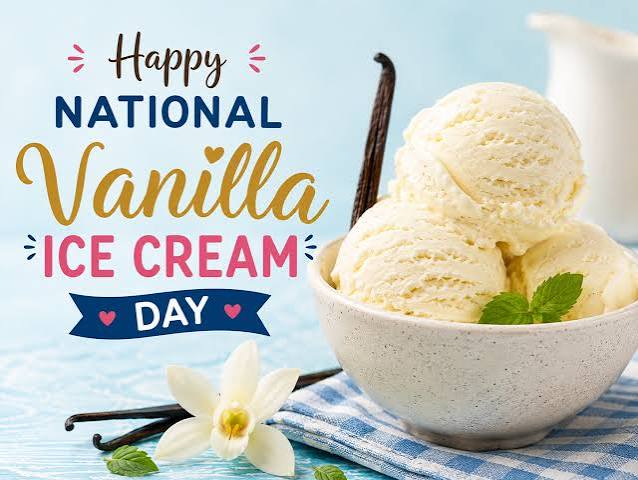
Observed on July 23, 2026, National Vanilla Ice Cream Day highlights vanilla's role as the top-selling flavor in the global frozen dessert market. Accounting for nearly one-third of commercial sales, the event focuses on FDA labeling standards, agricultural supply chains, and vanilla's historical evolution from 18th-century recipes to modern manufacturing.
WASHINGTON — Consumers and dairy manufacturers across North America are marking National Vanilla Ice Cream Day on July 23, 2026, celebrating the historical significance, production standards, and sustained consumer demand for vanilla ice cream. The annual observance, recognized within National Ice Cream Month, highlights vanilla's position as the foundational flavor driving the multi-billion-dollar global ice cream industry.
Data from food industry trade groups indicates that vanilla continuously accounts for approximately 28% to 33% of total commercial ice cream sales annually, outranking chocolate and strawberry. The celebration provides an annual platform for dairy processors, food historians, and agricultural supply chains to emphasize standard regulations governing real vanilla extract and dairy production metrics.
Historical Origins and Production Standards
The origin of vanilla ice cream dates back to early European culinary practices following the introduction of vanilla pods from Mesoamerica in the 16th century. Historical documentation from the Thomas Jefferson Foundation notes that Thomas Jefferson brought one of the earliest recorded vanilla ice cream recipes to the United States during the 1780s after serving as Minister to France. The hand-written recipe remains archived at the Library of Congress.
In modern commercial production, strict regulatory definitions maintained by the U.S. Food and Drug Administration (FDA) govern how products labeled "vanilla ice cream" are categorized. Under Code of Federal Regulations Title 21, products must adhere to precise guidelines depending on whether natural vanilla extract, vanilla-vanillin extract, or artificial flavorings are utilized.
| Regulatory Category | Flavoring Source Requirement | Labeling Standard |
| Category 1 | Direct vanilla bean extract or pods only | "Vanilla Ice Cream" |
| Category 2 | Natural vanilla bolstered by synthetic vanillin | "Vanilla-Flavored Ice Cream" |
| Category 3 | Exclusively artificial or synthetic flavorings | "Artificially Flavored Vanilla Ice Cream" |
Market Dynamics and Supply Chain Context
The market stability of vanilla ice cream depends heavily on global vanilla bean harvesting, primarily centered in Madagascar, Indonesia, and Uganda. According to agricultural reports from the International Dairy Foods Association (IDFA), vanilla ice cream serves as the essential baseline metric for consumer pricing trends across frozen dessert categories.
Retailers and commercial creameries leverage National Vanilla Ice Cream Day to launch seasonal promotions, highlight natural ingredient sourcing, and showcase traditional churned recipes alongside dairy-free alternative formulations.
Official Sources Section
Industry metrics, food safety guidelines, and historical documentation regarding National Vanilla Ice Cream Day are published through official releases by the International Dairy Foods Association (IDFA), the U.S. Food and Drug Administration (FDA), and the Library of Congress.
Quote Section
According to official industry statements issued by dairy trade representatives:
"Vanilla remains the cornerstone of the frozen dessert market. National Vanilla Ice Cream Day recognizes both the agricultural supply chain required to cultivate natural vanilla and the processing standards that keep vanilla as the preferred choice for consumers nationwide." — Industry Analysts, International Dairy Foods Association
Why It Matters
For consumers, National Vanilla Ice Cream Day emphasizes ingredient transparency, allowing buyers to distinguish between pure vanilla extracts and artificial substitutes on product labels. For dairy producers and agricultural suppliers, sustained demand for vanilla ice cream stabilizes market prices for raw milk and natural spices across international trade routes.
Key Facts at a Glance
Market Leader: Vanilla remains the highest-selling ice cream flavor, commanding nearly a third of all commercial sales.
Historical Roots: Thomas Jefferson recorded one of the earliest U.S. vanilla ice cream recipes in the 1780s, now preserved in the Library of Congress.
Regulatory Compliance: FDA regulations enforce three distinct labeling categories based on natural versus synthetic flavoring content.
Economic Anchor: Serves as the primary driver for global vanilla bean agriculture and domestic dairy processing volume.
FAQ Section
When is National Vanilla Ice Cream Day celebrated?
National Vanilla Ice Cream Day is observed annually on July 23 during National Ice Cream Month.
Why is vanilla the most popular ice cream flavor?
Market research indicates vanilla's popularity stems from its versatility as both a standalone dessert and a base for pairings, toppings, and beverages.
What is the difference between French Vanilla and standard Vanilla ice cream?
Standard vanilla ice cream relies on a basic cream, milk, and sugar base, whereas French vanilla refers to a traditional egg-yolk custard base that yields a richer texture and yellowish hue.
Source: International Dairy Foods Association (IDFA), U.S. Food and Drug Administration (FDA), Library of Congress