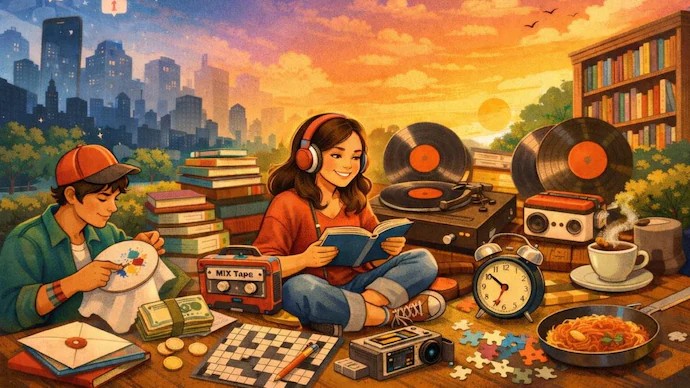

Gen Z is driving a global shift toward analog living, rejecting constant digital engagement in favor of tactile, offline experiences. From paper planners to nature retreats, this lifestyle trend emphasizes mental health, presence, and autonomy. The movement signals a cultural pushback against digital burnout and the dominance of screens.
In 2026, a striking cultural shift is underway. Gen Z, often labeled the most digitally native generation, is now leading a counter-movement: analog living. This lifestyle emphasizes unplugging from screens and rediscovering tactile, real-world experiences as a remedy for digital fatigue.
Key Highlights
-
The “Analogue January” initiative has gained traction, encouraging participants to ditch screens for 30 days and reclaim cognitive autonomy. This movement is seen as a direct response to the overwhelming influence of algorithm-driven platforms.
-
Mental health is a central driver. Gen Z cites digital burnout, anxiety, and the pressure of constant connectivity as reasons for embracing offline hobbies such as journaling, painting, gardening, and board games.
-
Data reflects the trend: average social media use among teens has dropped by nearly 10 percent since 2022, while searches for nature getaways have surged by 72 percent. Offline activities like board games have seen an 8 percent rise.
-
Social media itself has become a platform for showcasing analog journeys. Instagram feeds now highlight unplugged weekends, handwritten notes, and tactile crafts, turning digital spaces into showcases of screen-free living.
-
The movement is not just about leisure. Many young professionals are adopting paper planners, in-person meetings, and screen-free brainstorming sessions to enhance focus and creativity.
-
Lifestyle experts note that this shift is redefining productivity. Constant connectivity once symbolized efficiency, but now intentional disconnection is being celebrated as a path to deeper engagement and healthier living.
Gen Z’s embrace of analog living is more than a passing fad. It represents a cultural recalibration, where the value of presence, touch, and human connection is prioritized over digital saturation. As this movement grows, it may reshape how society balances technology with well-being.
Sources: India Today, Analogue January by Barsha Nag Bhowmick, Ultimate Digital Detox & Analog Living Guide