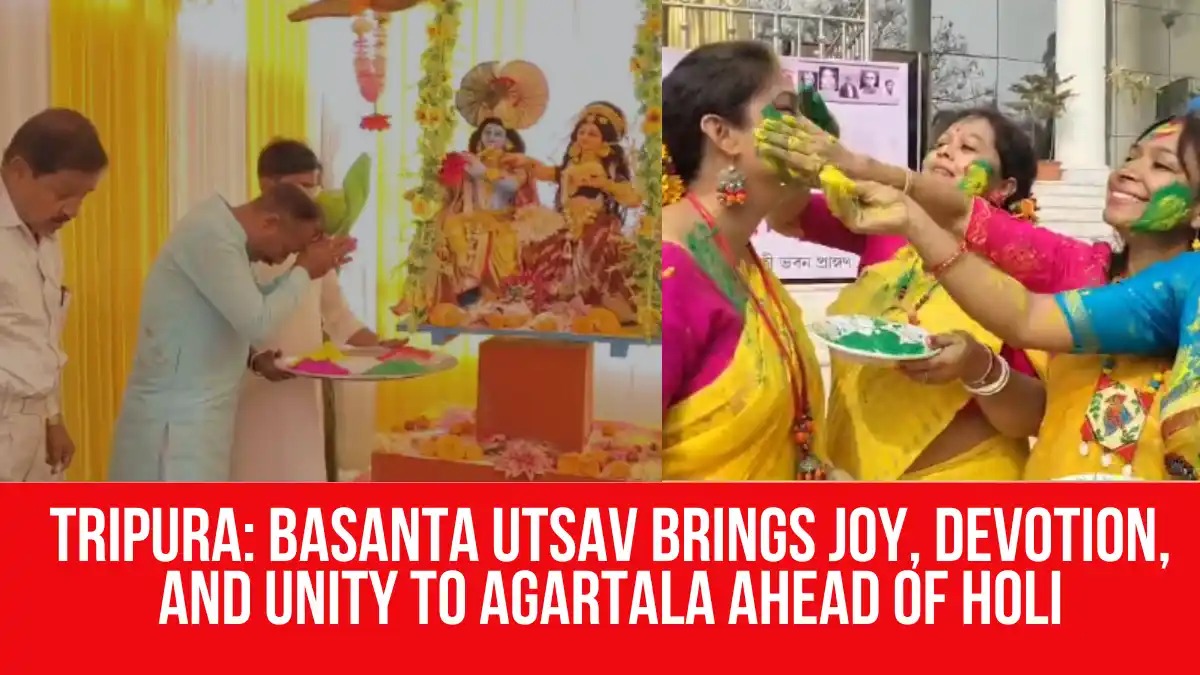




Image Source : Northeast Live
Santiniketan’s Basant Utsav, envisioned by Rabindranath Tagore, was deeply influenced by Tripura’s royal court. The kingdom’s decades-long patronage of Visva-Bharati University, contributions of Manipuri dance, and Vaishnava traditions helped transform Holi into a refined cultural celebration of spring, blending art, music, and spirituality into a globally recognized heritage festival.
Show more
Basant Utsav at Santiniketan is not just a spring festival—it is a cultural synthesis shaped by Bengal and Tripura. While Tagore introduced the idea of celebrating Holi with music, poetry, and dance, Tripura’s royal family provided the crucial support that gave the festival its distinctive identity. Their financial aid, artistic contributions, and spiritual traditions elevated the event into a symbol of cultural harmony.
Key Highlights
-
Royal Patronage: Tripura’s rulers funded Visva-Bharati University for nearly five decades, sustaining Tagore’s vision.
-
Dance & Music: Manipuri dancers from Tripura enriched Santiniketan’s curriculum, influencing Tagore’s compositions and performances.
-
Vaishnava Devotion: The kingdom’s spiritual traditions blended seamlessly with Tagore’s philosophy, elevating Basant Utsav beyond Holi’s revelry.
-
UNESCO Recognition: Santiniketan’s inscription as India’s 41st UNESCO World Heritage Site in 2023 acknowledged this shared legacy.
-
Modern Celebration: Today, Basant Utsav continues to symbolize cultural harmony, drawing thousands to Visva-Bharati every spring.
Sources: Indian Express, News365 Times, 24x7 Live News English
Stay Ahead – Explore Now!
Rs 50,000 Dilemma: Shop or Financial Assets?

Advertisement
STORIES YOU MAY LIKE
Image Source : India Today
Updated: March 04, 2026 21:56
Image Source: Instagram
Updated: March 03, 2026 19:07
Image Source: Instagram
Updated: March 02, 2026 20:39

Advertisement