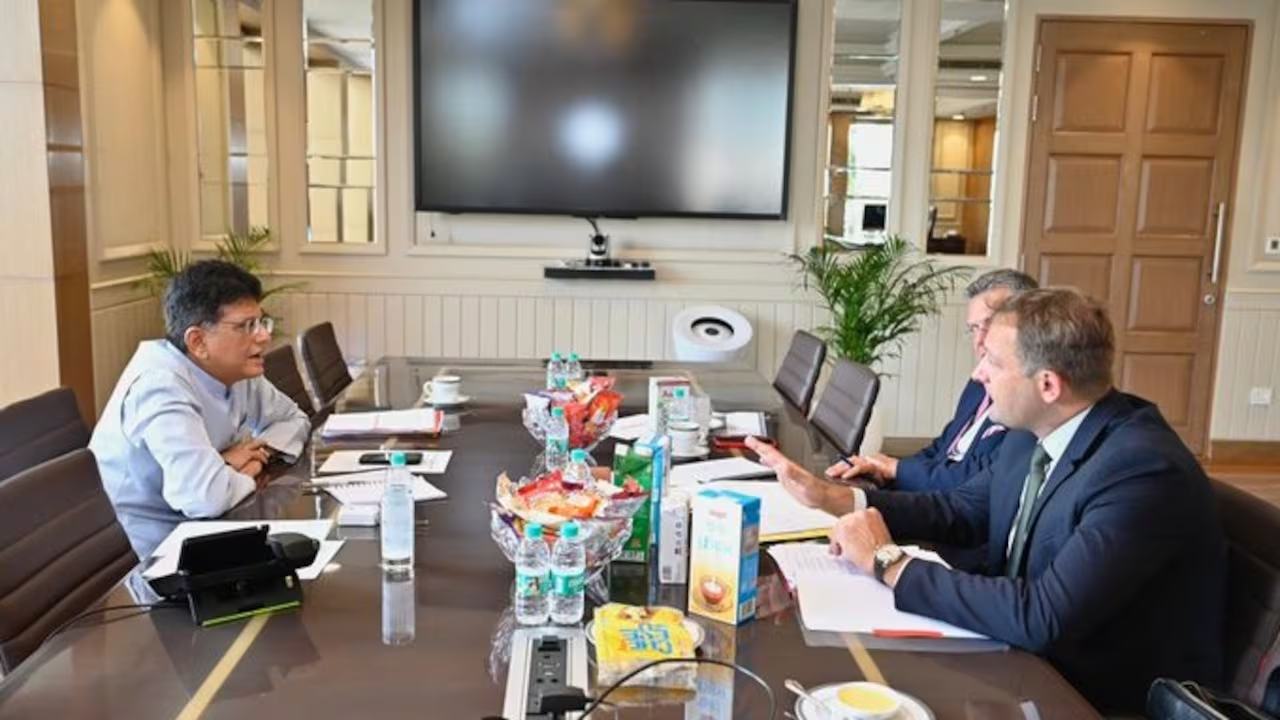



On December 8, 2025, Commerce Minister Piyush Goyal meets the EU trade delegation led by Sabine Weyand to push forward India-EU FTA talks. With a year-end deadline looming, key issues like steel, carbon tax, and automobile tariffs remain. The deal could reshape bilateral trade and strengthen global supply chains.
India’s Commerce and Industry Minister Piyush Goyal is set to hold high-stakes discussions with the visiting European Union (EU) trade team today, December 8, 2025, in New Delhi. The meeting marks a pivotal moment in the ongoing negotiations for a comprehensive Free Trade Agreement (FTA) between India and the 27-member EU bloc.
Key Highlights
-
The EU delegation is led by Sabine Weyand, Director-General for Trade, who is spearheading efforts to bridge differences on sensitive issues.
-
Negotiations cover 23 policy areas, including trade in goods, services, investment protection, rules of origin, customs facilitation, government procurement, and dispute settlement.
-
Outstanding concerns include steel exports, carbon tax implications, automobile tariffs, and non-tariff barriers, which have slowed progress.
-
Both sides have set a year-end deadline to conclude talks, making today’s meeting critical for ironing out final differences.
-
The FTA, once finalized, is expected to boost bilateral trade beyond the current $150 billion mark, enhance market access for Indian exporters, and strengthen India’s position in global supply chains.
-
For the EU, the agreement would secure a strategic partnership with one of the fastest-growing economies, while aligning with its broader Indo-Pacific trade strategy.
Significance
India and the EU resumed FTA negotiations in June 2022 after an eight-year gap, following stalled talks in 2013. Since then, both sides have accelerated discussions, recognizing the potential of a deal to reshape trade flows. Analysts believe the FTA could be a game-changer for sectors like textiles, pharmaceuticals, IT services, and renewable energy, while also addressing sustainability concerns through carbon tax frameworks.
The talks come at a time when global trade faces headwinds from geopolitical tensions and slowing demand in China, making India-EU cooperation even more vital. Successful closure of the agreement would signal India’s growing role in global trade diplomacy and reinforce its commitment to open, rules-based commerce.
Sources: Shillong Times, Times of India, Free Press Journal, Financial Express