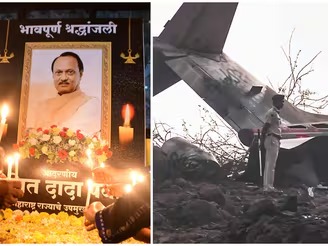

Following the tragic Baramati plane crash that claimed the life of Maharashtra Deputy Chief Minister Ajit Pawar, the Centre has launched a nationwide inspection of nearly 400 uncontrolled airstrips. The move aims to identify safety gaps, improve emergency preparedness, and establish uniform operating standards across non-ATC airports.
Nationwide Inspection Drive
The Ministry of Civil Aviation has directed the Directorate General of Civil Aviation (DGCA) and state governments to jointly inspect uncontrolled airstrips. These facilities, often used by chartered flights and political leaders, lack air traffic control systems, leaving pilots to self-coordinate.
Safety Concerns
The inspection will assess infrastructure gaps, communication facilities, firefighting readiness, and coordination with local authorities. Officials emphasize that most of these airstrips are state-owned and not subject to routine DGCA oversight, creating a regulatory blind spot that needs urgent correction.
Future Framework
The findings will help formulate a national safety framework to monitor and regulate non-ATC airstrips. This initiative is expected to strengthen aviation safety standards and restore public confidence in regional air travel.
Key Highlights
-
Centre orders inspection of 400 uncontrolled airstrips
-
Triggered by Ajit Pawar’s fatal Baramati crash on January 28
-
DGCA and states to jointly oversee inspections
-
Focus on infrastructure, communication, and emergency readiness
-
Move aims to create uniform safety standards nationwide
Conclusion
The Centre’s inspection drive marks a critical step toward addressing long-standing safety concerns at uncontrolled airstrips. By closing regulatory gaps and enhancing preparedness, India seeks to ensure safer skies and prevent future tragedies.
Sources: ANI, Moneycontrol, Times of India