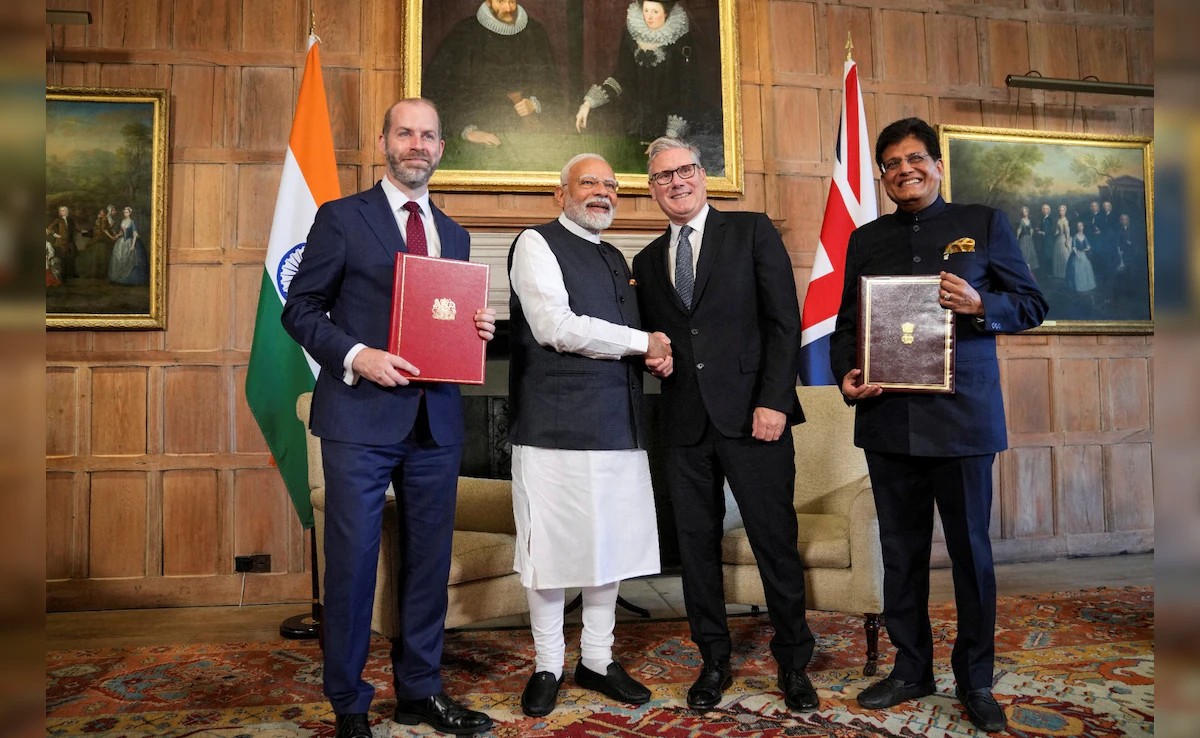







India and the UK are on the cusp of implementing a landmark free trade agreement (FTA), potentially transforming bilateral trade dynamics within 30 days, as announced by Commerce Minister Piyush Goyal.
In a recent update, Union Commerce and Industry Minister Piyush Goyal revealed that the India-UK trade pact could come into effect as early as one month from now. This development follows months of negotiations aimed at slashing tariffs and enhancing market access. The agreement promises significant economic gains for both nations amid global trade uncertainties.
India UK Free Trade Agreement Progress
The prospective activation of the India-UK trade pact marks a pivotal moment in post-Brexit economic realignments for the UK and India's ambitious export growth strategy. Minister Goyal, speaking at a business forum, indicated that final procedural hurdles are being cleared swiftly. Implementation could commence by mid-April 2026, pending parliamentary approvals in both countries. This FTA, first targeted for conclusion in 2025, encompasses goods, services, and investments, with India eyeing £40 billion in annual trade by 2030.
Key Benefits and Negotiated Wins
Tariff reductions on automobiles, textiles, and whiskey will benefit Indian exporters while opening UK markets for pharmaceuticals and IT services. Enhanced rules of origin and digital trade provisions align with modern supply chain needs. Intellectual property protections have been strengthened, addressing long-standing UK concerns.
Key Highlights
-
India-UK bilateral trade currently stands at $38 billion, with potential to double post-FTA
-
20-90% tariff cuts on 90% of goods, focusing on gems, jewellery, and machinery
-
Mutual recognition agreements for professional qualifications in nursing and engineering
-
Investment chapter to attract £25 billion UK FDI into India by 2030
-
Services trade liberalization, easing visa norms for Indian professionals
Economic Implications for India
For India, the pact reinforces its position in global trade pacts, complementing deals with UAE and Australia. It could create 50,000 jobs in export sectors and stabilize supply chains amid geopolitical tensions. UK businesses gain duty-free access to India's 1.4 billion consumer market, fostering deeper India-UK economic ties.
Sources: Press Information Bureau (PIB), Ministry of Commerce and Industry, Government of India; Reuters