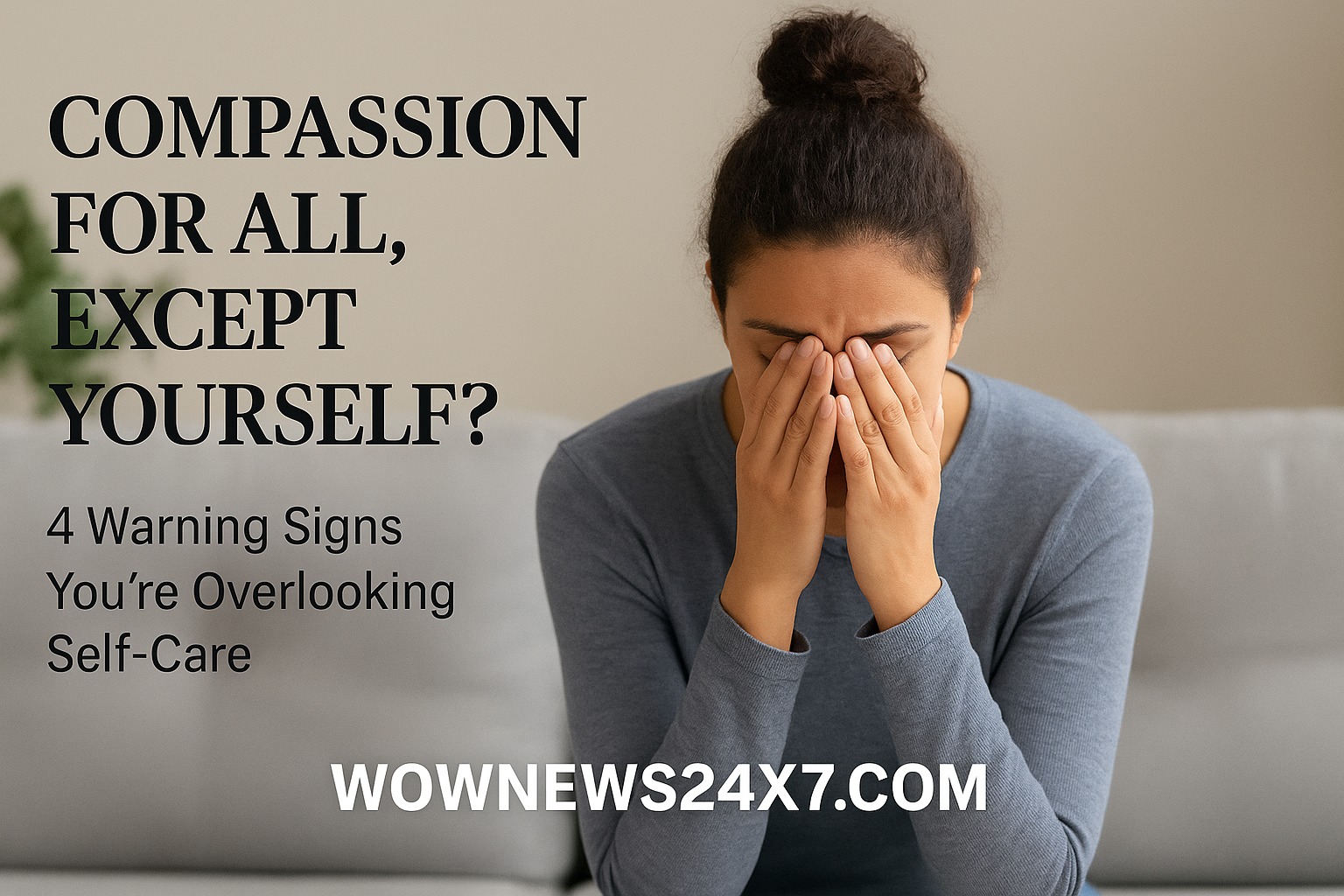






Image Source: WowNews24x7
Psychologist Alice Boyes, Ph.D., writing in Psychology Today, highlights how many people extend compassion to others yet deny it to themselves. She outlines subtle signs of lacking self-compassion, emphasizing the importance of recognizing these patterns to build resilience, motivation, and healthier emotional regulation in everyday life.
Show more
Self-compassion is often misunderstood as indulgence, but research shows it strengthens resilience, perspective, and motivation. According to psychologist Alice Boyes, many compassionate individuals fail to apply the same kindness inward. Recognizing the signs can help shift toward healthier self-awareness and emotional balance.
Key Highlights:
- Mistaking self-criticism for self-awareness: Believing harsh self-judgment equals growth, when it often undermines confidence.
- Neglecting your own needs: Prioritizing others’ struggles while ignoring personal well-being.
- Difficulty accepting mistakes: Treating personal errors more harshly than those of others.
- Believing compassion is for others, not you: Viewing self-kindness as unnecessary or undeserved, despite its proven benefits.
Why It Matters:
- Builds resilience against stress and burnout.
- Enhances motivation and self-regulation.
- Promotes healthier relationships by balancing empathy for others with empathy for oneself.
Sources:- Alice Boyes, Ph.D., Psychology Today – “5 Quiet Signs That You’re Not Practicing Self-Compassion
Stay Ahead – Explore Now!
Eat Smart, Live Strong: Doctors Decode What Healthy Eating Really Means in Everyday Life

Advertisement
Advertisement