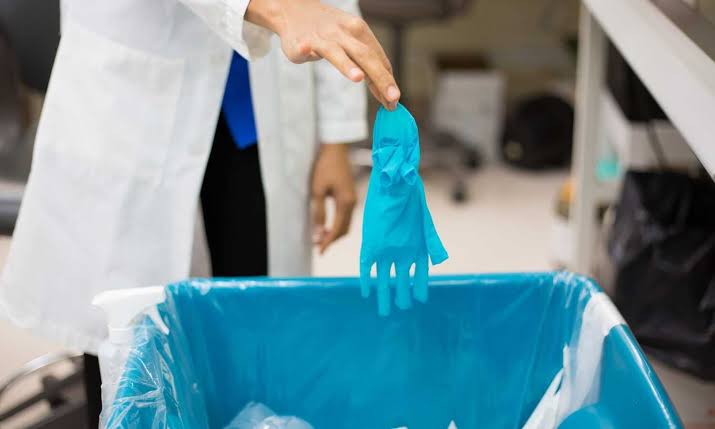

CSIR - National Institute for Interdisciplinary Science and Technology (CSIR–NIST) has partnered with Angamaly-based startup Bio Vastum Solutions to deploy a globally patented biomedical waste processing technology. The innovation converts hazardous biomedical waste into soil additives through a five-stage process, offering a sustainable solution to one of India’s pressing environmental challenges.
India has taken a significant step toward addressing biomedical waste management with a collaboration between CSIR–NIST and Bio Vastum Solutions. The partnership focuses on deploying a patented technology that safely converts biomedical waste into soil substitutes, reducing environmental risks and supporting sustainable waste disposal practices. The agreement was formally handed over by Dr. N. Kalaiselvi, Secretary of the Department of Scientific and Industrial Research (DSIR) and Director General of CSIR, to Dr. Joshy Varkey, Managing Director of Bio Vastum Solutions, at CSIR–NIST’s campus in Thiruvananthapuram.
Key highlights from the announcement include
-
CSIR - NIST collaborates with Bio Vastum Solutions to deploy biomedical waste-to-soil technology.
-
The technology employs a five-stage process to convert biomedical waste into soil additives.
-
Partnership aims to address challenges of hazardous biomedical waste disposal in India.
-
Technology transfer agreement formally signed at CSIR–NIST campus in Thiruvananthapuram.
-
Initiative aligns with India’s sustainability goals and circular economy principles.
-
Expected to reduce landfill dependency and environmental contamination risks.
Biomedical waste has long posed a challenge for India’s healthcare sector, with improper disposal leading to risks of infection, pollution, and ecological damage. This collaboration introduces a scalable and eco-friendly solution, turning waste into a resource while ensuring compliance with environmental standards. By integrating scientific innovation with entrepreneurial execution, the initiative demonstrates how public-private partnerships can drive impactful change in waste management.
Experts believe the technology could be a game-changer, especially for hospitals, diagnostic centers, and laboratories struggling with biomedical waste disposal. The soil additive produced through this process can potentially be used in agriculture and land restoration, further contributing to sustainability.
The CSIR–startup collaboration reflects India’s broader push toward innovation-driven environmental solutions, reinforcing the country’s commitment to the “Waste to Wealth” mission. With biomedical waste volumes rising alongside healthcare expansion, this initiative is timely and crucial for safeguarding public health and the environment.
Sources: Express News Service, UNI, CSIR–NIST Press Release