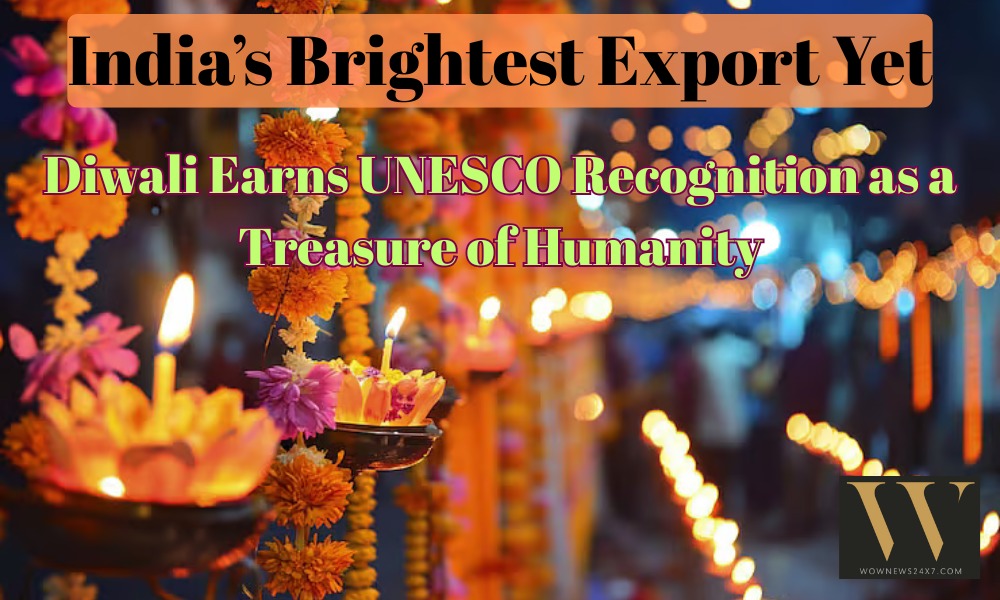



UNESCO has inscribed Deepavali (Diwali) on its Representative List of the Intangible Cultural Heritage of Humanity, giving India’s festival of lights a prestigious global recognition. The move acknowledges Diwali’s cultural, spiritual and community significance across religions and geographies, and is expected to boost cultural diplomacy, tourism and preservation of traditional practices.
Deepavali, celebrated by millions across India and the global Indian diaspora, has received a landmark cultural endorsement with its inclusion in UNESCO’s Intangible Cultural Heritage list. The inscription recognises Diwali not just as a religious festival, but as a living tradition that promotes community bonding, inter-faith harmony and shared cultural values.
The global honour is also a diplomatic and soft-power win for India, strengthening its cultural footprint at multilateral platforms. The recognition is expected to spur greater documentation, safeguarding of local rituals, crafts and performances associated with Diwali, while also giving a fillip to tourism and city-level cultural programming around the festival season.
Key Highlights
-
Deepavali added to UNESCO’s Intangible Cultural Heritage of Humanity list.
-
Recognition covers rituals like lighting lamps, community feasts, prayers, performances and traditional crafts.
-
Strengthens India’s cultural diplomacy and global soft power narrative.
-
Expected to boost tourism, heritage walks, and curated festival experiences in major Indian cities.
-
Push for better safeguarding of folk arts, artisans, and sustainable celebration practices linked to Diwali.
Sources (reported): Government cultural affairs briefings, UNESCO Intangible Cultural Heritage announcements, Indian national media reports.