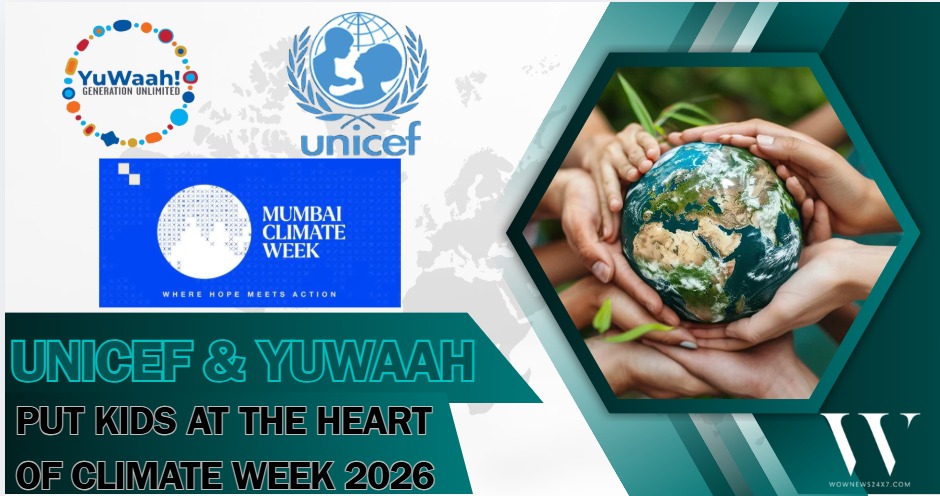

UNICEF India and YuWaah announced their role as the official Youth Engagement Partner for Mumbai Climate Week 2026. The initiative will amplify children’s and youth voices, ensuring their perspectives shape climate dialogue, policy, and citizen-driven solutions for urban resilience across India.
Mumbai is set to host a landmark event in February as Mumbai Climate Week 2026 (MCW) positions itself as India’s first city-led platform for climate action. Scheduled from 17–19 February 2026, the event will focus on citizen-driven solutions for urban resilience, translating global climate priorities into locally led initiatives across the Global South.
In a significant announcement on 21 January 2026, UNICEF India and YuWaah were named the official Youth Engagement Partner for MCW 2026. This partnership underscores the critical role of children and young people in shaping climate dialogue and policy.
Key highlights of the initiative:
-
Youth-Centric Engagement: UNICEF India and YuWaah will lead month-long activities beginning January, ensuring children and youth meaningfully contribute to climate discussions.
-
Official Role: As the Youth Engagement Partner, YuWaah will spearhead workshops, dialogues, and creative campaigns to amplify young voices.
-
Grassroots Impact: The initiative will empower children from diverse communities, including rural and urban areas, to share their lived experiences of climate change.
-
Policy Influence: Youth perspectives will be integrated into climate resilience strategies, bridging the gap between global frameworks and local realities.
-
Creative Expression: Activities will include art, storytelling, and digital campaigns, highlighting how climate change affects young lives and how they envision solutions.
-
Collaborative Vision: Convened by Project Mumbai, the event will bring together policymakers, businesses, civil society, and citizens to co-create sustainable urban solutions.
The emphasis on children and youth voices reflects a growing recognition that climate change disproportionately impacts younger generations. By centering their perspectives, MCW 2026 aims to foster inclusive, actionable, and future-focused climate strategies. UNICEF India’s involvement ensures that the dialogue is not only global but also deeply rooted in local realities, empowering young people to become agents of change.
As India grapples with rising urban challenges—heatwaves, flooding, and pollution—this initiative signals a transformative shift toward participatory climate governance. Analysts believe that engaging youth will not only strengthen resilience but also inspire innovative solutions that resonate across communities.
Sources: UNICEF India, CSR Times, MSN News