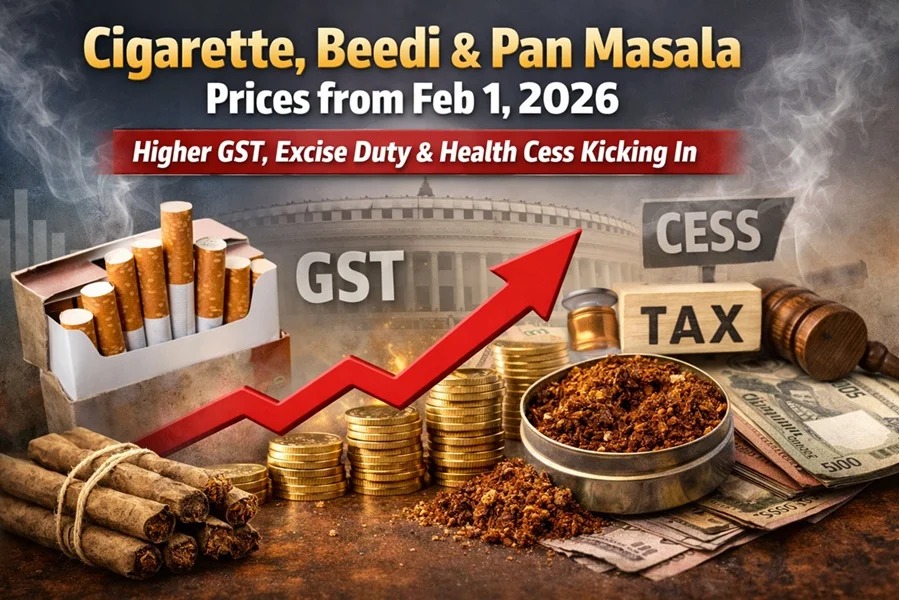

Image Source : Bharat Articles
Southeast Asia faces a staggering tobacco burden, with millions of preventable deaths each year. India has responded with a significant tax increase, raising GST on tobacco products to 40% from February 1, 2026. Experts believe this measure will reduce consumption, discourage youth uptake, and generate revenue to support public health.
Show more
Tobacco use continues to be a major public health crisis in Southeast Asia, where it causes more deaths than any other preventable factor. India, home to one of the world’s largest tobacco-consuming populations, has taken a decisive step by sharply increasing taxes on tobacco products.
Key Highlights:
-
Regional Toll: Tobacco causes 3.2 million deaths annually across Southeast Asia.
-
India’s Policy Shift: GST on cigarettes, pan masala, and other tobacco products raised from 28% to 40% starting February 1, 2026.
-
New Structure: The government has replaced the GST compensation cess with a new excise duty and cess, strengthening fiscal control.
-
Public Health Impact: Higher taxes are proven to reduce consumption, especially among youth and low-income groups.
-
Economic Rationale: Revenue generated will help offset rising healthcare costs linked to tobacco-related diseases.
-
Global Context: India’s move aligns with WHO recommendations to use taxation as a deterrent against tobacco use.
India’s tough tax stance signals a turning point in Southeast Asia’s fight against tobacco, combining fiscal policy with public health priorities.
Sources: The Economic Times, Business Standard, India Today
Stay Ahead – Explore Now!
ITI Ltd Receives Rs 160 Million From Tax Department

Advertisement
Advertisement