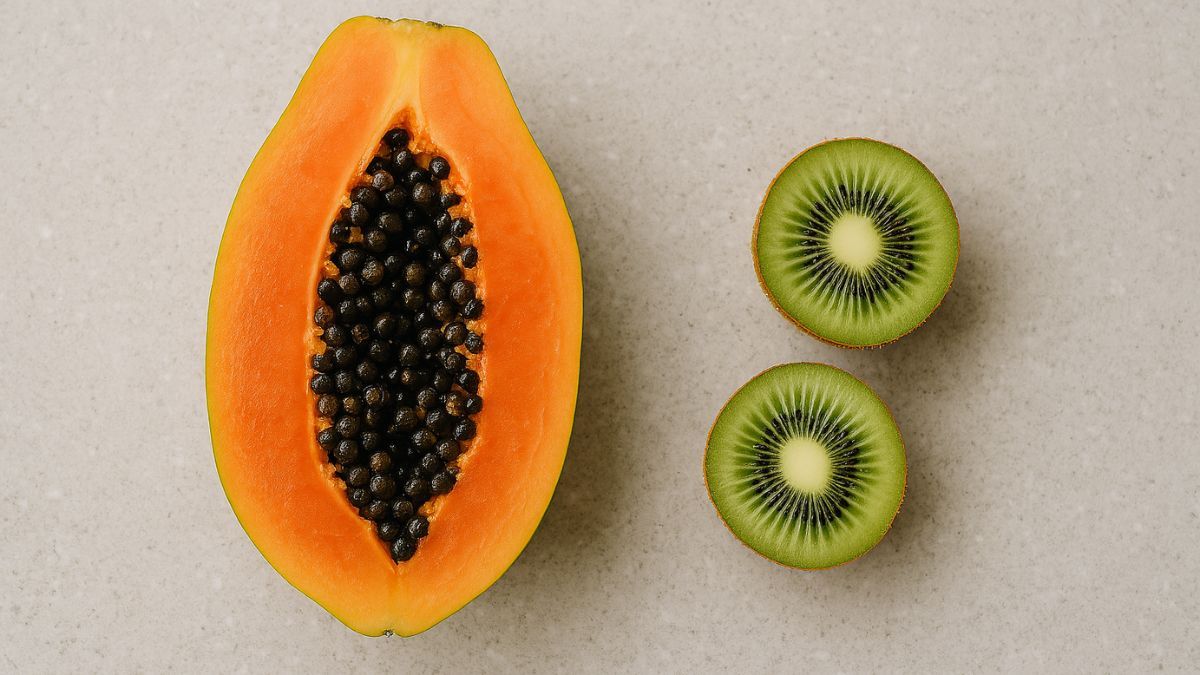





Both papaya and kiwi are digestion-friendly fruits, but they work differently. Papaya’s enzyme papain is gentle and ideal for sensitive stomachs, while kiwi’s actinidin and fiber provide stronger relief for sluggish digestion. Choosing between them depends on individual tolerance, with both helping ease constipation and improve overall gut health.
When it comes to easing bloating, constipation, or sluggish digestion, fruits are often the first natural remedy people turn to. Among the most recommended are papaya and kiwi, both packed with enzymes that aid gut health. But which one should you eat for better digestion?
According to nutrition experts, papaya contains papain, a proteolytic enzyme that helps break down proteins and supports smoother digestion. It is considered gentler on the stomach, making it suitable for those with acidity or sensitive digestive systems. On the other hand, kiwi contains actinidin, an enzyme that accelerates protein breakdown and, combined with its high fiber content, offers stronger support for bowel movements.
Notable Updates & Major Takeaways
Papaya’s Strengths:
Contains papain, aiding protein digestion.
Gentle on sensitive stomachs, ideal for those prone to acidity.
Rich in vitamin A and has a lower glycemic index.
Kiwi’s Strengths:
Contains actinidin and high dietary fiber, boosting bowel regularity.
Rich in vitamin C, K, copper, and vitamin E.
Recommended by gastroenterologists for easing constipation.
Shared Benefits:
Both fruits improve gut motility and help relieve constipation.
Both are natural, low-calorie options for everyday wellness.
Choosing Wisely:
Papaya is better for those with sensitive digestion or acidity.
Kiwi is more effective for stronger relief but may irritate sensitive stomachs.
Individual tolerance should guide the choice.
Conclusion
For better digestion, papaya and kiwi both shine—but in different ways. Papaya offers gentle, soothing support, while kiwi provides a stronger push thanks to its fiber and actinidin. The best choice depends on your digestive sensitivity and needs, making both fruits valuable allies in maintaining gut health.
Sources: NDTV Food, FoodStruct Nutrition Comparison, Economic Times