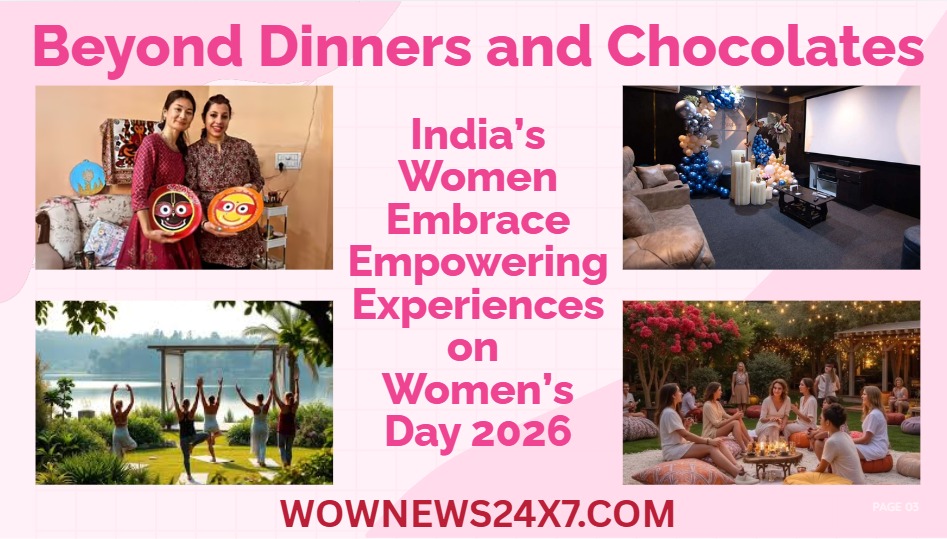






International Women’s Day 2026 in India is shifting from traditional dinners and token gestures to experiential celebrations. Women are choosing creative workshops, wellness sessions, private screenings, and taboo-breaking festivals that celebrate empowerment and agency. These evolving trends highlight a cultural shift toward meaningful, inclusive, and joyful ways of honoring women.
Experiential Celebrations Rising:
-
Women across India are opting for pottery workshops, private theatre screenings, trampoline parks, and creative brunches instead of conventional dinners.
-
The focus is on agency, fun, and connection, making celebrations more personal and memorable.
Creative & Wellness Events:
-
Cafés, art studios, and event spaces are hosting wellness retreats, concerts, and creative workshops.
-
These events encourage self-care, bonding, and artistic expression, offering alternatives to predictable restaurant specials.
Taboo-Breaking Festivals:
-
Unique festivals across India are celebrating menstruation and womanhood, challenging cultural taboos and reframing narratives around female identity.
-
These events highlight nature, culture, and empowerment, adding depth to Women’s Day observances.
National Context:
-
Women’s Day 2026 carries the global theme of gender equality and empowerment, reminding citizens of the ongoing fight against discrimination.
-
India’s celebrations reflect both progressive urban trends and traditional cultural practices, creating a diverse landscape of observances.
Why This Matters
The shift toward experiential celebrations signals a cultural transformation in how Women’s Day is perceived. Rather than token gestures, women are demanding authentic recognition and meaningful experiences. This evolution reflects broader societal changes from breaking taboos to embracing wellness and creativity and underscores the importance of agency in celebration.
For businesses, this trend opens opportunities to design experience-driven offerings that resonate with women’s evolving preferences. For society, it highlights the need to move beyond symbolic gestures toward substantive empowerment and inclusivity.
Conclusion
Women’s Day 2026 in India is no longer confined to flowers and formal dinners. It is being redefined through creative workshops, wellness retreats, taboo-breaking festivals, and experiential gatherings that celebrate women on their own terms. This transformation reflects a deeper cultural shift toward authenticity, empowerment, and joy.
Sources: The Hans India, Local Samosa, Curly Tales, Hindustan Times