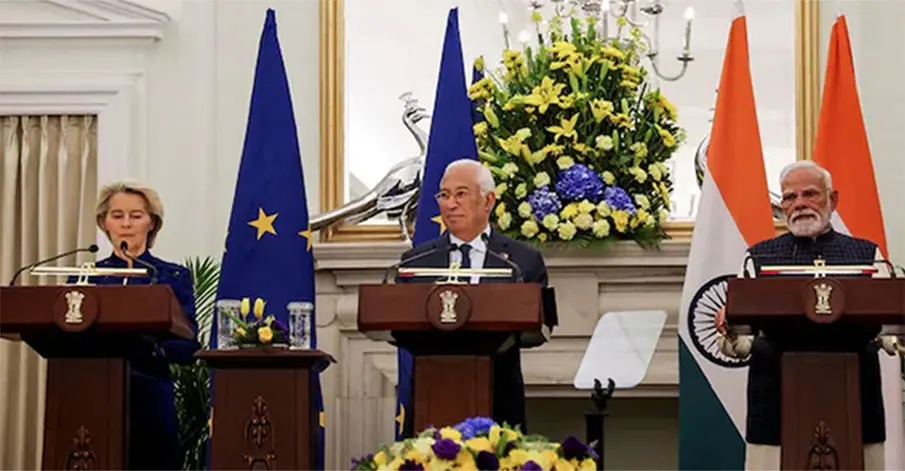

The India-European Union Free Trade Agreement (FTA) is expected to lower production costs and raise quality standards for electronics manufacturers. By reducing tariffs and aligning regulatory frameworks, the deal will boost competitiveness, attract foreign investment, and strengthen India’s position in global supply chains, particularly in electronics and ICT sectors.
India and the European Union have finalized a landmark Free Trade Agreement (FTA), hailed as a transformative step for the electronics industry. The agreement is designed to reduce tariffs, harmonize standards, and enhance market access, positioning India as a stronger player in global technology and manufacturing networks.
Key Highlights:
-
Tariff Reductions: Lower import duties on components and raw materials will cut production costs for Indian electronics makers.
-
Quality Standards: Alignment with EU regulatory frameworks will raise product quality and compliance benchmarks.
-
Export Boost: Electronics exports to the EU are projected to rise significantly, with long-term targets of $100 billion by 2040.
-
Investment Opportunities: Greater predictability and transparency are expected to attract foreign direct investment into India’s electronics and ICT sectors.
-
Strategic Impact: The FTA supports India’s “Make in India” initiative and strengthens its role in global supply chains.
Industry experts believe the deal will not only enhance competitiveness but also accelerate innovation in areas like 5G, AI, and IoT. For India, this agreement represents both economic opportunity and a strategic leap toward becoming a global electronics hub.
Sources: ETTelecom, Bloomberg, Reuters, Vajiram & Ravi