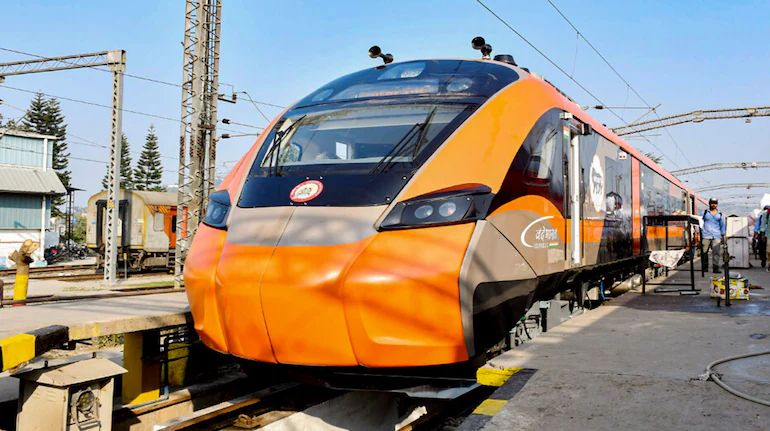
The Union Budget 2026–27 has announced seven high-speed rail corridors, dramatically reducing travel times between key Indian cities. Routes include Mumbai–Pune (90 minutes), Chennai–Bengaluru (1 hr 13 min), Bengaluru–Hyderabad (2 hrs), Chennai–Hyderabad (2 hrs 55 min), Delhi–Varanasi, and Varanasi–Siliguri. Backed by ₹2.78 lakh crore investment, the initiative aims to boost sustainable mobility and economic integration.
The Indian Railways, supported by a record ₹2.78 lakh crore allocation in the Union Budget 2026–27, has unveiled travel times for upcoming high-speed rail (HSR) corridors. Union Minister Ashwini Vaishnaw emphasized that these projects will redefine passenger mobility, cutting journey durations across India’s busiest routes.
The corridors, executed by the National High-Speed Rail Corporation Limited (NHSRCL), are designed as “growth connectors,” promoting eco-friendly transport, regional integration, and business efficiency.
Major Takeaways
Mumbai–Pune: Travel time cut to 90 minutes, benefiting commuters and business travelers.
Chennai–Bengaluru: Just 1 hr 13 min, connecting two major IT hubs.
Bengaluru–Hyderabad: Reduced to 2 hrs, strengthening tech and pharma industry links.
Chennai–Hyderabad: 2 hrs 55 min, easing long-distance travel.
Delhi–Varanasi & Varanasi–Siliguri: Key cultural and economic corridors to enhance connectivity.
Strategic vision: Seven HSR corridors announced as part of India’s long-term mobility plan.
Economic impact: Boost for industries, tourism, and sustainable urban growth.
India’s high-speed rail blueprint signals a transformative leap in infrastructure, positioning the country alongside global leaders in modern rail technology while ensuring faster, greener, and more inclusive travel.
Sources: Economic Times, Times of India, Pune Pulse, Business Standard