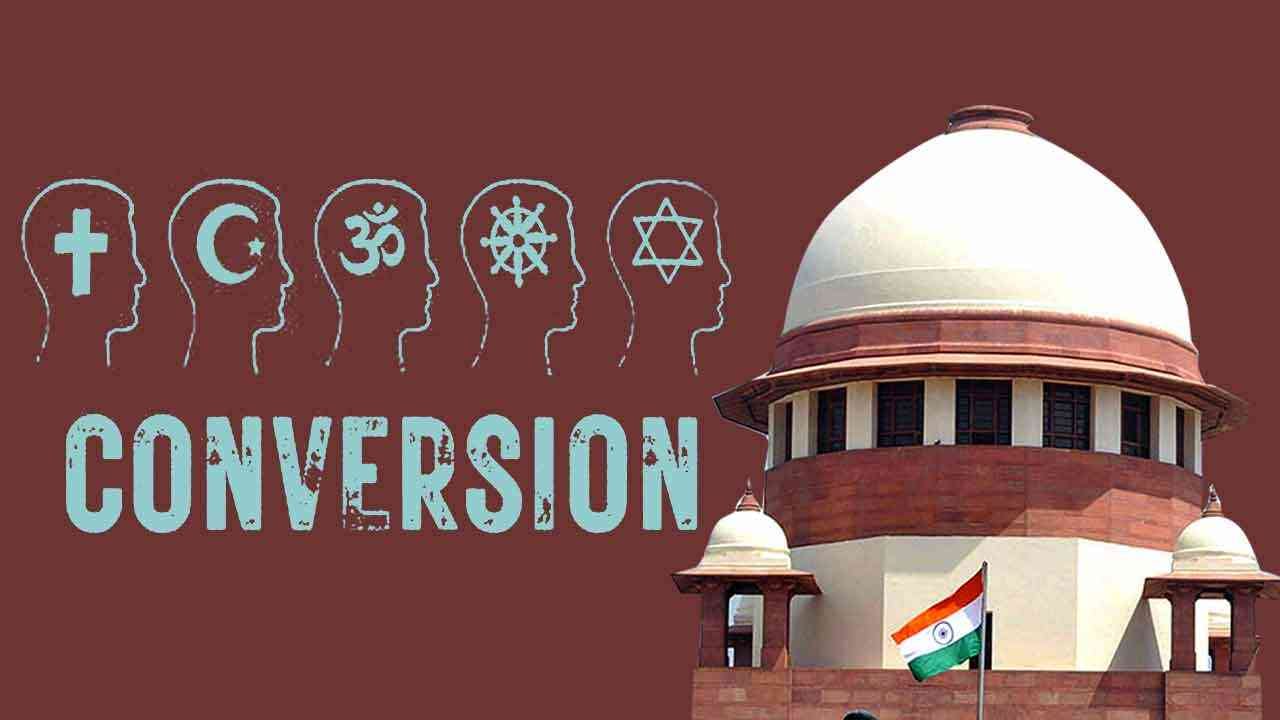

The Supreme Court of India has initiated a crucial judicial review of anti-conversion laws enacted by twelve states, following petitions filed by the National Council of Churches in India. A three-judge bench will examine the constitutional validity of these laws, with responses sought from the Centre and states.
In a significant development, the Supreme Court of India has announced that it will examine the constitutional validity of anti-conversion laws passed by multiple states. The move comes after the National Council of Churches in India (NCCI), representing nearly 14 million Christians, filed a petition challenging these laws. The apex court has directed that the matter be heard by a three-judge bench, underscoring the importance of the issue in safeguarding fundamental rights.
Key Highlights:
-
The petition challenges laws enacted by twelve states including Uttar Pradesh, Madhya Pradesh, Himachal Pradesh, Uttarakhand, Gujarat, Odisha, Chhattisgarh, Jharkhand, Karnataka, Haryana, Rajasthan, and Arunachal Pradesh.
-
The NCCI argued that these laws infringe upon the constitutional right to freedom of religion and personal liberty, and claimed they incentivize hostility against minority communities.
-
The bench, led by Chief Justice Surya Kant and Justice Joymalya Bagchi, has sought responses from the Centre and the concerned states within four weeks.
-
The court has tagged this petition with other pending pleas on similar issues, ensuring a consolidated hearing before a three-judge bench.
-
Solicitor General Tushar Mehta informed the court that the Centre’s response is ready and will be filed shortly.
-
The case is expected to have wide ramifications, as it will determine whether state-level anti-conversion laws align with constitutional guarantees of religious freedom and equality.
-
The NCCI emphasized that its petition is not limited to one state but addresses a broader pattern of legislation that could undermine secular principles enshrined in the Constitution.
Conclusion:
This judicial scrutiny marks a pivotal moment in India’s constitutional discourse, as the Supreme Court prepares to balance state legislation with fundamental rights. The outcome will shape the future of religious freedom and minority protection in the country.
Sources: The Hindu, CNBC TV18, UNI, The Law Advice