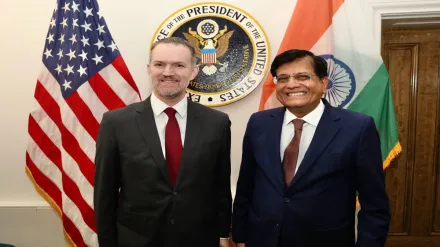


India's Trade Minister Mr.Piyush Goyal has been upbeat on the negotiations for a bilateral trade agreement (BTA) with the United States, terming the talks as "progressing well" and creating buzz among Indian industry circles. The minister's remarks follow as top trade officials from the two nations sit down for a decisive three-day discussion in New Delhi to finalize the shape of the proposed BTA.
Major points:
-
Indian trade groups "highly enthusiastic" regarding possible US trade agreement
-
Bargaining "going well" and poised to benefit both countries
-
Discussions center on securing BTA outline and negotiating timetable
-
US delegation headed by Assistant Trade Representative Brendan Lynch
-
India seeking to cut over 50% of tariffs on $23 billion of US imports
-
Initial phase of accord set to be finished by fall 2025
The positive tone by the minister concords with latest indications of seamless development in the talks, without signs of deadlock. Both the trading partners are taking efforts towards drafting a customized sector-wise tariff approach that can be rolled out on a phase-wise basis. The talks form a part of the overall "Mission 500" objective to achieve double the trade at $500 billion within five years through 2030.
One of the key features of the negotiations is India's possible respite in some areas, which would increase its export competitiveness. In contrast to past trade talks, the US has made it clear that India will not be lumped with nations such as China, Mexico, or Canada regarding tariff treatment, as India has a special economic status.
The negotiations are especially important as they proceed against the background of the looming deadline on April 2 when the US is scheduled to impose retaliatory tariffs. The negotiations' progress may actually affect the US administration's action on these tariffs.
During further talks, the two sides would be expected to discuss major sectors like expansion of market access, reduction of tariffs, and reduction of non-tariff barriers. The accord would be likely to include most sectors, with labor-intensive products like textiles and leather, along with agricultural products and automobile sectors.
Sources: Business Today, Hindustan Times, Reuters, March 27, 2025