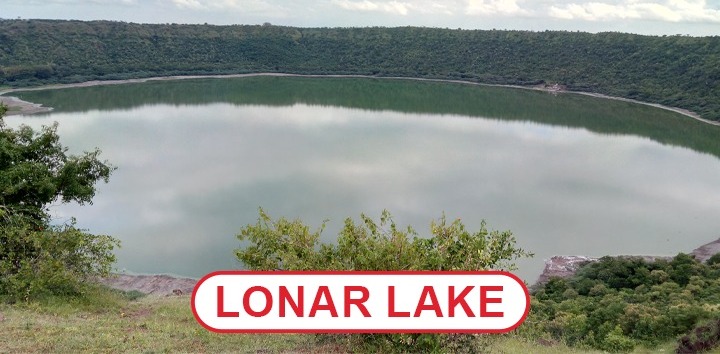

Lonar Lake in Maharashtra, created by a meteor strike 50,000 years ago, is famous for its unique ability to change colours. As a rare saline and alkaline crater lake, it attracts global scientific interest and is recognized as a National Geo-heritage Monument, blending natural mystery with cultural significance.
India is home to one of the world’s most fascinating natural wonders — Lonar Lake, located in Buldhana district, Maharashtra. Formed around 50,000 years ago by a meteor impact, the lake is unique for its saline and alkaline waters and its mysterious ability to change colours depending on environmental conditions.
Key Highlights:
-
Formation: Created by a meteor strike, making it one of only four known hyper-velocity impact crater lakes in basaltic rock worldwide.
-
Colour Changes: The lake’s water shifts hues due to microbial activity, mineral content, and seasonal variations.
-
Scientific Significance: Attracts researchers studying geology, microbiology, and planetary science.
-
Cultural Importance: Surrounded by ancient temples, it blends natural wonder with historical heritage.
-
Global Recognition: Declared a National Geo-heritage Monument and listed as a Ramsar Wetland in 2020.
Lonar Lake continues to captivate scientists, tourists, and historians alike, symbolizing the intersection of cosmic events, ecological diversity, and cultural legacy.
Sources: Times of India, Wikipedia, The Hindu BusinessLine