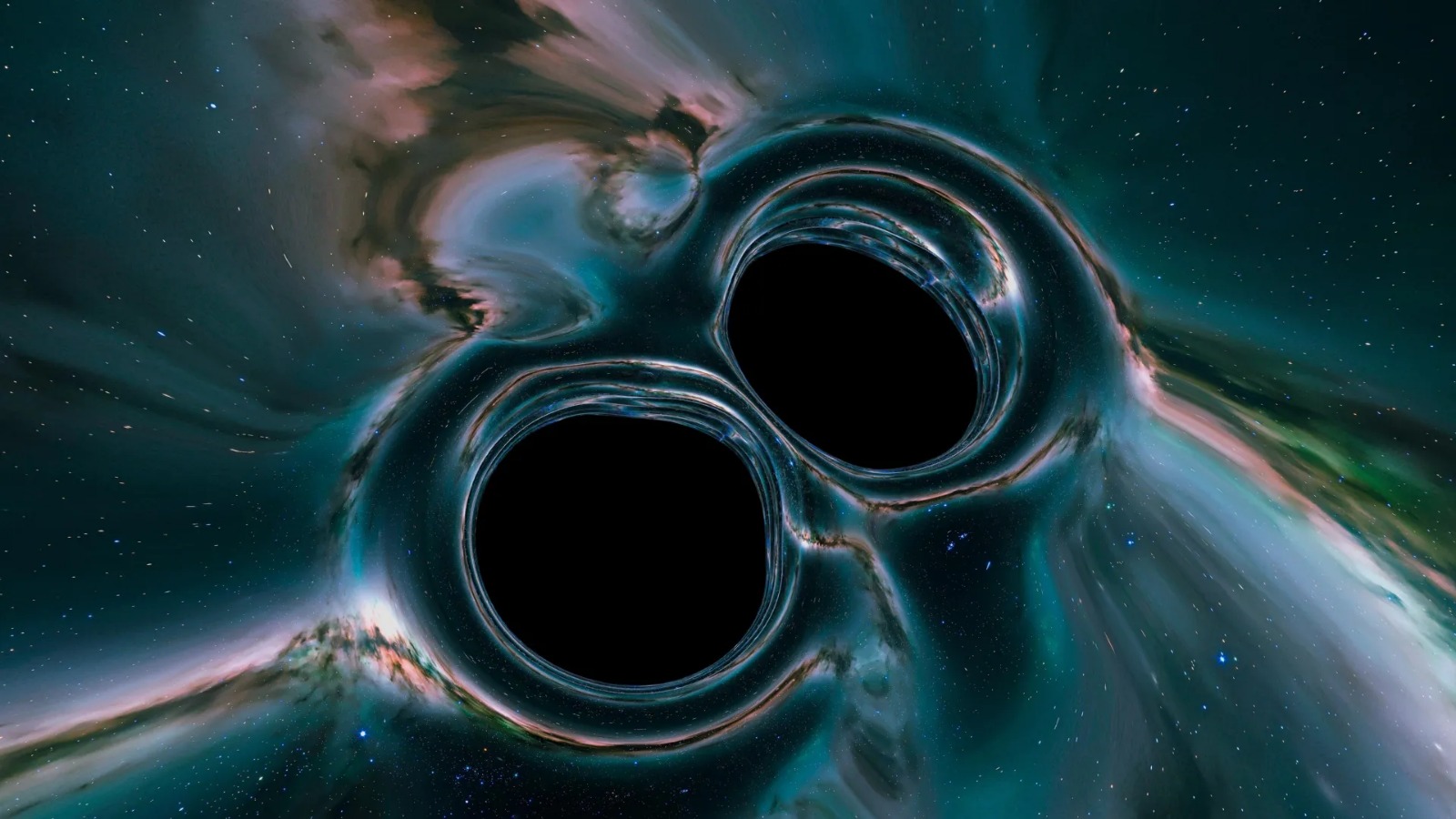

Scientists have detected GW250114, the loudest gravitational wave ever recorded, offering unprecedented clarity of a black hole collision. This record-breaking signal allows researchers to test Einstein’s general relativity in extreme conditions. Early analysis confirms his predictions, while future deviations could reveal new physics beyond current theories.
The Loudest Signal Yet
GW250114, observed by the LIGO, Virgo, and KAGRA collaborations, is the clearest gravitational wave signal to date. Its strength enabled scientists to measure multiple “tones” from the black hole merger, each aligning with Einstein’s predictions of how gravity behaves under intense conditions.
Testing General Relativity
The event provides a rare opportunity to probe relativity in the strong-gravity regime. Researchers are analyzing whether the remnant black hole conforms to the Kerr metric, a cornerstone of Einstein’s theory. Any deviation could point to new physics, potentially reshaping our understanding of gravity.
Future Implications
While this detection confirms Einstein’s theory once again, scientists are eager for future signals that may challenge it. The clarity of GW250114 sets a new benchmark for gravitational wave astronomy, opening doors to deeper exploration of the universe’s most violent events.
Key Highlights
-
GW250114 is the loudest gravitational wave detected
-
Signal came from a binary black hole merger
-
Multiple tones matched Einstein’s predictions
-
Tests general relativity in strong-gravity regime
-
Future deviations could reveal new physics
Conclusion
This record-breaking gravitational wave not only validates Einstein’s general relativity but also raises hopes of uncovering new physics. As detectors grow more sensitive, each discovery brings us closer to unlocking the mysteries of the universe.
Sources: ScienceDaily, Cornell Chronicle, Physical Review Letters