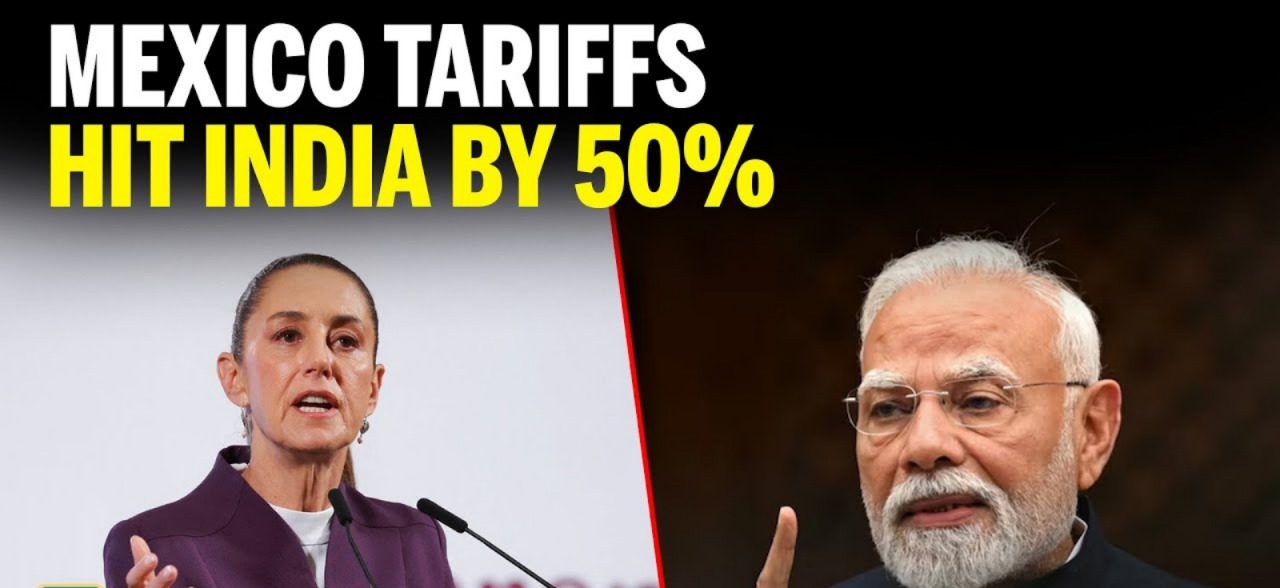











Mexico has approved steep tariffs of up to 50% on imports from countries without free trade agreements, including India. Starting January 2026, the move will impact over 1,400 products, with automobiles and auto parts being the most vulnerable. India’s $1.9 billion car exports to Mexico now face serious disruption.
The Mexican Senate’s decision is aimed at protecting domestic industries and reducing reliance on Asian imports. For India, the auto sector is most exposed, as Mexico is its largest passenger vehicle export market. Analysts warn that duties rising from 20% to 50% could severely dent competitiveness. Other sectors such as textiles, steel, plastics, and chemicals will also feel the pinch, though the impact is uneven. While Mexico remains a critical destination, exporters may need to diversify markets to offset losses.
Notable updates
• Mexico to impose tariffs of 5–50% on 1,460 products from non-FTA countries, including India
• Automobiles and auto parts most impacted; India exported $1.9 billion worth of cars to Mexico in 2024
• Other affected sectors: textiles, steel, plastics, chemicals, footwear, and household goods
• Tariffs effective January 1, 2026; aimed at protecting Mexican domestic producers
• India exported $5.7 billion worth of goods to Mexico in 2024–25
Major takeaway
Mexico’s tariff strike underscores the vulnerability of India’s auto exports, highlighting the urgent need for diversification and trade negotiations to safeguard long-term interests.
Sources: Moneycontrol, The Hindu, Zee News, NDTV, India Today, Economic Times