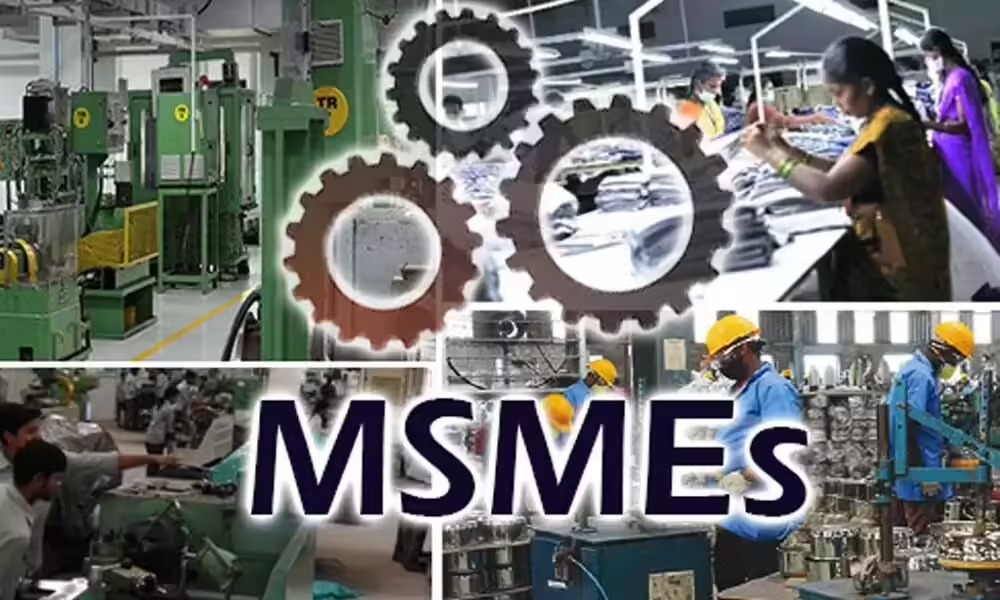
In the face of rapid technological changes and global uncertainties, the Indian Ministry of Micro, Small and Medium Enterprises (MSME) emphasizes the critical need for industry collaboration to build resilience in the MSME sector. Joint Secretary Ateesh Kumar Singh recently highlighted that industry stakeholders should actively engage with government data initiatives to shape policies and programs that empower MSMEs to navigate disruptions effectively.
Key Highlights From The Recent Statement
Industry participation is crucial for enriching government datasets that help design robust MSME support frameworks amid emerging disruptions
Upcoming ‘2.0’ Government initiatives are being crafted with legal reforms aimed at balancing easing compliance requirements with emerging regulatory burdens to improve ease of doing business
The importance of export diversification through leveraging flagship initiatives like Atma Nirbhar Bharat, Digital India, and Vocal for Local was stressed as a pathway for MSME resilience
Leveraging Free Trade Agreements (FTAs) with government handholding and focused digital adoption are key strategies for MSMEs to expand market access and competitiveness
Experts from the United Nations ESCAP and Indian Institute of Foreign Trade participated, underscoring the need for redefined MSME sector classifications and improved data integration with Harmonized System (HS) codes to guide international trade negotiations
Discussions highlighted the transformative impact anticipated from GST 2.0 reforms aimed at simplifying tax compliance and fostering growth pathways for MSMEs
There was consensus on the vital role of innovation, entrepreneurship, and ecosystem collaboration for MSMEs to thrive amid economic uncertainties and technology disruptions
Strategic Priorities For MSME Growth And Resilience
Ateesh Kumar Singh underscored that MSME resilience in today’s volatile environment depends on multi-stakeholder collaboration, data-driven policymaking, and targeted legal frameworks that neither stifle growth nor expose enterprises to complex compliance risks. Tailored government schemes focusing on technology adoption, skill enhancement, and market expansion are being ramped up to support MSMEs in building sustainable business models.
Global And Institutional Perspectives
Rajan Sudesh Ratna from the United Nations ESCAP emphasized that MSMEs must diversify export markets and integrate digital technologies to remain competitive globally. Simultaneously, Indian experts advocate for sector-specific interventions and improved access to international markets facilitated by policy support and harmonized trade codes.
Impact Of GST 2.0 On MSMEs
The GST 2.0 rollout is expected to ease operational burdens significantly by streamlining filing processes, reducing tax disputes, and promoting transparency. This reform will reduce production costs, improve cash flows, and enhance MSME participation in both domestic and export markets, thereby reinforcing their resilience and growth potential.
Challenges And The Road Ahead
Despite promising reforms, MSMEs face challenges including digital skill gaps, access to finance, and fluctuating demand. The ministry and experts stress continuous engagement between MSMEs, government bodies, and industry associations to address these hurdles through data-backed initiatives and pragmatic policy interventions.
Conclusion
Building resilience for MSMEs amid disruption requires collaborative input from industry, academia, and international institutions to create an ecosystem that supports innovation, exports, and compliance ease. The Ministry of MSME’s proactive steps, including soliciting industry input and rolling out GST 2.0 reforms, aim to empower MSMEs to navigate uncertainty and emerge stronger contributors to India’s economy.
Sources: Economic Times, Ministry of MSME, United Nations ESCAP, Indian Institute of Foreign Trade