
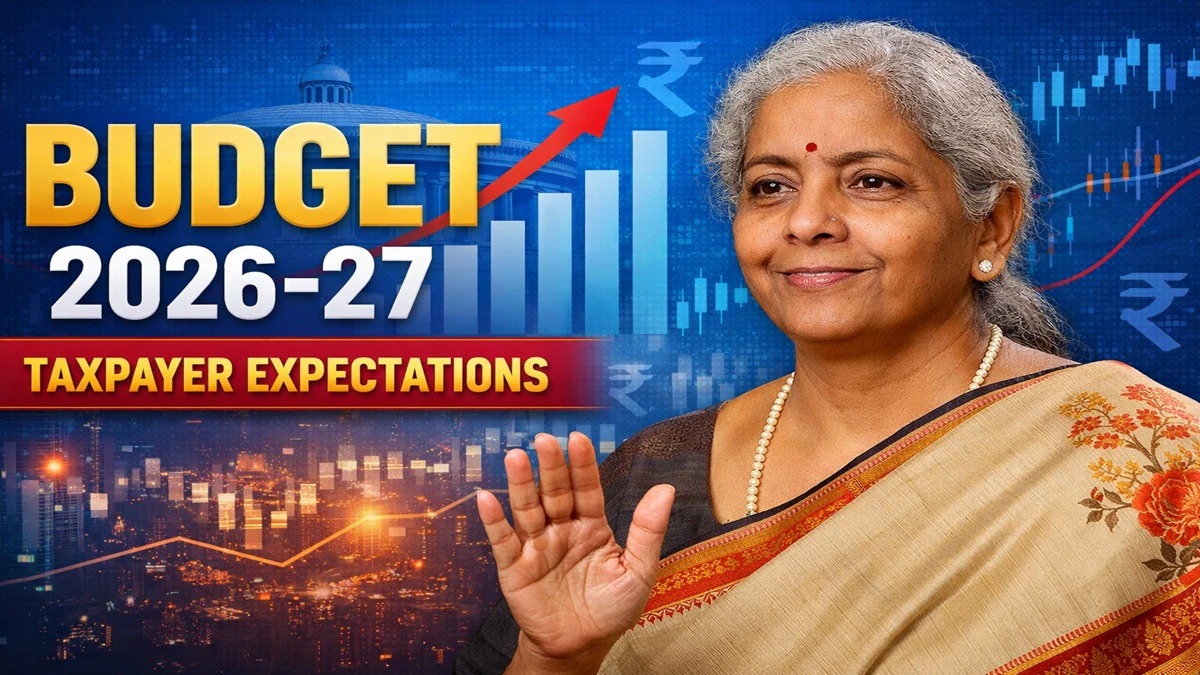
The Union Budget 2026 is expected to reshape India’s direct tax regime with a focus on simplification, reduced litigation, and clarity on digital and cross-border taxation. With the new Income Tax Act, 2025 set to replace the six-decade-old law from April 2026, stakeholders anticipate streamlined compliance and fairer structures.
As India prepares for the Union Budget 2026, expectations are high for reforms in the direct tax regime. The government’s vision of “Viksit Bharat” underpins this year’s proposals, aiming to balance growth, ease of doing business, and taxpayer convenience.
The most significant change will be the replacement of the Income Tax Act, 1961, with the Income Tax Act, 2025, effective April 1, 2026. This transition introduces the concept of a unified “Tax Year”, replacing the earlier “Assessment Year” and “Previous Year” terminology to reduce confusion.
Stakeholders are calling for simplified tax slabs, higher exemption limits, and rationalisation of deductions, especially for salaried individuals and homebuyers. The government is also expected to address refund delays, streamline compliance, and provide clarity on digital economy taxation.
Key Highlights
-
New Law: Income Tax Act, 2025 to replace the 1961 Act from April 2026.
-
Terminology Shift: Unified “Tax Year” to simplify compliance.
-
Taxpayer Relief: Possible changes in slabs, higher exemptions, and rationalised deductions.
-
Focus Areas: Reduced litigation, clarity on cross-border taxation, and digital economy rules.
-
Strategic Vision: Aligns with “Viksit Bharat” roadmap for a $5 trillion economy.
The Budget is expected to set the tone for a predictable, transparent, and innovation-friendly tax regime, ensuring India’s competitiveness in the global economy.
Sources: Moneycontrol, Financial Express, ABP Live, Economic Times