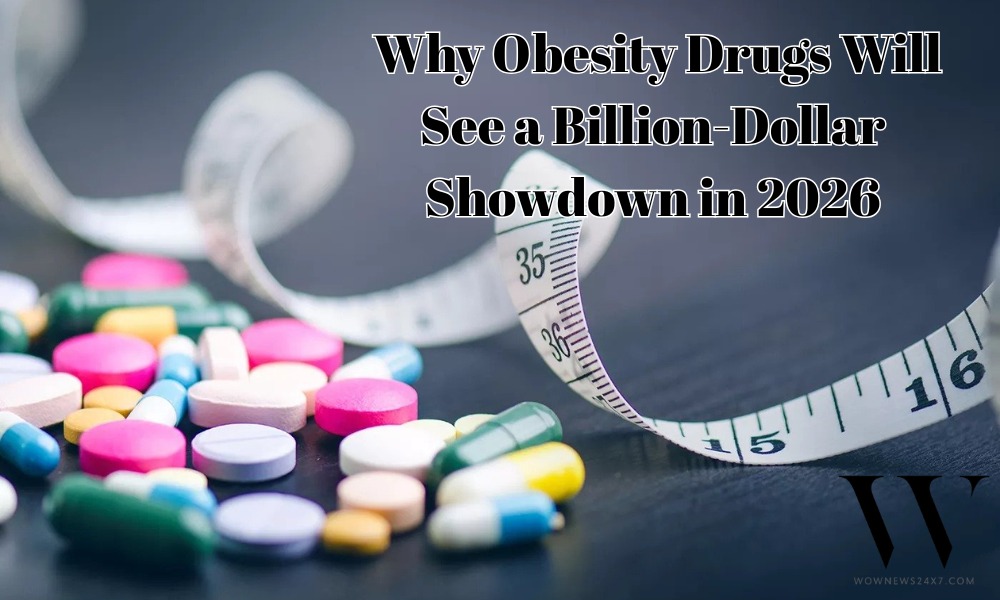
The global weight-loss drug market is entering a fierce new phase in 2026. With oral GLP-1 pills, combination therapies, and next-generation injectables challenging the dominance of Novo Nordisk and Eli Lilly, competition is set to reshape pricing, patient access, and innovation. Five charts reveal how this pharmaceutical battle will unfold.
The fight for dominance in the multi-billion-dollar weight-loss drug market is about to escalate dramatically in 2026. Once a duopoly controlled by Novo Nordisk (Ozempic, Wegovy) and Eli Lilly (Mounjaro, Zepbound), the sector is now facing a wave of challengers armed with new delivery formats, combination therapies, and broader patient appeal.
Key Highlights from the 2026 Outlook
-
Oral Pills Enter the Arena: Novo Nordisk projects that oral GLP-1 pills could capture one-third of the obesity drug market by 2030. Eli Lilly’s Orforglipron, expected to receive FDA approval by March 2026, is positioned as the first non-peptide oral GLP-1 agonist, offering convenience for injection-averse patients.
-
Market Explosion: Analysts forecast the obesity drug market to surge from $15 billion in 2025 to $50–80 billion by 2030, driven by rising demand and expanded treatment options.
-
Combination Therapies: Companies like Regeneron and Zealand Pharma are developing dual and triple-action drugs that promise superior weight loss (25–30% vs. 15–20% with monotherapy) while preserving muscle mass.
-
New Entrants: Firms including Pfizer, Viking, Wave Life Sciences, and Structure Therapeutics are racing to launch oral GLP-1 alternatives, targeting the 30–40% of patients reluctant to use injectables.
-
Global Expansion: While the U.S. remains the epicenter, markets in Europe, Asia, and Latin America are expected to see rapid adoption, intensifying the competitive battlefield.
Why It Matters
-
Patient Access: Oral pills and combination therapies could broaden treatment adoption, making weight-loss drugs more accessible and appealing.
-
Pricing Pressure: With more players entering, drug costs may decline, potentially easing affordability concerns.
-
Innovation Race: The next five years will determine whether injectables retain dominance or oral therapies redefine the market.
Broader Context
Obesity affects over 1 billion people worldwide, and effective treatments are seen as critical to reducing related conditions like diabetes and cardiovascular disease. The intensifying competition in 2026 signals not just a pharmaceutical rivalry but a public health turning point, where innovation could reshape how societies tackle obesity.
Sources: FindInAll News, BioMed Nexus, ObesityTech