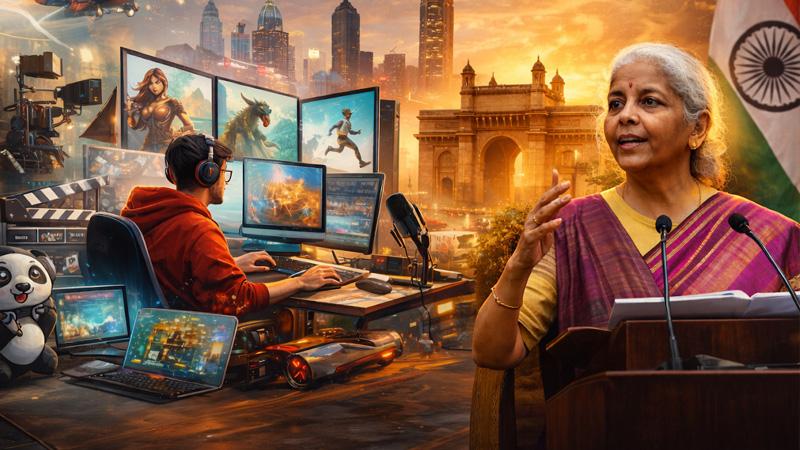
India's Union Budget 2026 spotlights the orange economy, encompassing creative sectors like animation, gaming, VFX, comics, design, and live entertainment. Finance Minister Nirmala Sitharaman announced key initiatives to skill youth, create jobs, and drive urban-tourism growth, backed by Economic Survey 2025-26 insights. This positions creativity as a services-led powerhouse for Viksit Bharat.
Orange Economy Defined
The orange economy refers to knowledge-based creative industries deriving value from ideas, culture, and intellectual property rather than physical goods. It includes animation, visual effects, gaming, comics (AVGC), design, media, entertainment, and live events like concerts. Globally, these sectors contribute 0.5-7% of GDP per UNCTAD estimates, amplified in India by youth demographics, urbanization, digital adoption, and rising incomes.
Key growth drivers
-
India's AVGC sector eyes 2 million jobs by 2030, with creator economy expanding at 18% CAGR to Rs 34 billion by 2026
-
Concert economy rebounds, generating spillovers in hospitality, transport, and tourism via high-multiplier events
-
Economic Survey links it to urban services, positioning creativity as labor-intensive alternative to manufacturing.
Budget 2026 Initiatives
Sitharaman proposed supporting Indian Institute of Creative Technologies (IICT) Mumbai to establish AVGC content creator labs in 15,000 secondary schools and 500 colleges nationwide. A new National Institute of Design will rise in eastern India to tackle designer shortages. These embed skills early, fostering startups and exports in high-growth AVGC, projected at Rs 103 billion revenues in 2024.
Strategic impacts
-
Labs address talent gaps, enabling 2 million professionals for AVGC by 2030 while boosting entrepreneurship
-
New NID expands design education, aiding manufacturing, branding, and digital sectors regionally
-
Concert push via single-window permissions eases regulations, unlocking tourism and youth jobs.
Economic Potential
Orange economy fuels soft power, exports, and city revitalization, with digital media at 32% of M&E revenues (Rs 2.5 lakh crore in 2024). It supports MSMEs, skilling, and IP monetization amid AI-virtual production trends. Challenges like venue shortages and approvals persist, but policy alignment promises scaled impact.
Sources: The Economic Times, Firstpost, Times of India, NDTV, Business Today.