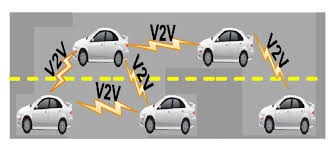

Image Source : ResearchGate
India will fully roll out vehicle-to-vehicle (V2V) communication this year, enabling cars to exchange real-time safety alerts without mobile networks. Using an on-board unit and a dedicated 30 MHz spectrum, the system targets fog pile-ups, rear-end collisions, and blind-spot risks, with standards and mandates progressing under the road transport ministry.
Show more
Rollout plan and safety impact
Union Minister Nitin Gadkari announced that V2V technology will be deployed nationwide in 2026, allowing vehicles to “talk” to each other and warn drivers about hazards such as sudden braking, stationary vehicles, dense fog, and blind spots. The initiative aims to sharply reduce crashes and improve emergency response for accident victims.
Key highlights
-
Nationwide rollout in 2026: Full-year deployment plan, starting with new vehicles, supported by standards and Motor Vehicles Act amendments.
-
How it works: On-Board Units (OBUs) exchange data (speed, location, acceleration, braking) directly between vehicles no cellular networks required.
-
Spectrum allocation: Dedicated 30 MHz band earmarked to ensure reliable, low-latency safety messaging between vehicles.
-
Targeted risks: Alerts for fog pile-ups, rear-end crashes, and stationary vehicles to mitigate multi-vehicle accidents in low-visibility conditions.
-
Expected benefit: Government targets significant crash reduction, with estimates up to 80% in key scenarios according to briefings and industry assessments.
-
Trauma care link: Parallel push for cashless treatment up to ₹1.5 lakh for seven days to strengthen post-crash response.
The V2V rollout marks a decisive shift toward connected road safety, combining proactive hazard alerts with better trauma support to save lives and reduce economic losses from collisions.
Sources: Moneycontrol; Financial Express; India TV; Business Standard
Stay Ahead – Explore Now!
PM Meets AI Startups, Calls For Ethical, Indigenous Models

Advertisement
Advertisement