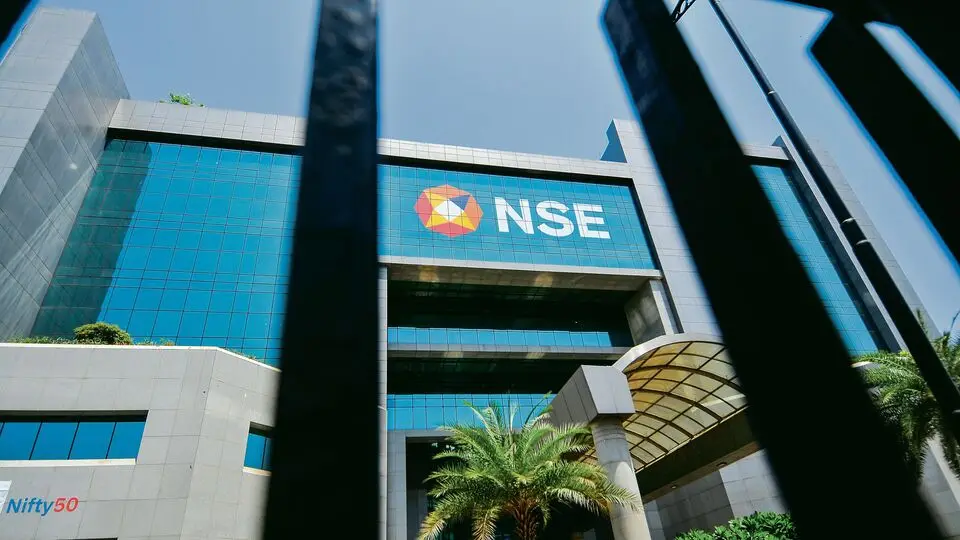
India's benchmark Nifty 50 index dropped 0.65% on Tuesday as Brent crude neared $100 a barrel amid Middle East supply risks. The rise in international oil prices revived investor concerns over domestic inflation, rising corporate input costs, foreign capital outflows, and expanding trade deficits for the world's third-largest oil importer.
MUMBAI — India’s benchmark Nifty 50 index extended losses during Tuesday afternoon trade, falling 0.65% as global benchmark Brent crude hovered near the psychologically significant threshold of $100 per barrel.
The sustained drop reflects escalating concerns over imported inflation, expanding current account deficits, and narrowing corporate profitability for Indian enterprises reliant on petroleum feedstocks. As energy markets price in shipping disruptions across the Middle East, foreign and domestic institutional investors have pared risk exposure across broad market equities.
Energy Cost Spikes Pressure Domestic Equities
Trading across the National Stock Exchange of India (NSE) saw steady selling pressure throughout the session, driving the Nifty 50 index down 0.65% to trade below key technical supports. The decline mirrors broader weakness across Mumbai trading desks, where the benchmark S&P BSE Sensex registered corresponding intraday drops.
International benchmark Brent crude futures advanced toward $100 per barrel following military developments in the Strait of Hormuz and elevated supply-chain risk premiums. India imports more than 85% of its crude requirements, making the domestic equity market uniquely sensitive to sustained moves in global oil prices.
Automakers, logistics providers, and paint manufacturers led sectoral losses, while oil marketing companies faced selling pressure on fears that elevated procurement costs cannot be immediately passed on to end consumers. In contrast, upstream state-run energy exploration firms and selective natural gas producers showed modest defensive resilience.
Macroeconomic Headwinds and Capital Flows
The rapid run-up in energy prices complicates India's macroeconomic backdrop, prompting foreign institutional investors (FIIs) to trim exposure to domestic equities. Sustained triple-digit crude prices risk stoking domestic retail and wholesale price indices, narrowing the Reserve Bank of India’s operational room for monetary policy easing.
Simultaneously, the Indian rupee experienced depreciation pressure in the foreign exchange market, further elevating the landed cost of dollar-denominated imports. Market participants pointed to rising benchmark bond yields and uncertainty ahead of major global central bank rate decisions as contributing factors that prompted portfolio managers to shift capital into lower-volatility sovereign assets.
Impact Across Key Sectors and Market Participants
The retreat in the Nifty 50 index generates direct repercussions across the economic landscape:
Automotive and Transportation: Elevated retail fuel prices dampen consumer vehicle demand and squeeze margins for freight haulers and passenger logistics operators.
Industrial Consumers and Paints: Chemical, plastic, packaging, and coating producers face direct margin compression due to surging petrochem derivative input costs.
Retail and Institutional Investors: Domestic retail portfolios tracking the Nifty 50 index absorb mark-to-market declines as large-cap financial and manufacturing heavyweights drag down benchmark performance.
Energy Exploration Firms: Upstream exploration and production corporations benefit from wider gross realization margins on domestic crude barrels.
Official Sources
According to market trading data published by the National Stock Exchange of India (NSE) and the BSE Limited, benchmark equity indices remained in negative territory throughout Tuesday's afternoon session, with the Nifty 50 index recording an intraday low drop of 0.65%.
Commodity reference rates from the Intercontinental Exchange (ICE) confirmed that Brent crude contracts traded near $99 to $100 a barrel, driven by global supply alerts and ongoing geopolitical tension in Middle East shipping lanes.
Market Commentary
According to officials and market strategists tracking institutional order flow, elevated oil import bills represent the primary headwind confronting emerging market valuations.
Treasury strategists and brokerage research desks noted in trading memos:
"The direct correlation between rising Brent crude and declining Indian equity benchmarks has returned to the fore. With crude hovering near $100 a barrel, markets are adjusting for higher corporate operating expenditures and evaluating potential inflationary pass-through across consumption sectors."
Why It Matters
The slide in the Nifty 50 index underscores structural vulnerabilities linked to global commodity volatility:
Corporate Earnings: Elevated raw material expenses directly reduce operating margins across core consumer, automobile, and manufacturing segments.
Trade Balance: High crude import outlays widen India's trade and current account deficits, compounding downward pressure on the currency.
Monetary Policy: Sustained input price shocks raise headline inflation figures, preventing benchmark interest rate reductions by the central bank.
Key Facts at a Glance
Benchmark Performance: The Nifty 50 index declined 0.65% in afternoon trade.
Commodity Driver: Brent crude futures moved within range of $100 a barrel.
Vulnerable Sectors: Automotive, chemicals, logistics, paints, and downstream oil retailers.
Primary Macro Trigger: Concerns over import-driven inflation and widening trade deficits.
Market Exposure: Heavy foreign institutional selling concentrated across blue-chip index constituents.
Frequently Asked Questions
Why does a spike in Brent crude cause the Nifty 50 index to drop?
India imports more than 80% to 85% of its crude oil requirements. Surging oil prices increase production costs, elevate transportation expenses, threaten corporate profit margins, and expand the national trade deficit, leading investors to offload shares.
Which sectors on the Nifty 50 are hurt most by higher oil prices?
Aviation, automobile manufacturers, paint companies, tire makers, and specialty chemicals suffer because crude oil and its derivatives form a significant share of their input costs.
Are any sectors benefiting from near-$100 oil?
Upstream oil and gas exploration and production companies generally benefit from higher global crude benchmarks, as they receive higher prices for extracted hydrocarbons.
What are analysts watching next for market direction?
Market participants are monitoring crude inventory levels, Middle East shipping stability, upcoming inflation print releases, and central bank policy meetings for signals on interest rate direction.
Source: Real-time benchmark index feeds from the National Stock Exchange of India (NSE), market operations updates from BSE Limited, commodity indices via the Intercontinental Exchange (ICE), and monetary reporting by the Reserve Bank of India (RBI).