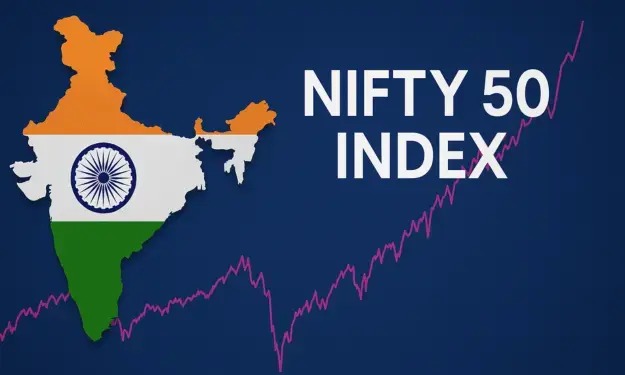
India's benchmark Nifty 50 index ended provisionally 0.99% higher near 23,850, driven by a global relief rally after the U.S. and Iran finalized a peace agreement. A subsequent 3.5% drop in crude oil prices boosted domestic market sentiment, fueling strong gains across auto, realty, and financial stocks.
India’s benchmark Nifty 50 index extended its winning streak on Monday, closing provisionally 0.99% higher to settle near the key psychological threshold of 23,850. The sharp upward movement followed a massive gap-up opening across domestic bourses, triggered by a definitive weekend breakthrough in international diplomacy. With the United States and Iran officially finalizing a peace agreement to end their four-month-long conflict in West Asia, global risk sentiment shifted dramatically. The subsequent cooling of international crude oil prices provided structural relief to Indian macroeconomic indicators, prompting a wave of domestic institutional buying across high-momentum sectors.
Macroeconomic Relief Triggers Broad Institutional Inflows
According to provisional trading data from the National Stock Exchange of India (NSE), the Nifty 50 index (.NSEI) experienced uniform buying pressure throughout the session, fluctuating within a stable, elevated horizontal band after opening more than 1.5% higher. Market analysts noted that the unwinding of the geopolitical risk premium directly targeted India's primary economic vulnerabilities: energy-driven inflation and fiscal deficit pressures.
The localized market breadth remained highly favorable, maintaining a strong advance-decline ratio of nearly 3:1. The relief rally was anchored by a sharp drop in Brent crude futures, which tumbled 3.5% to slide below $84 per barrel on the Intercontinental Exchange.
Because India relies on foreign imports to fulfill over 85% of its crude oil requirements, the sudden price drop immediately boosted corporate margin expectations across aviation, paint manufacturing, automotive, and logistics enterprises. Concurrently, the Indian Rupee exhibited positive momentum, firming up past the 95.0 mark against the U.S. Dollar.
Sectoral Performance and Leading Structural Drivers
The provisional 0.99% gain across the Nifty 50 index was characterized by strong rotational buying, with domestic cyclical sectors outperforming defensive plays:
Real Estate and Automobiles: The Nifty Realty and Nifty Auto indices led the sectoral charts, posting gains of over 1.5%. Tata Motors Passenger Vehicles and UltraTech Cement emerged as prominent heavyweights driving the benchmark upward.
Financial and Logistics Services: Shriram Finance and Bajaj Finance drew heavy institutional accumulation, while InterGlobe Aviation (IndiGo) surged significantly due to the projected reduction in aviation turbine fuel overheads.
Defensive Retraction: In contrast to the broader market surge, defensive clusters faced profit-taking. The Nifty Pharma and Nifty Healthcare indices finished as the session's primary laggards, as capital rotated back into high-beta infrastructure and financial assets.
Official Market Commentary
Financial institutions and regulatory observers stated that the structural recovery indicates a return of foreign capital that had previously exited emerging markets during the peak of the West Asian maritime bottleneck.
"According to officials and technical analysts, the decisive clearing of the 23,500 zone has effectively transformed previous resistance levels into a reliable demand cushion," noted a senior portfolio manager at Motilal Oswal Financial Services. "The structural upward momentum is well-supported by the normalization of energy corridors like the Strait of Hormuz. Unless unexpected macroeconomic data emerges from the upcoming Federal Reserve policy review, the index is geared to challenge its next structural ceiling near 24,000."
In official releases from regional exchange desks, the Nifty MidCap and SmallCap indices echoed the large-cap sentiment, matching the benchmark's trajectory by finishing roughly 1.5% higher.
Why It Matters
The Nifty 50 index’s move toward the 23,850 mark has direct implications for retail investors, consumer industries, and corporate capital expenditure budgets. Lower oil prices mitigate domestic inflationary pressures, giving the Reserve Bank of India (RBI) more room to consider accommodative liquidity adjustments later in the fiscal year. For corporate India, stabilized input costs translate directly into improved quarterly earnings visibility, protecting equity valuations from aggressive cross-border outflows.
Key Facts at a Glance
Closing Metrics: The Nifty 50 index gained nearly 1% provisionally, sustaining the multi-day bullish momentum established during the previous Friday's session.
Catalyst Vector: A finalized peace deal between Washington and Tehran removed persistent operational threats across global commercial shipping lanes.
Commodity Slump: International Brent crude oil fell below $84 a barrel, lowering input cost forecasts for energy-dependent Indian conglomerates.
Rotational Dynamics: Financial, automotive, and real estate equities drove the index's growth, while pharmaceutical and healthcare components faced marginal corrections.
Frequently Asked Questions
What caused the sharp rise in the Nifty 50 index today?
The primary driver was a global relief rally triggered by the weekend announcement that the United States and Iran have finalized a peace framework, effectively ending their military conflict and stabilizing energy markets.
How do lower international crude oil prices benefit Indian stocks?
Since India imports the vast majority of its crude oil, lower prices reduce the national import bill, strengthen the rupee, cool domestic retail inflation, and improve profit margins for automotive, paint, and transportation companies.
Which sectors gained the most during Monday's session?
The Nifty Realty, Nifty Auto, and Nifty Financial Services sectors emerged as the top performers, while defensive spaces like healthcare and pharmaceuticals faced minor corrections due to capital rotation.
What are the immediate technical support and resistance levels for the Nifty 50?
Market analysts place immediate structural support in the 23,500–23,450 zone, while the next major psychological resistance hurdle is situated directly at the 24,000 mark.
Source: National Stock Exchange of India (NSE), Intercontinental Exchange (ICE), Press Information Bureau (PIB)