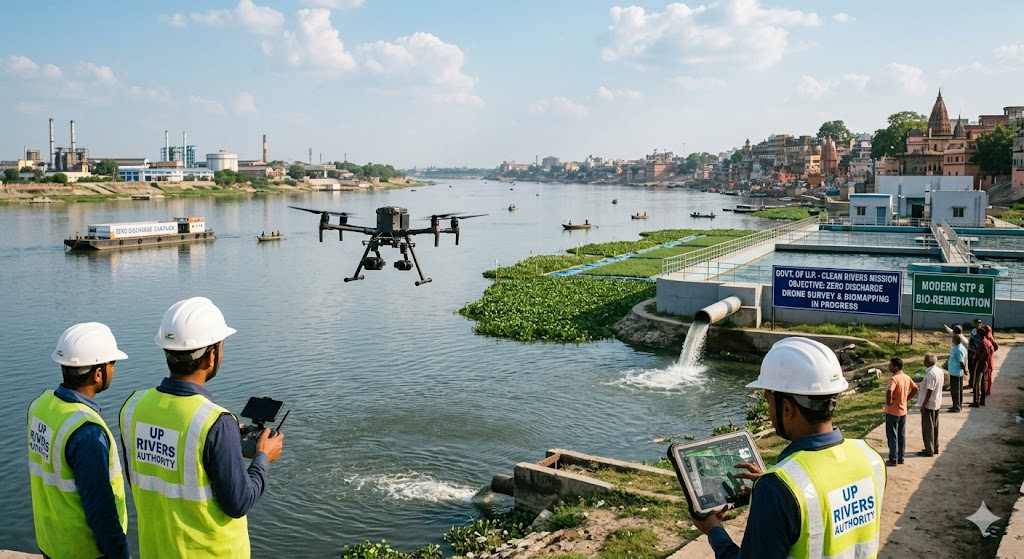
The Uttar Pradesh government has launched drone surveys as part of a multi-layered approach to ensure zero untreated waste discharge into rivers. This ambitious initiative utilizes advanced aerial technology to map pollution sources and monitor water quality, enhancing the effectiveness of enforcement actions and infrastructure upgrades across the state.
LUCKNOW, India — The Government of Uttar Pradesh has launched an ambitious initiative aimed at ensuring zero discharge of untreated sewage and industrial effluent into the state's rivers. In a major technological push to monitor water quality and identify pollution sources, the state has begun implementing a multi-layered approach that includes high-tech drone surveys. This development is crucial as India's most populous state seeks to restore the health of critical river systems like the Ganga and Yamuna, which are vital for agriculture, drinking water, and religious practices.
State officials confirmed today that the first phase of drone-based mapping is underway in critical industrial clusters and densely populated urban centers. The government’s proactive stance underscores its commitment to environmental sustainability and aligns with national directives under the 'Namami Gange' program.
High-Tech Eyes in the Sky
A central component of U.P.'s new strategy is the utilization of unmanned aerial vehicles (UAVs) or drones. These drones are equipped with specialized sensors, including high-resolution thermal cameras, which are instrumental in detecting illegal pipelines and outfalls discharging untreated waste directly into rivers.
By flying over riverbanks and industrial areas, the drones provide real-time, aerial data that would be difficult and time-consuming to obtain through ground-based inspections alone. This technology allows environmental regulators to pinpoint pollution hotspots with unprecedented accuracy. The gathered data is being used to create comprehensive digital maps of drainage networks, facilitating more effective enforcement of anti-pollution regulations against industries and municipalities found to be violating discharge norms.
A Comprehensive, Multi-Layered Strategy
The drone surveys are not a standalone measure but part of a much larger, multi-pronged strategy. The Uttar Pradesh government is simultaneously investing heavily in the construction and upgrading of Sewage Treatment Plants (STPs) across major cities and towns. The ultimate goal is to ensure that all domestic and industrial wastewater is treated to prescribed standards before any reuse or safe discharge occurs elsewhere, with the aim of reducing the dependency on river discharge entirely.
Key elements of this multi-layered approach include:
Infrastructure Augmentation: Accelerating the completion of pending STP projects and expanding sewer networks to connect more households.
Industrial Regulation: Stringent monitoring of Common Effluent Treatment Plants (CETPs) in industrial areas to ensure compliance.
Bioremediation Techniques: Exploring nature-based solutions, such as constructing artificial wetlands and utilizing specific plants for in-situ water treatment.
Strict Enforcement: Imposing heavy penalties and taking legal action against habitual polluters based on evidence collected from various monitoring tools, including drones.
Context and Background
Uttar Pradesh has long grappled with severe river pollution, a complex challenge exacerbated by rapid industrialization, urbanization, and the significant volume of domestic sewage. The Ganga and its tributaries, while culturally and religiously significant, have consistently registered high levels of pollutants, posing serious health risks to millions of citizens and endangering aquatic ecosystems.
Previous river clean-up efforts often struggled due to inadequate monitoring capabilities and insufficient wastewater treatment capacity. The introduction of drone technology represents a critical shift towards a more data-driven and proactive enforcement model, aimed at overcoming these historic challenges and finally achieving tangible results in river restoration.
Official Sources Section
According to official government releases from the Uttar Pradesh Environment, Forest and Climate Change Department, the deployment of drones is intended to modernize environmental monitoring and enhance the effectiveness of the ongoing 'Clean Rivers Mission' in the state.
Operational details provided by the State Mission for Clean Ganga (SMCG-UP) indicate that specific stretches of the Ganga and Yamuna rivers in cities like Kanpur, Prayagraj, and Varanasi are being prioritized for the initial drone surveys. Information regarding industrial compliance is being compiled based on regulatory filings with the Uttar Pradesh Pollution Control Board (UPPCB).
Quote Section
A senior official from the State Mission for Clean Ganga (SMCG-UP) stated:
"The drone-based surveys give us an unprecedented advantage in monitoring vast and complex river stretches. By identifying points of illegal or untreated discharge that were previously hidden, we can take swift corrective and punitive action. This technology-driven approach is critical to realizing the Chief Minister's vision of a zero discharge policy and restoring the purity of our rivers."
According to the UP Pollution Control Board (UPPCB):
"Organizers stated that the data generated from these aerial surveys will be integrated into a GIS-based platform, enabling real-time monitoring and better coordination between various departments involved in river conservation efforts."
Why It Matters
Ensuring zero discharge into Uttar Pradesh's rivers has vast practical implications. For the millions of citizens dependent on these rivers, it translates to cleaner, safer water for drinking, bathing, and agriculture. Improved water quality is essential for public health, reducing the incidence of waterborne diseases. Economically, cleaner rivers can boost tourism and fisheries, supporting local livelihoods. Furthermore, a successful model in U.P. can serve as a benchmark for river conservation efforts across India and other developing nations facing similar environmental challenges.
Key Facts at a Glance
Technology Deployment: Uttar Pradesh is using drone surveys equipped with thermal cameras to identify illegal pollution sources in rivers.
Ambitious Goal: The state aims to achieve zero discharge of untreated sewage and industrial effluent into major waterways like the Ganga and Yamuna.
Holistic Approach: Drone surveillance is part of a broader strategy including massive STP infrastructure upgrades and stricter regulatory enforcement.
Initial Focus: High-priority drone monitoring is currently focused on industrial hubs and critical urban centers along the riverbanks.
FAQ Section
Q1: How do drones detect river pollution?
A1: Drones are equipped with sensors like thermal cameras that detect temperature differences in the water, revealing hidden outfalls or pipelines discharging warmer, untreated wastewater into the cooler river. High-resolution imagery also maps visible pollution plumes and illegal dumping activities.
Q2: What happens to the wastewater if it is not discharged into the rivers?
A2: The zero discharge goal aims to ensure all wastewater is treated at Sewage Treatment Plants (STPs) and Common Effluent Treatment Plants (CETPs). The treated water is then designated for reuse in agriculture, industrial processes, or city landscape irrigation, reducing fresh water demand.
Q3: Which cities in U.P. are being covered by the drone surveys?
A3: Initial drone surveys are targeting major cities with historically high pollution levels, including industrial Kanpur, and culturally significant cities like Prayagraj and Varanasi, located along critical stretches of the Ganga and Yamuna.
Source: Uttar Pradesh Environment, Forest and Climate Change Department official releases, State Mission for Clean Ganga (SMCG-UP) operational updates, Uttar Pradesh Pollution Control Board (UPPCB) regulatory filings.