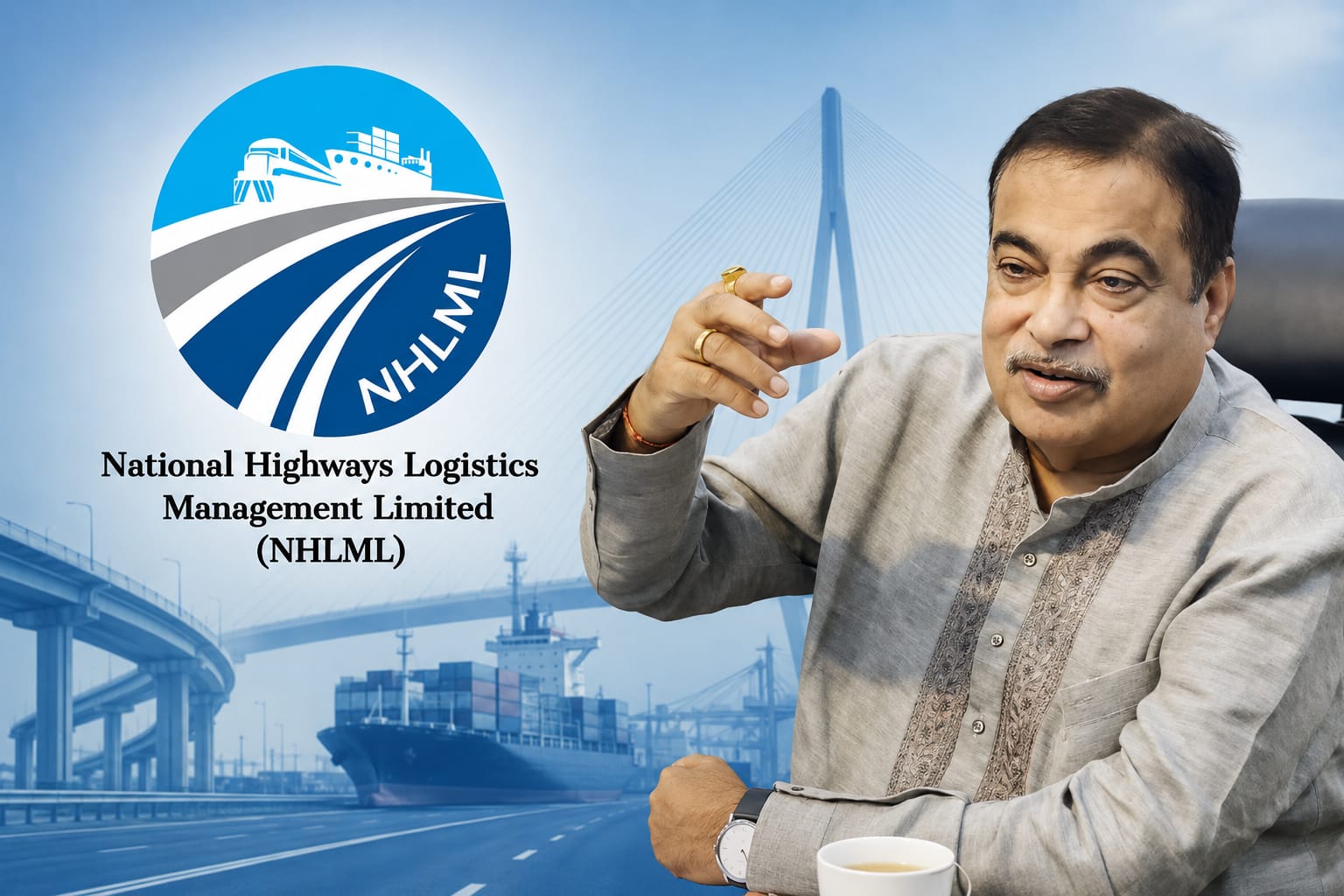
Union Minister Nitin Gadkari reviewed the progress of National Highways Logistics Management Limited (NHLML) projects, including Multi Modal Logistics Parks and ropeway networks. Gadkari instructed officials to eliminate local bottlenecks immediately, emphasizing that timely completion will improve logistics efficiency, decrease transportation costs, and advance India's high-tech infrastructure goals.
NEW DELHI, India — Union Minister for Road Transport and Highways Nitin Gadkari chaired a comprehensive high-level review meeting of the National Highways Logistics Management Limited (NHLML) on Monday, July 6, 2026. During the session, Gadkari evaluated the project-level progress of foundational logistics initiatives, including Multi Modal Logistics Parks (MMLPs), national ropeway networks, intermodal stations, and wayside amenities being developed across the country.
The government's intervention comes at a critical time as India seeks to lower its domestic logistics costs to global benchmarks to boost export competitiveness. Gadkari called for the expeditious completion of these multimodal infrastructure initiatives to ensure a future-ready, integrated transport ecosystem that can reliably handle expanded freight and passenger volumes.
Overcoming Systemic Bottlenecks in Multi Modal Infrastructure
According to official press data from the Ministry of Road Transport & Highways, the review focused directly on resolving active construction, regulatory, and financial challenges that stall field execution. The minister examined project timelines for the ongoing development of strategic MMLPs, which serve as localized cargo aggregation and distribution hubs.
Department officials received firm administrative instructions to coordinate directly with state governments and private concessionaires to clear pending land acquisitions, utility shifting delays, and environmental clearances. The goal is to avoid prolonged structural delays in the nationwide infrastructure rollout.
The ministry's current strategy focuses heavily on linking different modes of transport—including rail, road, and inland waterways—to allow smoother freight movement. This structural overhaul is expected to significantly reduce freight handling times at major industrial junctions.
Expanding Ropeways and Wayside Amenities
Beyond cargo logistics, the NHLML review highlighted the expansion of commuter and tourist infrastructure through the National Ropeways Programme ("Parvatmala") and modern wayside amenities. These developments aim to improve connectivity in hilly terrains and provide standardized public services along national highways.
The official project tracking systems monitor regional progress across targeted territories to integrate remote regions into the primary transportation infrastructure network. The inclusion of urban ropeways and intermodal stations is intended to alleviate congestion in heavily populated transit points, creating an accessible urban transport alternative.
Official Sources Section
The operational details, project monitoring data, and structural performance targets cited in this report are based on official public announcements published on July 6, 2026, by the Press Information Bureau (PIB) on behalf of the Ministry of Road Transport & Highways.
Quote Section
"These transformative projects are shaping the next generation of India's infrastructure by fostering seamless multimodal integration and creating a future-ready transport network," Union Minister Nitin Gadkari stated following the high-level review. "Their timely execution will improve logistics efficiency, reduce transportation costs, and provide world-class facilities for commuters, further advancing the vision of a Viksit Bharat and an Aatmanirbhar Bharat."
Why It Matters
This nationwide infrastructure push carries major practical implications for domestic manufacturers, supply chain businesses, and everyday commuters. Successfully executing the NHLML projects bridges the gap between different transport modes, directly reducing transit delays and product damage during shipping. By driving down logistics costs, the initiatives help Indian businesses lower retail prices for domestic consumers while enhancing the pricing power of Indian goods in international markets.
Key Facts at a Glance
Core Review Focus: Project-level tracking of Multi Modal Logistics Parks (MMLPs), ropeway corridors, intermodal stations, and highway wayside amenities.
Primary Objective: Achieving maximum logistics efficiency and reducing overall transportation and freight costs across India.
Administrative Directives: Immediate resolution of local land acquisition, financial, and regulatory bottlenecks through coordinated stakeholder action.
Macro Impact: Fostering seamless multimodal integration to build a highly competitive and future-ready transport network.
Frequently Asked Questions
What is the role of the NHLML in India's infrastructure growth?
The National Highways Logistics Management Limited (NHLML) is a special-purpose vehicle owned by the National Highways Authority of India (NHAI). It is specifically tasked with developing Multi Modal Logistics Parks (MMLPs), port connectivity roads, ropeways, and integrated transit stations to optimize national freight and passenger movement.
How do Multi Modal Logistics Parks help ordinary consumers?
MMLPs allow large-scale cargo storage, efficient mechanized handling, and seamless transfer between trucks, trains, and ships. This reduces the time and cost required to transport bulk commodities, which helps stabilize market prices for consumer goods, electronics, and agricultural products.
What specific challenges were highlighted during the review meeting?
The review session focused heavily on field execution bottlenecks, including regulatory approval delays, slow land handovers, utility relocation friction, and cooperation hurdles between concessionaires and local authorities.
Source: Ministry of Road Transport & Highways, Press Information Bureau (PIB).