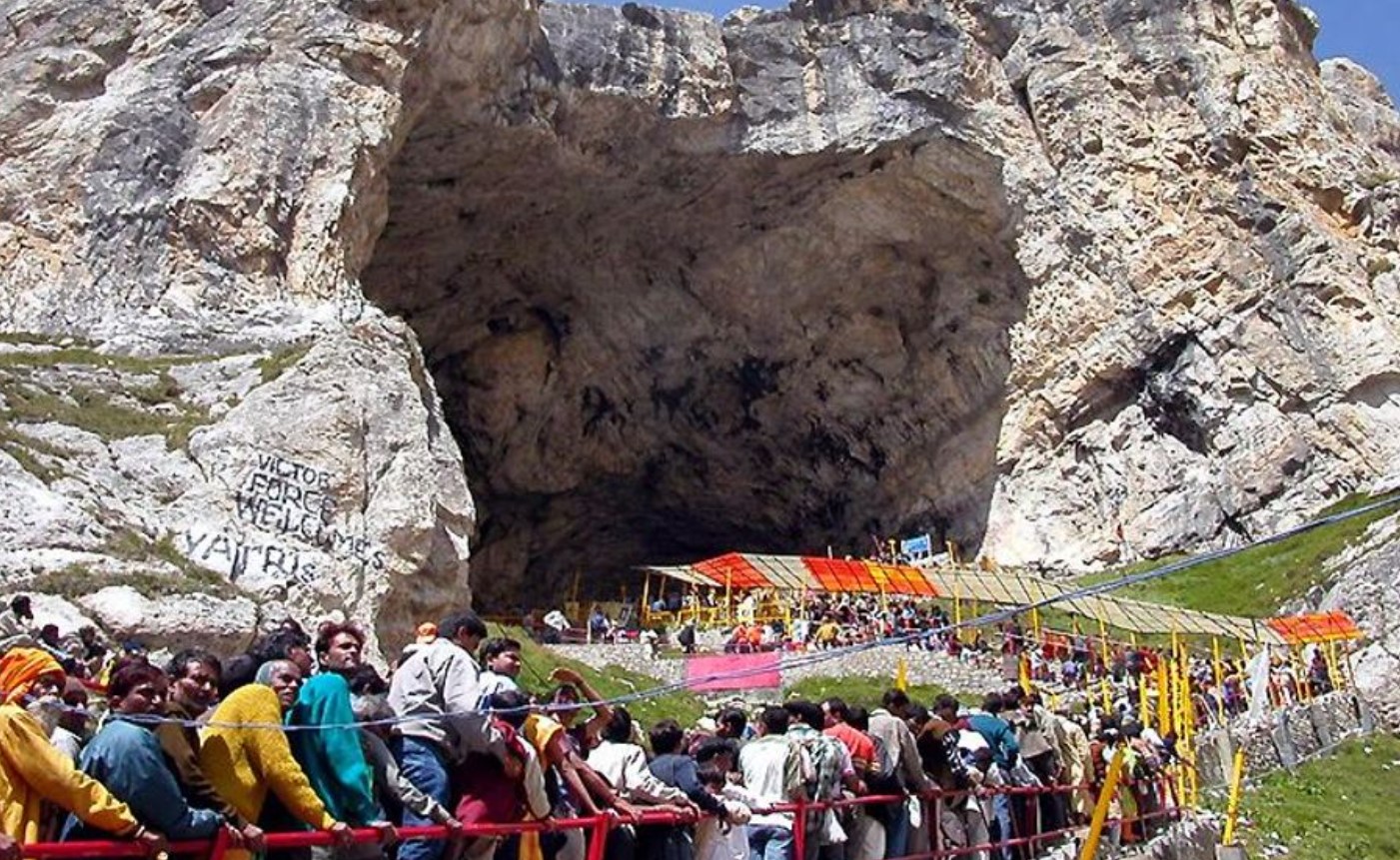
The 57-day Amarnath Yatra 2026 saw over 26,000 pilgrims visit the holy cave shrine during its first two days. Divisional Commissioner Kashmir Anshul Garg emphasized strict adherence to Supreme Court-mandated crowd limits, utilizing mandatory RFID tracking while advising unregistered travelers to follow scheduled dates to ensure safety and prevent overcrowding.
SRINAGAR — More than 26,000 pilgrims successfully performed darshan at the holy Amarnath cave shrine during the first two days of the annual Amarnath Yatra 2026, which commenced on July 3. Divisional Commissioner Kashmir, Anshul Garg, confirmed the figures on Saturday during a joint press conference in Srinagar, stating that the pilgrimage via the twin routes of Pahalgam and Baltal is progressing smoothly amid comprehensive multi-layered security and logistical arrangements.
Strict Adherence to Carrying Capacity
According to the divisional administration, authorities are strictly enforcing the daily carrying capacity mandated by the Supreme Court of India. This legal ceiling limits the maximum number of devotees permitted to undertake the trek each day to ensure safety, prevent overcrowding, and protect the fragile Himalayan ecosystem.
Divisional Commissioner Anshul Garg stated that the entire management mechanism is functioning within this judicial framework. To regulate the heavy influx, the administration is prioritizing devotees who completed their advance online registration, which originally opened on April 15. Devotees who registered beforehand are being issued Radio Frequency Identification (RFID) cards after completing mandatory Know Your Customer (KYC) verifications at designated transition camps.
Logistical Infrastructure and Safety Measures
The Shri Amarnathji Shrine Board (SASB), in coordination with local civil administration and security agencies, has deployed wide-ranging facilities along both tracking axes: the traditional 48-kilometer Pahalgam route in South Kashmir's Anantnag district and the steeper 14-kilometer Baltal route in Central Kashmir's Ganderbal district.
The deployed administrative infrastructure includes:
Accommodation & Rest Shelters: Emergency disaster-management-ready shelters placed along high-altitude tracks to mitigate weather risks.
Healthcare Facilities: Stationary medical camps equipped to treat acute mountain sickness (AMS) and respiratory complications.
Surveillance: Integrated multi-tier security cover overseen by Inspector General of Police (IGP) Kashmir, V. K. Birdi, featuring drone surveillance, RFID tracking, and continuous checking.
Challenges with Unregistered Devotees
A major operational challenge noted by the administration during the opening weekend was the arrival of a significant number of unregistered yatris. Authorities have reiterated that the Tatkal (on-the-spot) registration quota remains highly restricted and is strictly dependent on daily vacancies created when registered pilgrims fail to report on their allotted dates.
Furthermore, officials clarified that pilgrims arriving in the valley ahead of their scheduled registration dates will not be allowed to proceed early. Devotees holding registration slips for later dates, such as July 15 or beyond, are required to wait for their designated timeline.
Official Sources Section
The details and operational statistics presented in this report are based on official announcements made during a joint press conference by Divisional Commissioner Kashmir Anshul Garg and IGP Kashmir V. K. Birdi. Additional regulatory parameters and registration data have been sourced from official public directives issued by the Shri Amarnathji Shrine Board.
Quote Section
"The Supreme Court has fixed a ceiling on the number of pilgrims who can undertake the Yatra each day. Our entire mechanism is functioning within that framework to ensure safety, smooth movement, and better management of the pilgrimage. So far, 26,000 pilgrims have performed the darshan at the holy cave shrine and the pilgrimage is smoothly going from both tracks."
— Anshul Garg, Divisional Commissioner Kashmir
Why It Matters
The smooth regulation of the Amarnath Yatra 2026 holds immense administrative, economic, and security importance for Jammu and Kashmir. For the tens of thousands of traveling devotees, strict enforcement of registration dates means potential transit delays if they arrive un-scheduled. For local businesses, transport operators, and the tourism sector, the steady, regulated flow of over 400,000 projected visitors over 57 days provides a sustained economic boost while minimizing the risk of crowd disasters or weather-related strandings.
Key Facts at a Glance
Total Darshans: More than 26,000 pilgrims offered prayers within the first 48 hours of the yatra.
Duration: The annual pilgrimage lasts for 57 days, beginning July 3, 2026, and concluding on August 28, 2026.
Active Routes: Devotees are utilizing the 48-km traditional Pahalgam track and the shorter 14-km Baltal track.
Mandatory Tech: Every individual pilgrim must clear KYC checks and carry an active RFID tracking card for real-time security monitoring.
FAQ Section
Can I travel to the Amarnath cave shrine without prior online registration?
No. Undertaking the pilgrimage requires valid registration. Unregistered travelers face extensive delays as the on-the-spot Tatkal quota is highly limited and only available if registered pilgrims forfeit their slots.
What happens if I arrive in Jammu and Kashmir ahead of my scheduled registration date?
The administration has stated that pilgrims will not be allowed to trek ahead of their official allotted dates. You will be required to wait at transit camps until your registered date.
What documents are required to receive an RFID card?
Pilgrims must present their valid advance registration slip along with a Compulsory Health Certificate (CHC) issued by an authorized doctor, and complete mandatory verification.
Source: Official press briefing by the Divisional Commissioner of Kashmir; official regulatory filings and guidelines issued by the Shri Amarnathji Shrine Board.