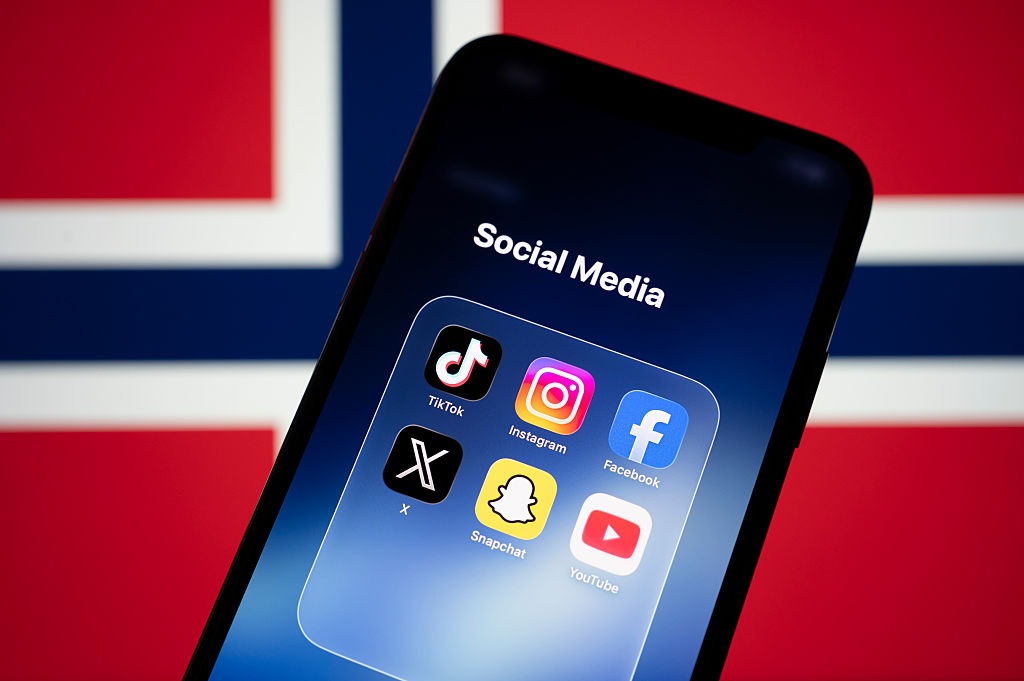
Norway has announced plans to ban social media use for children under 16, making tech companies responsible for age verification. The proposal, unveiled on April 24, 2026, aims to protect mental health, reduce screen time, and ensure children enjoy offline friendships and development. The bill will reach parliament by year-end.
Norway is set to become one of Europe’s strictest regulators of youth access to social media. The government’s proposal reflects growing global concern about the impact of algorithm-driven platforms on children’s mental health and social development. If passed, the law will prohibit children under 16 from using apps like Instagram, TikTok, Snapchat, YouTube, and X.
Government’s Rationale
Prime Minister Jonas Gahr Støre emphasized that the initiative is about ensuring “a childhood where children get to be children,” free from the dominance of algorithms and constant online engagement. The government clarified that the ban is not about limiting communication but about safeguarding mental health, encouraging offline friendships, and promoting healthier development.
Enforcement Responsibility
Digitalisation Minister Karianne Tung stated that responsibility for enforcement will rest with technology companies, not children or parents. Platforms will be required to implement robust age-verification systems to ensure compliance. The law proposes that the cutoff be tied to January 1 of the year a child turns 16, so entire school cohorts gain access at the same time.
Global And European Context
Norway’s move follows Australia’s world-first ban in December 2025, which led to 4.7 million underage accounts being removed within two months. France, Spain, and Denmark are preparing similar legislation, while Greece has announced plans to ban social media for under-15s starting in 2027. The European Commission has also introduced an age-verification app to support enforcement across member states.
Broader Implications
Norway already has national screen-time guidelines and mobile-free school recommendations, which have reduced children’s phone and social media use. The proposed ban builds on these measures, signaling a shift toward stricter digital regulation in high-freedom nations. The move highlights the tension between safeguarding children’s well-being and maintaining internet openness.
Key Highlights
- Norway plans to ban social media for children under 16
- Bill to be presented in parliament by end of 2026
- Tech companies will be responsible for age verification
- Cutoff tied to January 1 of the year a child turns 16
- Australia, France, Spain, Denmark, and Greece pursuing similar bans
- European Commission introduces age-verification app for enforcement
Sources: The Times of India, The Hindu, CNBC TV18, Global Banking & Finance Review, MSN, Bloomberg, US News, regjeringen.no