SHENZHEN — Corporate restructuring plans inside BBK Electronics’ prominent smartphone conglomerate suggest that OnePlus could be systematically scaled down from an autonomous sub-brand to a localized product line under its parent firm, OPPO. The organizational consolidation, accelerated in June 2026...
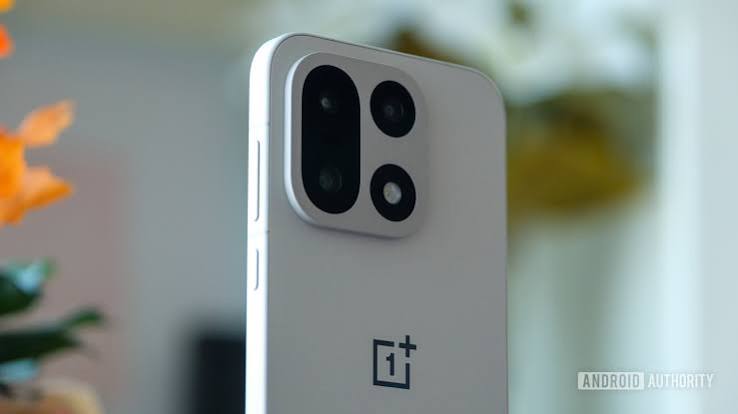
SHENZHEN — Corporate restructuring plans inside BBK Electronics’ prominent smartphone conglomerate suggest that OnePlus could be systematically scaled down from an autonomous sub-brand to a localized product line under its parent firm, OPPO. The organizational consolidation, accelerated in June 2026, involves merging backend engineering, marketing networks, and product development chains with realme into a unified "sub-product center." The move aims to mitigate rising supply chain costs by eliminating structural duplication across the brands' primary consumer categories.
Restructuring Prompts High-Level Leadership Exits
The operational pivot was highlighted by the sudden resignation of realme India Chief Executive Officer Michael Guo on June 23, 2026. According to internal corporate memos and reports compiled by industrial monitoring groups, Guo's exit coincided with an overarching corporate integration plan aimed at absorbing independent entities into centralized divisions. Chase Xu, Vice President of realme Global, has assumed operational oversight of the critical South Asian corridor.
This corporate shift mirrors earlier friction in the executive ranks; former OnePlus India Chief Executive Officer Robin Liu unexpectedly stepped down from his post in May 2026. The succession of departures strongly indicates that the parent firm, colloquially known as the OPlus Group (comprising OPPO, OnePlus, and realme), is replacing independent leadership teams with centralized operational matrices reporting directly to OPPO’s primary design and executive boards.
Convergence of Product Development and Hardware Lines
Under the architectural strategy outlined by industry analysts and supply-chain leaks on Weibo, the unified business units will operate directly under the guidance of OPPO Chief Product Officer Pete Lau (Liu Zuohu). The primary long-term mandate of this integrated center is the "reuse of product lines"—a euphemism for extreme hardware platform sharing.
Historically, OnePlus enjoyed total autonomy over product selection, custom display matrices, and dedicated hardware components like the Hasselblad camera tuning partnerships. The new model, however, is projected to restrict the company's product cycle to a narrower selection of online-exclusive models built entirely upon shared OPPO manufacturing chassis.
Furthermore, realme's dedicated research divisions, particularly imaging and hardware development, are being fully re-absorbed into standard OPPO laboratories to eliminate overlapping corporate expenditure.
Market Footprint and Consumer Consequences
The strategic shift is already changing how the enthusiast brand interacts with global smartphone users and technology investors:
Geographic Contraction: Industry monitoring indicates that OnePlus is actively narrowing its active global footprint. While the brand remains prominent in India and mainland China, operations across European territories have been downscaled following mass departures of regional public relations teams.
Retail Visibility: In North America and various global regions, physical product visibility has dropped. Notably, major technology retailers like Best Buy have removed display units for older flagships like the OnePlus 15 and 15R from physical shelves.
Loss of Brand Identity: Market analysis by technology research firms highlights that the brand has seen its "flagship killer" identity dilute. Ever since its initial backend integration with OPPO, consumer perception has shifted as premium imaging innovations and flagship displays are increasingly reserved for OPPO's top-tier Find X lineup.
Official Sources Section
The underlying restructuring directives, operational fusions, and leadership shifts have been outlined through internal company documentation reported by financial monitoring networks, including TechNode and The Economic Times, alongside public corporate announcements regarding executive transitions.
Quote Section
"According to officials familiar with the matter, the consolidation has already triggered workforce rationalisation across marketing, sales, service, and administrative teams to optimize resources amid high material costs."
"OPPO's long-term objective is to manage OPPO, OnePlus, and realme under a single operating structure while maintaining distinct product identities, though realme is expected to gradually function more like a product series," independent industrial investigators stated.
Why It Matters
This corporate shift serves as an important case study in how rising manufacturing costs and global economic pressures force corporate consolidation. For consumers, the erosion of OnePlus' structural autonomy means less choice in the premium smartphone market, highlighting a trend where unique software layers and distinct hardware choices are replaced by mass-produced, shared corporate baselines.
Key Facts at a Glance
The Shift: Plans indicate that OnePlus may be integrated directly into OPPO's portfolio as a dependent product line rather than an autonomous entity.
Executive Impact: The strategy has driven the resignations of realme India CEO Michael Guo and OnePlus India CEO Robin Liu.
Resource Unification: A newly engineered "sub-product center" will blend marketing, procurement, and after-sales services across OPPO, OnePlus, and realme.
Hardware Re-use: The integration emphasizes shared hardware platforms and development cycles under the direction of Pete Lau.
FAQ Section
Is OnePlus shutting down its operations globally? No, official sources do not indicate an immediate shutdown. Instead, the brand is undergoing internal restructuring to share backend, supply chain, and marketing operations with OPPO and realme.
Will my OnePlus phone stop receiving software updates? No. Software ecosystems and customer warranties will remain active, though the fundamental source code for OxygenOS is expected to move closer to a unified baseline with OPPO’s ColorOS.
Why is OPPO consolidating these distinct smartphone brands? The restructuring is driven by the need to lower operating costs, eliminate overlapping jobs, and maximize efficiency by sharing manufacturing pipelines and R&D resources across all three sub-brands.
Source: TechNode, The Economic Times, Android Authority