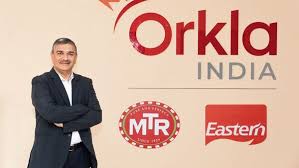
Orkla India is overhaulings Eastern Condiments’ sales and distribution framework nearly five years post-acquisition. The strategic revamp, aimed at pivoting toward modern trade, quick commerce, and premium convenience foods, marks a major transition from the brand’s traditional, deeply localized retail distribution network in Kerala to a high-efficiency pan-Indian model.
BENGALURU — Orkla India, the parent entity behind MTR Foods, has initiated a comprehensive restructuring of the traditional sales and distribution network of Eastern Condiments. Coming nearly five years after the Norwegian consumer goods giant first acquired a controlling stake in the southern Indian spices company, this strategic shift aims to align the legacy brand with modern consumer purchasing habits. The company plans to pivot its focus away from traditional localized retail networks toward modern trade platforms, corporate retail chains, and rapidly expanding quick commerce channels.
The decision to transition Eastern's sales model comes as large packaged food enterprises in India recalibrate their operations to meet the demand for fast, digitized delivery systems. Analysts note that integrating deeply embedded regional brands into unified corporate distribution frameworks often presents logistical hurdles, requiring a delicate balance between preserving local market depth and scaling via tech-enabled retail platforms.
Moving Beyond a Deeply Localized Legacy
Established in 1983, Eastern Condiments built its market dominance using a unique direct-to-retail distribution method, directly covering over 50,000 retail outlets in Kerala alone. While this highly specialized framework protected its regional market share, it restricted the brand’s scalability outside its home territory.
Orkla India first entered the picture in 2021 when its subsidiary MTR Foods acquired a 67.82% stake in Eastern Condiments for approximately ₹1,356 crore, valuing the entity at ₹2,000 crore. After completing a full corporate merger that elevated Orkla's holding to 90.01% with the founding Meeran family retaining 9.99% the company spent several years carefully examining the localized operational mechanics before altering Eastern's sales model.
The structural overhaul is aimed at transforming the brand from a pure regional spice manufacturer into a diversified, pan-Indian convenience food player. By shifting Eastern's sales model, Orkla India plans to utilize modern trade hierarchies and digital supply networks to expand the brand's reach into secondary urban centers across neighboring states.
Adapting to the Quick Commerce Revolution
A core reason behind changing Eastern's sales model is the exponential rise of quick commerce platforms in India's major metropolitan areas. Traditional direct-to-retail models lack the rapid processing and high-volume dispatch capabilities needed to support instantaneous delivery applications.
By re-engineering Eastern's sales model to work seamlessly with modern distributors, Orkla India ensures that its blended masalas, single spices, and ready-to-cook portfolios are positioned prominently on digital storefronts. This transition allows the brand to capture urban micro-markets and younger consumer demographics who prioritize digital convenience over local mom-and-pop grocery stores (Kiranas).
Market Impact and Industry Implications
The reorganization carries substantial implications across multiple sectors of the fast-moving consumer goods (FMCG) ecosystem:
For Retailers and Distributors: Traditional standalone distributors in Kerala may see localized route adjustments as Orkla consolidates its supply chains under unified hubs.
For Investors: Institutional investors view this modernization as a vital step ahead of Orkla India's corporate growth milestones, signaling strong asset optimization and post-merger synergy execution.
For Consumers: Shoppers outside Kerala will gain smoother, more consistent access to Eastern's specialized non-vegetarian and blended spice offerings through mainstream supermarkets and e-commerce portals.
Official Sources Section
The corporate updates and financial milestones detailed in this report are sourced from formal communications released by the respective entities:
Audited financial and transaction releases published via the Orkla Corporate Archive.
Strategic corporate distribution portfolios managed directly by Orkla India.
Market analysis and investment updates tracking packaged food transitions under the Ministry of Corporate Affairs regulations.
Quote Section
"When we acquired Eastern, we secured the culture and secured the people first. We did not understand Kerala, we did not understand Eastern's sales system, and if we had gone in and changed it on day one, it would have been a disaster."
— Sanjay Sharma, Chief Executive Officer of Orkla India
Why It Matters
Altering Eastern's sales model reflects a broader operational shift sweeping across the multi-billion dollar Indian packaged foods sector. As consumer behavior shifts from unbranded open-market commodities to premium packaged choices, legacy consumer goods giants must update their local supply chains. For Orkla India, transforming this localized distribution structure into an agile, tech-driven network is essential to scaling its market footprint and unlocking the true financial synergies of its ₹1,356 crore investment.
Key Facts at a Glance
Acquisition Value: Orkla initially secured its stake in Eastern Condiments in 2021 for ₹1,356 crore, valuing the business at ₹2,000 crore.
Current Ownership Structure: Following a successful merger, Orkla holds a dominant 90.01% stake, while the founding Meeran family retains 9.99%.
Market Position: Eastern Condiments commands a 41.8% share of Kerala's packaged spices market, alongside strong footholds in Karnataka, Andhra Pradesh, and Telangana.
Strategic Reorientation: The new sales framework shifts focus from a localized direct-to-retail model toward modern trade networks and high-growth quick commerce apps.
FAQ Section
Q1: What was unique about Eastern's original sales model? A1: Eastern utilized an agile direct-to-retail operation, supplying over 50,000 individual outlets directly in Kerala, which ensured product freshness but limited broad out-of-state scalability.
Q2: Why did Orkla India wait five years to change the distribution strategy? A2: Management chose to preserve the regional business culture and thoroughly understand the local retail ecosystem first, preventing any operational disruptions right after the merger.
Q3: Will the Eastern brand name change after this restructure? A3: No. While back-end logistics, supply networks, and sales channels are being integrated, the consumer-facing Eastern brand identity will remain fully independent alongside MTR Foods.
Source: Orkla Corporate Press, Orkla India Brand Portfolio