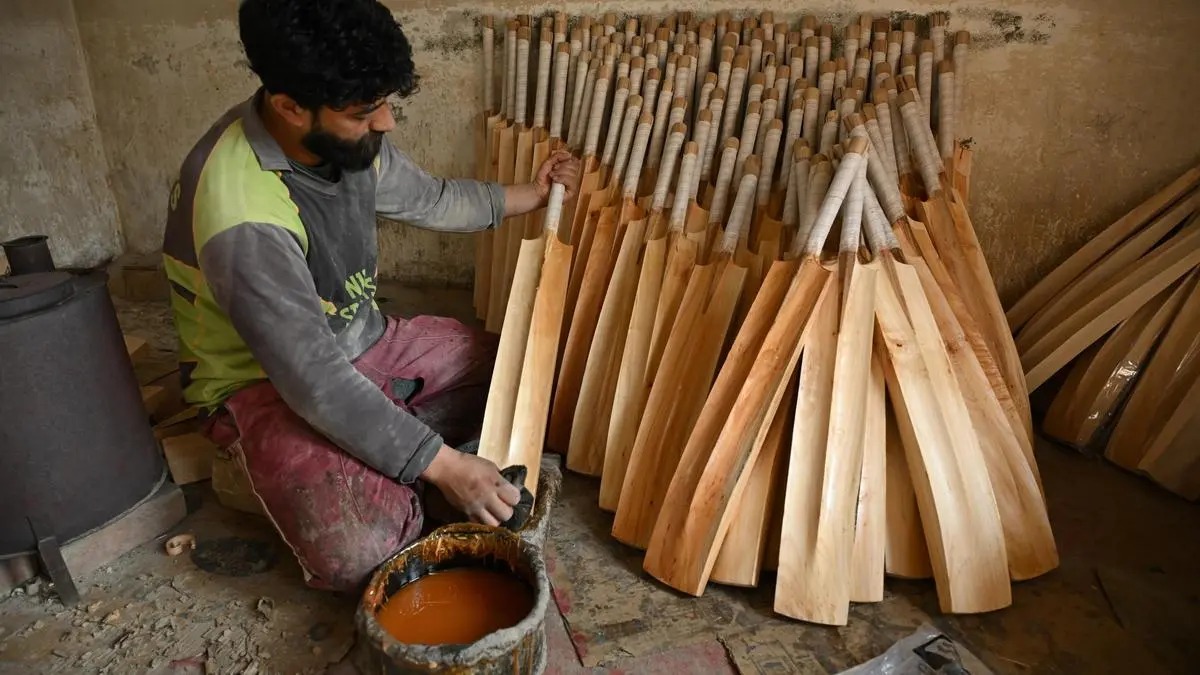
Kashmir's ₹700-crore cricket bat industry is facing a severe raw material crisis due to environmental restrictions and shrinking willow tree populations. With 1.5 lakh livelihoods at stake, state authorities and manufacturers are actively seeking sustainable plantation frameworks and policy interventions to protect the sector.
Jammu and Kashmir's vital cricket bat manufacturing sector faces severe operational hurdles due to an escalating raw material shortage and environmental restrictions.
SRINAGAR — Jammu and Kashmir’s historic ₹700-crore cricket bat manufacturing sector is facing an unprecedented structural crisis. Centered primarily around the industrial hubs of Sangam in South Kashmir, the traditional craft supports nearly 1.5 lakh artisans, laborers, and transport workers. However, a severe scarcity of quality Kashmir willow (Salix alba), tightening environmental regulations, and judicial restrictions on tree harvesting near wetlands have left manufacturers struggling to secure a sustainable supply of raw clefts.
Environmental Regulations and Raw Material Scarcity
According to industry representatives and government briefings, the crisis has been significantly compounded by restrictions on willow plantations around ecological zones such as Wular Lake. Judicial directives aimed at wetland conservation and flood-mitigation efforts have led to the systematic removal of thousands of mature willow trees without corresponding replanting initiatives.
Furthermore, manufacturers note that skyrocketing global demand for Kashmir willow bats—spurred by international recognition and a growing network of cricket-playing nations—has severely outpaced local timber regeneration. With raw material procurement constrained, local production units are operating well below maximum capacity, threatening the economic stability of a sector that ranks directly behind tourism and agriculture in the region.
Official Sources and Administrative Interventions
Information regarding the ongoing crisis and administrative remediation efforts was outlined following high-level discussions between state authorities and trade bodies.
Chief Minister Omar Abdullah addressed the concerns of the Bat Manufacturers Association, acknowledging that securing an uninterrupted supply of raw material is critical to keeping the sector viable.
"The Bat Manufacturers Association met me... and their biggest concern was that the supply of raw material should continue," Chief Minister Omar Abdullah stated. "Since the court has directed that no new willow trees be planted around Wular, trees are being cut but not replaced. We have taken some decisions on that."
Additionally, the state administration is reviewing infrastructure bottlenecks, including proposals to revive dormant common-facilitation centers and establish immediate medical dispensary facilities for factory workers.
Why It Matters
The survival of Kashmir's willow bat industry carries vast economic and social implications. Beyond preserving a centuries-old artisanal heritage, the sector provides foundational employment for thousands of local families and migrant laborers from across India. A prolonged shortage of timber risks driving up production costs, restricting access to affordable professional-grade equipment for junior and domestic cricketers, and permanently damaging regional export capabilities.
Key Facts at a Glance
Industry Valuation: Approximately ₹700 crore
Employment Impact: Supports roughly 1.5 lakh workers, artisans, and laborers
Core Challenge: Acute shortage of Kashmir willow timber driven by wetland conservation curbs and environmental policies
Key Stakeholders: Cricket Bat Manufacturers Association of Kashmir and the Jammu and Kashmir Government
Frequently Asked Questions
Why is Kashmir's cricket bat industry facing a crisis?
The industry is grappling with a severe shortage of quality Kashmir willow timber caused by environmental regulations, wetland clearing, and restrictions on new plantations.
How many people depend on the bat manufacturing sector?
An estimated 1.5 lakh people rely directly or indirectly on the industry for their livelihoods.
What steps is the government taking to address the shortage?
State authorities are reviewing policy frameworks to balance wetland conservation with sustainable willow cultivation, alongside upgrading local industrial infrastructure.
Why is Kashmir willow preferred in cricket?
Kashmir willow offers high durability and performance at a more accessible price point compared to imported English willow, making it a staple for professional and developmental cricket.
Source: