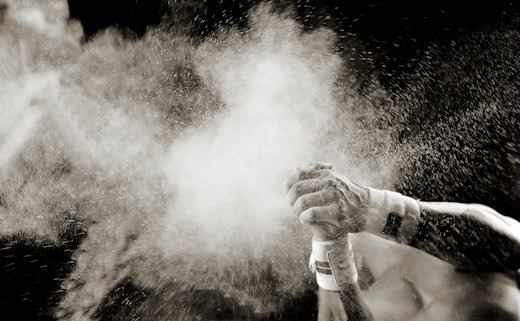
Gym chalk, used by weightlifters, gymnasts, and climbers, is chemically composed of magnesium carbonate. Unlike slippery classroom chalk, this powder rapidly absorbs sweat and skin oils. By increasing static friction between the hands and equipment, it prevents dangerous slips, improves safety, and maximizes grip performance during heavy lifts.
Walk into any competitive weightlifting arena, cross-training facility, or rock-climbing gym, and you will observe a familiar ritual: athletes rubbing a fine, white dust into their palms before handling heavy loads. Frequently referred to as gym chalk or lifting chalk, this substance is a critical component in strength sports and physical conditioning. Far from being a cosmetic accessory, it serves a precise physiological and mechanical purpose designed to maximize safety and optimize performance under load.
The Chemical Composition: What is Gym Chalk?
According to athletic equipment manufacturers and material safety data, gym chalk is chemically formulated as magnesium carbonate ($MgCO_3$). It is distinct from traditional classroom chalk, which is typically composed of calcium carbonate.
Unlike calcium carbonate or talcum powder—which can become slippery or slimy when mixed with moisture—magnesium carbonate acts as a powerful drying agent. Its primary function is to rapidly absorb sweat and skin oils from the palms and fingers, creating a dry barrier that maximizes static friction between the athlete's skin and the steel surface of a barbell or pull-up bar.
Why Athletes Rely on Magnesium Carbonate
According to sports scientists and coaching professionals, maintaining a secure grip is often the primary limiting factor in heavy compound movements such as deadlifts, clean and catches, and heavy rows.
When sweat accumulates on the skin, the coefficient of friction drops sharply, increasing the risk that a heavy bar might slip. By absorbing moisture and increasing surface texture friction, gym chalk allows athletes to maintain a firm hold without prematurely fatiguing their forearm flexors or compromising structural alignment.
Official Sources and Industry Standards
Information regarding the implementation of lifting aids is widely documented across athletic governing bodies, including the International Weightlifting Federation (IWF) and international gymnastics federations, which permit the use of magnesium carbonate during official competition to ensure athlete safety.
Organizers stated that the provision of chalk stations is a standard requirement for training halls and competition platforms to prevent injuries caused by grip failure during maximal lifts.
Why It Matters
For competitive athletes, recreational weightlifters, and fitness enthusiasts, proper grip management directly impacts training safety and progression. Preventing accidental slips protects lifters from acute muscle strains, dropped equipment, and soft-tissue injuries, enabling safer execution of high-intensity training regimens.
Key Facts at a Glance
Substance: Magnesium carbonate ($MgCO_3$)
Primary Function: Absorbs sweat and increases surface friction to prevent slipping
Common Applications: Weightlifting, powerlifting, gymnastics, rock climbing, and pole sports
Available Forms: Loose powder, compressed blocks, liquid chalk (mixed with rubbing alcohol), and chalk balls
Frequently Asked Questions
Is gym chalk the same as blackboard chalk?
No. Classroom chalk is made of calcium carbonate, which lacks sweat-absorbing properties and can become slick when wet, whereas gym chalk is pure magnesium carbonate.
Why do some gyms ban powdered chalk?
Loose powder can create significant airborne dust and leave residues on equipment and flooring, leading many commercial facilities to require liquid chalk or enclosed chalk balls instead.
How does liquid chalk work?
Liquid chalk is magnesium carbonate suspended in isopropyl alcohol. Once applied to the hands, the alcohol rapidly evaporates, leaving behind an even layer of dry chalk with minimal airborne mess.
Can gym chalk damage skin?
Because its primary purpose is to strip moisture, frequent and heavy use can dry out the skin, making regular hand washing and moisturizing recommended post-training.
Source: