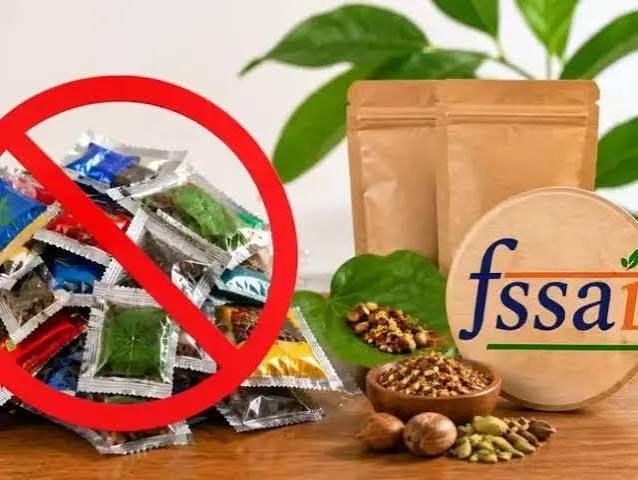
India's food safety regulator, the Food Safety and Standards Authority of India (FSSAI), has barred plastic, aluminium foil, and synthetic laminates in pan masala packaging. Under the Food Safety and Standards (Packaging) Amendment Regulations, 2026, manufacturers must transition exclusively to 100% plastic-free paper, paperboard, cellulose, tin, or glass containers.
NEW DELHI — In a major regulatory intervention, the Food Safety and Standards Authority of India (FSSAI) has officially banned the use of plastic, plastic laminates, aluminium foil, and metallised layers in pan masala packaging across the country. Released under the Food Safety and Standards (Packaging) Amendment Regulations, 2026, the newly notified rules require all pan masala manufacturers to restrict their packaging formats strictly to plastic-free paper, paperboard, cellulose, or traditional rigid containers like tin and glass. Published in the Gazette of India Extraordinary, the binding directive takes immediate effect from its publication date, setting in motion a sweeping supply chain transition for India's estimated ₹48,456 crore pan masala sector.
Strict Material Specifications under Food Safety Amendment Regulations 2026
The notification, issued under powers granted by Section 92(2)(k) of the Food Safety and Standards Act, 2006, with prior approval from the Central Government, formally inserts a new entry—Item 11—into Schedule IV of the Food Safety and Standards (Packaging) Regulations, 2018.
According to the official regulatory release, the pan masala plastic packaging ban explicitly prohibits synthetic polymers and multilayer materials that have historically dominated flexible sachet production. Prohibited materials include:
Under the updated framework, manufacturers opting for paper or cellulose-based options must ensure these materials are completely free from internal plastic coatings or metallised barrier layers. Hybrid sachets that feature a paper outer shell lined with hidden plastic or foil layers will be treated as non-compliant. Alternatively, rigid packaging solutions such as tin cans and glass jars remain permitted options.
Alignment with Plastic Waste Management Rules 2016
The new regulation aligns food safety standards directly with environmental law. FSSAI specified that pan masala packaging must strictly adhere to clauses (f) and (i) of Rule 4(1) under the Plastic Waste Management Rules, 2016, which were framed under the Environment (Protection) Act, 1986.
While environmental laws had previously placed restrictions on plastic sachets for tobacco and gutkha, multi-layer plastic (MLP) sachets for pan masala continued to circulate widely due to regulatory gaps between environmental enforcement and food safety schedules. By amending Schedule IV of the 2018 packaging regulations, FSSAI closes this compliance loop, ensuring unified statutory enforcement across both food safety inspectors and municipal environmental authorities.
Commercial and Industry Impact on FMCG Operations
The enforcement of the pan masala plastic packaging ban introduces operational and logistical adjustments for fast-moving consumer goods (FMCG) brand owners, converters, and packaging vendors. Flexible multilayer plastic sachets have long been favored by manufacturers due to high-speed sealing capabilities, extended shelf-life moisture barrier protection, and low production costs.
Replacing plastic laminates with 100% plastic-free paperboard, cellulose, or tin requires retooling filling machinery, adjusting moisture-barrier coatings, and altering distributor transport practices. Market analysts note that while premium product lines already utilize tin or glass containers, mass-market low-unit-cost sachets will experience the most substantial restructuring as suppliers pivot toward certified compostable or bio-derived paper substrates.
Consumers can expect to see gradual changes on retail shelves as older inventory clears and compliant paper or tin packaging formats take over. Importantly, officials clarified that the amendment regulates packaging materials only and does not impose a ban on the sale or manufacturing of pan masala itself.
Official Sources Section
According to official press releases and regulatory documentation, the rule changes were finalized following a comprehensive public consultation process:
Draft Notification: Issued on April 28, 2026, inviting public objections and stakeholder feedback for 60 days.
Final Gazette Notification: Approved by the Union Ministry of Health and Family Welfare, dated August 7, 2026, and officially published in the Gazette of India Extraordinary on August 10, 2026.
Enforcement: Issued under Section 92 of the Food Safety and Standards Act, 2006.
Quote Section
"According to officials from the food safety authority, the primary objective of amending Schedule IV of the Packaging Regulations is to eliminate non-biodegradable synthetic laminates and metallic foils from food-grade supply chains, bringing packaging norms into complete harmony with national plastic waste abatement directives."
Why It Matters
The pan masala plastic packaging ban represents a decisive step in reducing single-use plastic waste across urban and rural landscapes. Because pan masala sachets are produced and consumed in massive daily volumes, discarded plastic and metallised wrappers frequently choke drainage systems and linger in landfills for decades. Mandating paper, cellulose, tin, or glass forces one of India's largest FMCG volume categories to adopt sustainable packaging models, accelerating broader industry shifts toward eco-friendly materials.
Key Facts at a Glance
Prohibited Materials: Polyethylene, polypropylene, PET, PVC, synthetic laminates, aluminium foil, and metallised layers.
Permitted Alternatives: 100% plastic-free paper, paperboard, cellulose, naturally derived materials, tin cans, and glass containers.
Regulatory Authority: Food Safety and Standards Authority of India (FSSAI) under the Ministry of Health and Family Welfare.
Statutory Basis: Food Safety and Standards (Packaging) Amendment Regulations, 2026, amending Schedule IV of the 2018 regulations.
Effective Date: Immediately applicable from the date of publication in the Official Gazette.
FAQ Section
What materials are banned under the new FSSAI pan masala packaging rules?
All synthetic plastics including polyethylene, polypropylene, polyester (PET), PVC, plastic laminates, aluminium foils, and metallised layers are completely banned from pan masala packaging.
Can pan masala still be sold in paper sachets?
Yes, pan masala can be sold in paper, paperboard, or cellulose-based sachets, provided the material is 100% free of plastic coatings, synthetic polymer layers, or metallised linings.
Is pan masala itself banned under this regulation?
No. The FSSAI directive solely regulates the packaging materials used for pan masala and does not ban the product's manufacture or sale.
Are tin and glass containers still allowed for pan masala?
Yes, traditional rigid packaging formats such as tin containers and glass jars remain officially permitted options under the amended regulations.
Source: Official regulatory announcements published by the Food Safety and Standards Authority of India (FSSAI), notifications in the Gazette of India, and statutory releases from the Ministry of Health and Family Welfare.