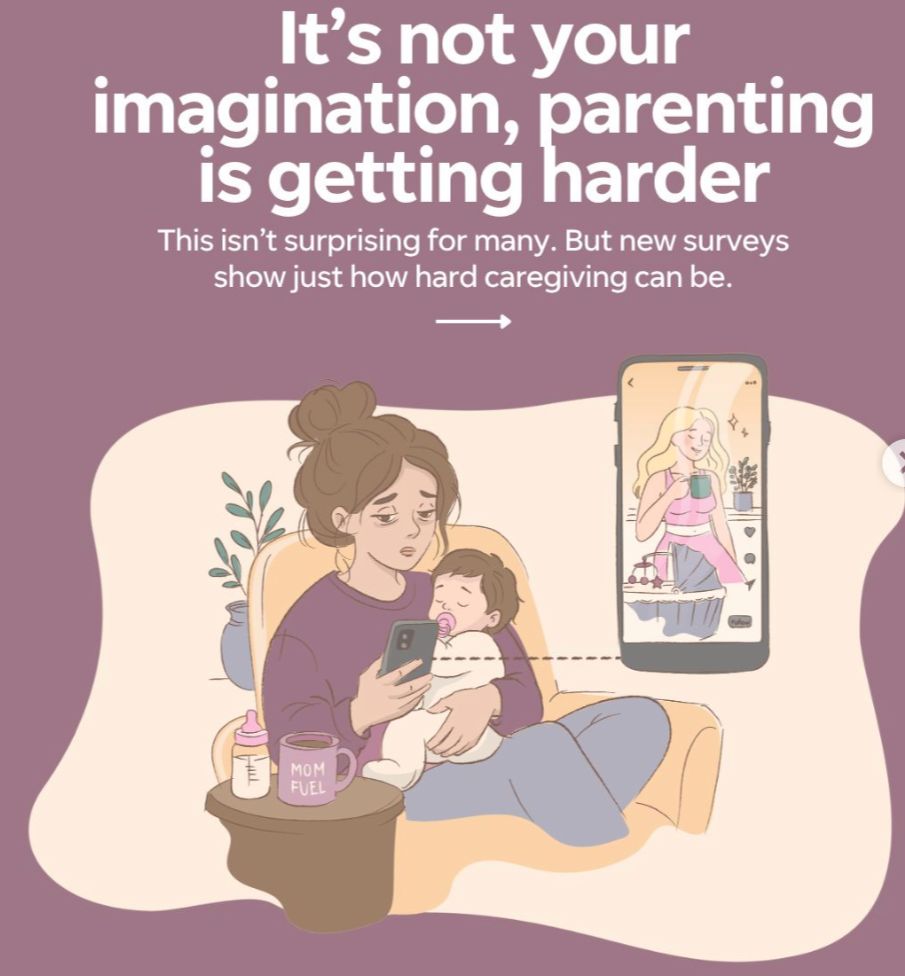
The U.S. Surgeon General has issued a landmark health advisory declaring parental stress an urgent public health crisis. Driven by a 26% spike in child care costs, longer work hours, and digital safety anxieties, nearly half of all parents report overwhelming daily stress, directly threatening child development and societal stability.
WASHINGTON, D.C. — Raising children in the modern era has become a severe threat to public health. The Office of the Surgeon General officially issued an unprecedented advisory warning that contemporary societal, economic, and technological demands have intensified parental stress to alarming thresholds. The federal declaration confirms that the rising difficulties of parenting are not imaginary, but are instead fueled by structural failures in child care, workplace flexibility, and digital safety.
High Stress Declared a Public Health Challenge
According to the 2024 advisory titled “Parents Under Pressure: The U.S. Surgeon General’s Advisory on the Mental Health and Well-Being of Parents,” federal health authorities are treating the psychological strain on caregivers with the same urgency as smoking cessation or epidemic control. Data indicates that the 63 million parents residing with children under 18 in the United States suffer from disproportionate levels of mental exhaustion.
A baseline assessment from the American Psychological Association (APA) revealed that 33% of parents reported high levels of stress in the past month, compared to 20% of other adults. Crucially, 48% of parents reported that their stress is completely overwhelming on most days, nearly doubling the 26% benchmark reported by adults without children.
Structural Shift: Work, Wealth, and Web Woes
The main body of evidence compiled by federal researchers attributes the escalation of parenting difficulties to a combination of compounding modern stressors:
Expanded Work Demands: Between 1985 and 2022, weekly work hours increased by 28% for mothers and 4% for fathers, severely cutting into sleep, parental leisure, and partner time.
The Child Care Deficit: Over the last decade, child care prices grew by approximately 26% across the United States, placing a massive financial burden on households.
Digital Isolation & Social Media: Approximately 70% of parents state that parenting is significantly more difficult than it was 20 years ago, citing children's use of technology and social media as the premier challenges.
The Loneliness Epidemic: Data from health insurer Cigna found that 65% of parents suffer from chronic isolation—a full 10 percentage points higher than non-parents.
The Downstream Impact on Children
Medical researchers emphasize that parental stress is not isolated to adults; it directly dictates the biological and developmental trajectories of children. The Centers for Disease Control and Prevention (CDC) note that exposure to chronic parental anxiety raises a child's risk of physical injury, chronic disease, and developmental issues.
Furthermore, empirical studies cited in the report confirm that when parents struggle with unmanaged mental health conditions, their children are four times more likely to exhibit physical health complications and twice as likely to develop mental or behavioral disorders.
Official Sources Section
The findings, data sets, and policy mandates presented in this report originate directly from official government releases, federal public health notices, and institutional psychiatric registries.
"The work of parenting is essential not only for the health of children but also for the health of society. The stresses parents and caregivers have today are being passed to children in direct and indirect ways, impacting families and communities across America."
— Dr. Vivek Murthy, U.S. Surgeon General
Why It Matters
The formalization of parental stress as a public health issue means that the struggles of everyday families are no longer viewed as personal failures, but as systemic economic deficits. For businesses, this requires a restructuring of workplace culture, emphasizing predictable scheduling and manager training regarding work-life harmony. For consumers and citizens, it signals an upcoming legislative push toward expanded child tax credits, paid family leave, and subsidized early child care infrastructure.
Key Facts at a Glance
48% of Parents report facing completely overwhelming stress on most days, compared to 26% of non-parents.
Child Care Costs surged by 26% over the last decade, forcing 25% of parents into financial instability to cover basic needs.
65% of Caregivers suffer from chronic loneliness, heavily exacerbated by an online "culture of comparison."
Work Hours Rose by 28% for mothers and 4% for fathers over a 37-year tracking window, eliminating personal rest.
FAQ Section
Is modern parenting actually harder, or does it just seem that way?
It is measurably harder. Data shows parents face longer work hours, a 26% increase in child care costs over ten years, and unprecedented digital safety anxieties surrounding social media that did not exist for previous generations.
How does parental stress affect children long-term?
Chronic stress alters the home environment. The CDC notes that children of chronically stressed parents face a fourfold increase in physical health risks and are twice as likely to develop emotional, behavioral, or mental health disorders.
What solutions does the government propose?
The U.S. Surgeon General is calling for policy changes including an expanded Child Tax Credit, federally supported affordable child care programs, universal paid family leave, and mandatory annual mental health screenings for parents within healthcare systems.
What can employers do to mitigate this crisis?
Employers are urged to establish predictable work schedules, implement management training geared toward work-life harmony, and provide robust, affordable access to mental health services for employees with dependents.
Sources: U.S. Department of Health and Human Services (HHS), National Institutes of Health (NIH) / NCBI Bookshelf, Centers for Disease Control and Prevention (CDC)