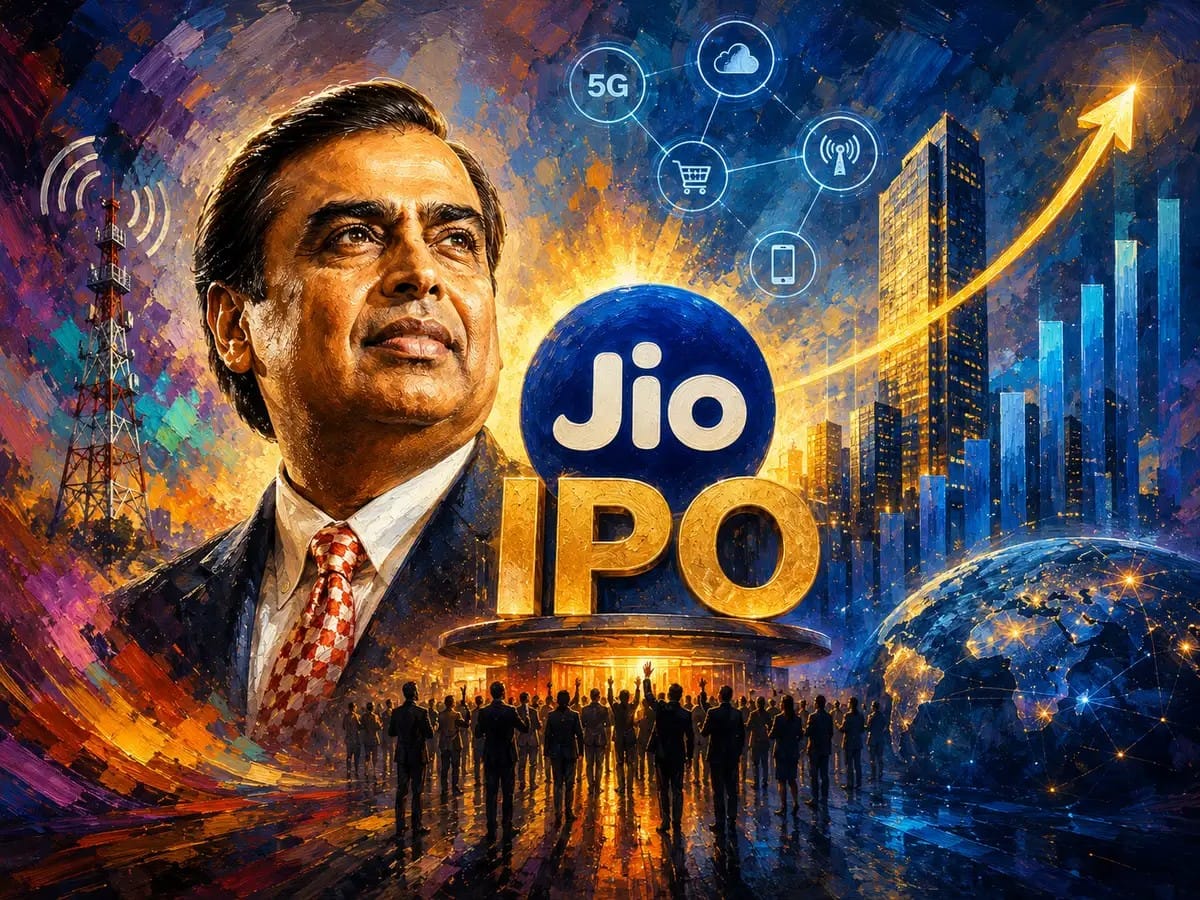
Reliance's narrative framing Jio Platforms as a global technology titan ahead of its IPO faces sharp market skepticism. While the company highlights extensive patent portfolios and AI capabilities to justify a $140 billion valuation, analysts caution that the true commercial value of its intellectual property remains unproven.
New Delhi - As Reliance Industries accelerates preparations for a landmark initial public offering for Jio Platforms, a core narrative advanced by billionaire Mukesh Ambani is encountering critical pushback from market analysts. Rather than presenting the enterprise as a traditional telecommunications utility collecting routine monthly fees, corporate disclosures and promotional roadshows have increasingly marketed the digital infrastructure giant as a high-margin global technology titan. However, financial researchers and patent experts caution that the commercial viability of Jio’s intellectual property and its justification for a projected valuation between $120 billion and $140 billion remain unproven ahead of the upcoming listing window.
Scrutiny Over Proprietary Intellectual Property
Central to the tech-titan positioning is Jio's extensive portfolio of patent filings, which spans thousands of submissions covering 5G network architecture, cloud automation, and artificial intelligence integration. According to draft red herring prospectuses and regulatory filings reviewed by market watchers, the firm highlights thousands of active applications filed both domestically and internationally.
Independent patent practitioners, however, have raised red flags regarding the underlying commercial weight of these assets. Analysis of public patent registries indicates that an overwhelming majority of these filings remain pending, with a substantial percentage submitted over only the past four years. Furthermore, industry observers note that possessing legal patent filings does not automatically translate into lucrative global licensing streams, particularly when entrenched equipment vendors such as Ericsson, Nokia, and Samsung maintain dominant market shares supported by multi-billion-dollar annual research and development budgets.
Valuation Benchmarks and Financial Realities
The debate over corporate positioning directly impacts how institutional investors evaluate the proposed equity pricing. While financial metrics show a robust digital ecosystem servicing over 500 million subscribers and generating substantial post-tax profits, skeptics argue that a valuation nearing $140 billion demands earnings multiples that outpace regional competitors like Bharti Airtel.
"According to officials, the upcoming public issue aims to optimize capital structures and provide liquidity for major early-stage backers, even as market participants weigh long-term monetization paths for unproven technology exports," institutional advisors noted.
The primary objective of the public offering involves raising substantial capital primarily targeted at clearing subsidiary-level debt, leaving analysts questioning how the enterprise will sustain a premium technology valuation once balance-sheet cleanup concludes.
Market Impact and Investor Considerations
The friction surrounding the tech-titan narrative introduces distinct variables for various market participants:
For Institutional Investors: Portfolio managers must determine whether to price Jio as a traditional telecom cash-cow or a high-growth software innovator.
For Retail Shareholders: Heightened media attention requires careful scrutiny of underlying financials rather than relying solely on high-level promotional growth stories.
For Competing Telecom Operators: The ongoing debate highlights the structural limits of exporting domestic cost-innovation models to saturated foreign markets.
Official Sources Section
Evaluations of the company's financial health, patent disclosures, and capital allocation frameworks are drawn from regulatory filings submitted to the Securities and Exchange Board of India (SEBI), corporate updates from Reliance Industries Limited, and market research notes published by the World Gold Council and financial analysts.
"According to officials, corporate disclosures emphasize full-stack proprietary technologies and international licensing capabilities as foundational pillars for future revenue expansion," company regulatory documents stated.
Why It Matters
As India’s capital markets prepare for one of the largest public offerings in corporate history, the accuracy of corporate narratives dictates how public savings are allocated. If premium valuations are assigned based on unproven technology ambitions rather than concrete software export revenues, public investors risk paying an inflated price for standard telecom fundamentals disguised as deep-tech innovation.
Key Facts at a Glance
Proposed Offering: Jio Platforms targets a multi-billion-dollar initial public offering following regulatory clearances.
Valuation Target: Market projections estimate an implied equity valuation between $120 billion and $140 billion.
Primary Use of Proceeds: A significant portion of fresh issue capital is earmarked for debt prepayment at subsidiary entities like Reliance Jio Infocomm.
Core Point of Contention: Skeptics question the immediate commercial royalty value of Jio's thousands of pending patent applications.
FAQ Section
Why are analysts questioning Jio’s tech-titan IPO narrative?
Analysts point out that despite heavy emphasis on proprietary patents and AI systems, the vast majority of filings are pending, and their ability to generate independent international licensing revenue remains unproven.
What is the anticipated valuation range for Jio Platforms?
Market estimates and institutional expectations place the target valuation between $120 billion and $140 billion.
How does Jio intend to utilize the capital raised from the IPO?
Regulatory filings indicate that the primary objective is to prepay or service outstanding debt obligations within its core telecom subsidiary to optimize the balance sheet.
Do international co-investors retain their stakes ahead of the listing?
Yes, marquee strategic backers like Meta Platforms and Alphabet maintain their investments as the company transitions toward its public exchange debut.
Source: Securities and Exchange Board of India (SEBI) filings, Reliance Industries Limited corporate disclosures, and analyst market evaluations.