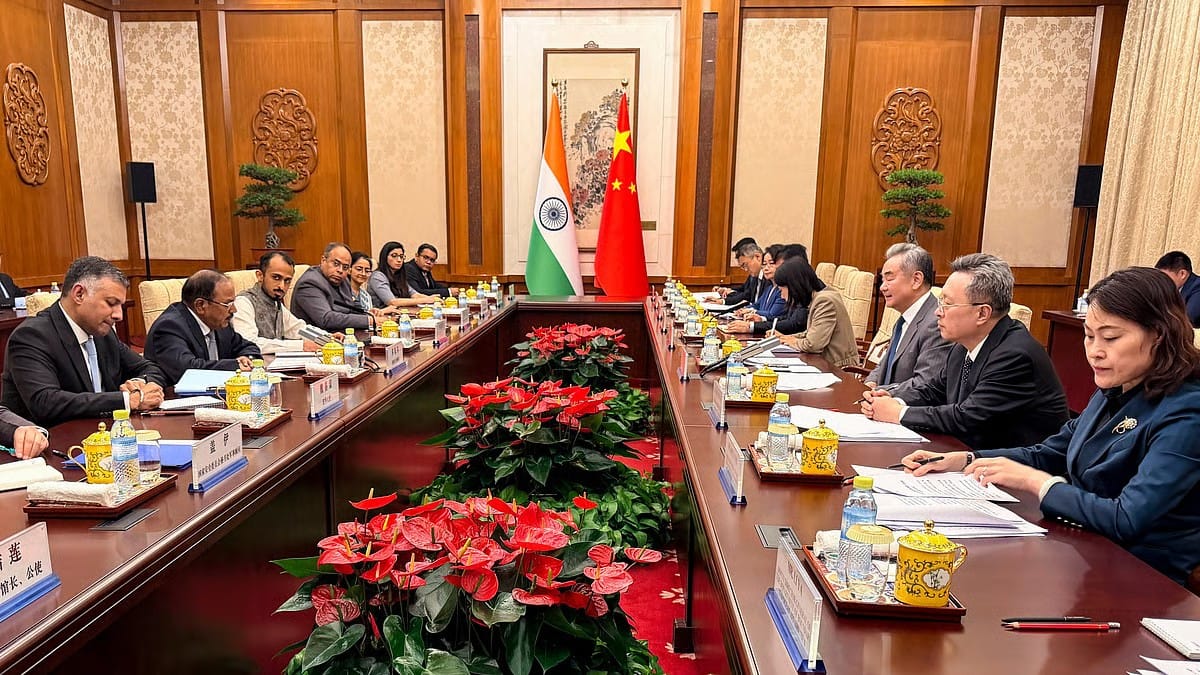
Indian NSA Ajit Doval and Chinese Foreign Minister Wang Yi met in Beijing to review India-China bilateral relations. Following directions from PM Narendra Modi and President Xi Jinping, both leaders discussed boundary delimitation, transboundary cooperation, and steps to maintain long-term peace and stability along border areas.
BEIJING — The Embassy of India in China confirmed that Indian National Security Advisor Ajit Doval and Chinese Foreign Minister Wang Yi held high-level discussions in Beijing to review the momentum of bilateral relations. The bilateral talks aimed to operationalize consensus directives previously established between Indian Prime Minister Narendra Modi and Chinese President Xi Jinping. During the bilateral dialogue, both officials evaluated boundary delimitation frameworks, evaluated transboundary cooperation mechanisms, and reaffirmed their commitment to preserving stability along the border areas separating the two Asian nations.
Strategic Review of India-China Bilateral Relations
According to diplomatic communications released by the Embassy of India in Beijing, the strategic dialogue between National Security Advisor Ajit Doval and Chinese Foreign Minister Wang Yi served as a critical platform to evaluate ongoing engagement channels between New Delhi and Beijing. Both delegations assessed existing bilateral frameworks to align ongoing diplomatic and security dialogues with the strategic directions outlined during previous summit-level interactions between Prime Minister Narendra Modi and President Xi Jinping.
The talks emphasized maintaining consistent administrative channels to navigate long-standing geopolitical dynamics. Officials noted that sustaining steady engagement across security and diplomatic tiers remains essential for broader economic and geopolitical stability in Asia.
Focus on Boundary Delimitation and Border Peace
A primary component of the discussions centered on boundary delimitation and transboundary cooperation. NSA Ajit Doval and Foreign Minister Wang Yi reviewed military and diplomatic mechanisms tasked with managing border affairs along the Line of Actual Control (LAC).
According to officials, both sides committed to maintaining the ongoing work on transboundary cooperation to foster confidence-building measures. The discussions focused on specific steps to expand bilateral cooperation, safeguard regional stability, and ensure long-term peace and tranquility across border sectors. Both representatives recognized that security along shared frontiers is vital for normal interactions between the two countries.
Context and Geopolitical Background
The meeting between Doval and Wang Yi reflects a ongoing diplomatic effort to stabilize India-China relations following periods of heightened friction along the border. Over recent years, senior representatives from both nations have engaged in multi-tier mechanisms, including Special Representative (SR) level mechanisms, military commander talks, and Working Mechanism for Consultation and Coordination (WMCC) meetings.
Geopolitical analysts observe that maintaining structured dialogues helps reduce risks of operational miscalculations along remote border stretches. Sustainable border management also establishes a baseline for addressing bilateral trade, regional stability, investment flows, and cross-border environmental and resource management projects.
Regional and Economic Impact
The alignment between India and China carries broad implications for citizens, trade groups, and international stakeholders:
Regional Security: Sustaining peace along the border reduces military friction, improving stability across South and East Asia.
Trade and Commerce: Clear diplomatic channels help minimize supply chain vulnerabilities for global businesses reliant on Asian manufacturing and commerce.
Cross-Border Infrastructure: Operational continuity supports ongoing transboundary water-data sharing, emergency protocols, and administrative coordination along river systems shared by both nations.
Official Sources Section
Information regarding these discussions is based on official diplomatic updates issued by the Embassy of India in China and releases from the Ministry of External Affairs of India.
According to officials, the interactions were conducted in a constructve atmosphere aimed at sustaining dialogue frameworks established by leadership in both capitals. Official communications confirmed that NSA Ajit Doval and Foreign Minister Wang Yi addressed boundary delimitation while committing to expand broader bilateral cooperation and maintain border peace.
Quote Section
"According to officials from the Embassy of India in China, the meeting between National Security Advisor Ajit Doval and Foreign Minister Wang Yi focused on boundary delimitation, expanding bilateral cooperation, and maintaining peace and tranquility along the border areas in line with directions provided by Prime Minister Narendra Modi and President Xi Jinping."
Why It Matters
Stable India-China relations directly affect regional economic policy, trade pathways, and international security architecture. By actively managing boundary delimitation through established diplomatic and national security mechanisms, both nations reduce risk parameters for international markets, regional logistics hubs, and neighboring states dependent on continental stability.
Key Facts at a Glance
Diplomatic Leads: Discussions were held between India's NSA Ajit Doval and China's Foreign Minister Wang Yi.
Core Agenda: Boundary delimitation, transboundary cooperation, and border stability.
Mandate Origin: Conducted under strategic guidance previously provided by PM Narendra Modi and President Xi Jinping.
Key Outcome: Mutual commitment to expand bilateral cooperation and preserve peace along border regions.
Frequently Asked Questions (FAQ)
What was the main objective of the Doval-Wang Yi meeting?
The primary objective was to review ongoing momentum in bilateral relations, discuss boundary delimitation, and implement strategic directions set by the leadership of both nations.
Who represented India and China during these diplomatic talks?
National Security Advisor Ajit Doval represented the Republic of India, while Foreign Minister Wang Yi represented the People's Republic of China.
How do these talks impact border security?
The talks reinforced joint commitments to sustain peace and tranquility in border areas through established diplomatic and military consultative channels.
What is transboundary cooperation in this context?
Transboundary cooperation includes administrative coordination, border management protocols, resource data sharing, and joint mechanisms designed to prevent operational friction along shared boundaries.
Source:
Official statements released by the Ministry of External Affairs and the Embassy of India in Beijing, China.