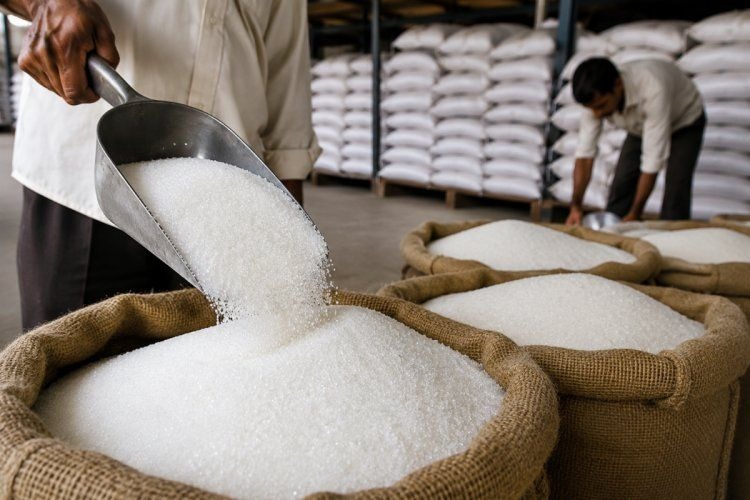
The Indian government has assured that national sugar stocks remain completely adequate to meet domestic consumption demands, dismissing structural shortage concerns. Highlighting a multi-year production increase alongside stringent stockholding limits and calibrated import policies, authorities aim to stabilize prices and ensure steady supplies through the upcoming festive season.
Government Assures Stable Inventories and Supplies
NEW DELHI — Amid recent market discussions regarding commodity pricing and domestic inventory levels, the Indian government has officially confirmed that the country maintains adequate sugar stocks to comfortably fulfill domestic requirements. Clarifying the country's broader agricultural trajectory, official evaluations highlight that long-term production capacities have expanded significantly over the past decade, insulating the national market from systemic deficits.
According to official updates from the Ministry of Consumer Affairs, Food and Public Distribution, national sugar output continues to hover around comfortable thresholds, averaging between 300 and 340 lakh metric tonnes annually against a steady domestic consumption requirement of approximately 280 to 290 lakh metric tonnes. Authorities emphasized that recent price fluctuations are driven by temporary market sentiment, seasonal festive demand surges, and localized supply chain variables rather than any structural scarcity.
Regulatory Interventions and Market Stabilization
To counter speculative hoarding and maintain orderly pricing across retail and wholesale segments, the central administration implemented proactive regulatory measures, including tighter stockholding limits for large dealers and industrial buyers. Furthermore, calibrated trade levers—such as monitoring export quotas and introducing targeted import windows—have been deployed to ensure balanced market equilibrium.
Inventory Thresholds: Stockholding restrictions restrict large-scale entities from accumulating excessive inventories, compelling steady market releases.
Consumption Security: Estimated closing reserves ensure that domestic supply chains remain well-buffered ahead of peak festival consumption months.
Ethanol Integration: While a portion of sugarcane biomass is successfully diverted toward the nation's successful ethanol blending program, overall agricultural yields remain robust enough to prioritize primary food security.
Economic analysts note that these proactive administrative steps safeguard consumers from artificial inflationary pressures while maintaining fair remuneration for sugarcane farmers across key agrarian states like Maharashtra and Uttar Pradesh.
Quote Section
"According to official statements from the government and industry representatives, India maintains adequate sugar stocks to meet domestic consumption demands, with proactive regulatory measures successfully ensuring price stability and smooth market supplies."
Why It Matters
For everyday consumers, retail buyers, and commercial enterprises, guaranteed domestic food security prevents runaway inflation on essential household commodities. Ensuring transparent stock disclosures and enforcing strict anti-hoarding protocols protects household budgets while maintaining equitable market access throughout high-demand festive seasons.
Key Facts at a Glance
Domestic Demand: Annual consumption consistently tracks between 280 and 290 lakh metric tonnes.
Production Capacity: Yields remain strong, supported by robust decadal agricultural growth and high recovery rates.
Government Action: Implementation of strict stockholding limits and calibrated trade interventions to curb hoarding.
Market Outlook: Supplies are projected to remain comfortable, with prices stabilizing as fresh stocks arrive.
Frequently Asked Questions (FAQ)
1. Does India currently have a shortage of sugar?
No, official government data and industry bodies confirm that India maintains adequate sugar stocks to comfortably meet total domestic consumption requirements.
2. What caused recent fluctuations in sugar prices?
Authorities attribute recent price firmness to temporary factors such as festive-season demand spikes, localized crop weather variations, and market behavior, rather than any structural shortage.
3. What steps has the government taken to stabilize sugar prices?
The government has tightened stockholding limits for large dealers, monitored supply releases, and opened calibrated import windows to deter hoarding and cool prices.
4. How does the ethanol blending program affect sugar availability?
While a fraction of sugarcane biomass goes toward ethanol production, overall output is carefully balanced to prioritize national food security and domestic sugar requirements.
Source: Ministry of Consumer Affairs, Food & Public Distribution Portal, Indian Sugar & Bio-Energy Manufacturers Association, and Press Information Bureau PIB