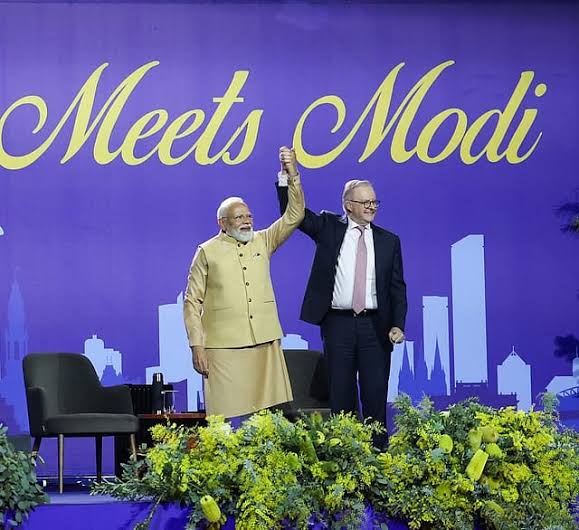
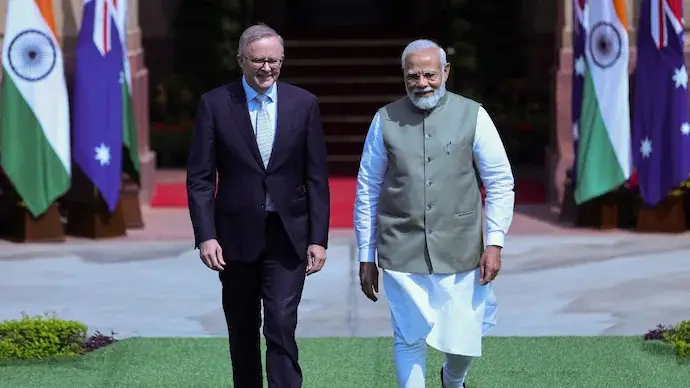
Prime Minister Narendra Modi, speaking in Melbourne, declared "Make in India" a trusted global defence brand. He noted that Indian-made platforms are gaining international reliability, supported by record-breaking exports. The summit resulted in a joint defence declaration with Australia, further cementing India’s role as a major global manufacturing hub.
MELBOURNE — Prime Minister Narendra Modi declared on Friday that the "Make in India" initiative has successfully evolved into a trusted global brand, particularly within the strategic defence sector. Speaking at the Australia-India Annual Leaders' Summit in Melbourne, the Prime Minister emphasized that Indian-made defence platforms are now gaining international recognition for their reliability, advanced technological integration, and cost-effectiveness.
The Prime Minister’s remarks come as India aggressively seeks to diversify its defence exports, moving from a position of historical dependency to becoming a key supplier for friendly nations. Addressing industry leaders and policymakers, PM Modi noted that the global trust in Indian defence equipment is a testament to the robust indigenous research, development, and manufacturing ecosystem established under the "Make in India" framework.
Transforming the Defence Manufacturing Landscape
The shift in India’s defence narrative is supported by recent export figures and a surge in orders for platforms such as the BrahMos supersonic cruise missile, Light Combat Aircraft (LCA) Tejas, and various artillery systems. According to government data, India’s defence exports have reached record highs in the last two fiscal years, with interest expanding from Southeast Asia to the Middle East and parts of Africa.
PM Modi stressed that the "Make in India" mission has streamlined the manufacturing sector, making it easier for global original equipment manufacturers (OEMs) to partner with Indian firms. This collaborative approach has not only bolstered domestic production but has also integrated Indian manufacturers into global supply chains, ensuring that "Made in India" components are now present in sophisticated military platforms worldwide.
Strategic Synergy in Melbourne
The Melbourne summit provided a platform for PM Modi and Australian Prime Minister Anthony Albanese to formalize deeper ties in the defence sector. A key outcome of the summit was the new "Joint Declaration on Defence and Security Cooperation," which outlines plans for increased industrial collaboration and technological sharing.
By positioning "Make in India" as a reliable global partner, the government aims to encourage joint ventures between Indian firms and their Australian counterparts. The discussions in Melbourne highlighted the potential for co-development of drones, maritime security technologies, and sub-systems, further cementing India’s role as a net security provider in the Indo-Pacific.
Impact on Global Security and Trade
For international observers and defence investors, the Prime Minister’s confidence signals a shift in the global arms market. By emphasizing that Indian defence platforms are winning global trust, the government is signaling to potential buyers that its hardware meets stringent global performance standards. This shift reduces the cost of entry for many nations that seek high-end technology without the prohibitive costs often associated with traditional Western or Russian suppliers.
The economic impact is equally significant. A stronger domestic defence manufacturing sector creates high-tech jobs, supports hundreds of MSMEs in the manufacturing value chain, and reduces the foreign exchange burden of long-term defence imports.
Official Sources
According to official government releases, the government’s focus remains on expanding the reach of the "Make in India" initiative to encompass critical sectors including semiconductor manufacturing, civil aviation, and aerospace. The Ministry of Defence (India) has consistently stated that its policy goal is to achieve an annual defence export target of ₹50,000 crore by 2029, a goal the Prime Minister suggested is well within reach given the current momentum.
Quote Section
"According to officials," the rapid adoption of Indian-made defence platforms by foreign militaries is the result of years of structural reforms, including the simplification of defence procurement procedures and the creation of dedicated Defence Industrial Corridors. Organizers stated that the interest expressed by various delegations during the Melbourne summit confirms that global confidence in "Make in India" is at an all-time high.
Key Facts at a Glance
Global Recognition: Prime Minister Modi stated that "Make in India" is now a recognized and trusted brand in the international defence market.
Export Growth: Defence exports have reached record levels, with platforms like the BrahMos missile seeing significant interest from foreign buyers.
Strategic Collaboration: The India-Australia summit included a new joint declaration focused on deepening defence industrial collaboration.
Manufacturing Goal: The government targets ₹50,000 crore in annual defence exports by 2029.
Frequently Asked Questions (FAQ)
1. What makes "Make in India" defence platforms competitive?
Indian platforms are increasingly valued for their technological sophistication, competitive pricing, and rigorous testing standards that meet global performance requirements.
2. How does the "Make in India" brand benefit global partners?
It offers global partners a reliable, high-tech manufacturing hub that provides cost-effective alternatives for military hardware and components, alongside opportunities for co-development.
3. What sectors are covered under the "Make in India" defence umbrella?
The initiative covers a wide range of hardware, including cruise missiles, light combat aircraft, artillery systems, maritime surveillance technology, and advanced drone platforms.
Source: Prime Minister's Office (India), Ministry of Defence (India), Australian Government