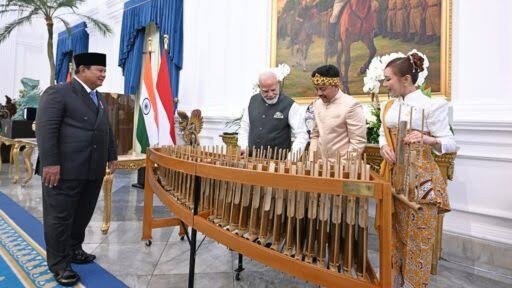
Prime Minister Narendra Modi played the traditional Indonesian musical instrument, the Angklung, during his visit to Jakarta for the ASEAN-India Summit. This gesture of cultural diplomacy highlights the ongoing efforts to strengthen strategic, economic, and cultural ties between India and the Southeast Asian bloc amidst a packed diplomatic agenda.
In a gesture of cultural diplomacy, Prime Minister Narendra Modi engaged with local traditions while attending a high-level summit in Jakarta.
JAKARTA — Prime Minister Narendra Modi participated in a cultural exchange event during his official visit to Jakarta on Wednesday, where he played the Angklung, a traditional Indonesian musical instrument. The Prime Minister’s interaction with the instrument, which is crafted from bamboo tubes and recognized by UNESCO as a masterpiece of oral and intangible heritage, occurred during the inaugural session of the ASEAN-India Summit.
The act served as a symbolic moment of harmony between India and Indonesia, highlighting the deep-rooted cultural ties between the two nations as they discuss regional cooperation, maritime security, and economic integration.
Strengthening Cultural Bonds
The Angklung, which produces distinct notes when shaken, is a hallmark of Indonesian identity. Prime Minister Modi’s participation was part of an effort to acknowledge Indonesia's cultural richness as the host of the regional summit. Observers noted that the gesture was received warmly by local leadership and delegates, reinforcing the “Look East” policy—now the “Act East” policy—that has guided India’s diplomatic engagement with Southeast Asian nations for years.
According to officials accompanying the delegation, such cultural exchanges are integral to building trust and fostering a cooperative environment before diving into complex geopolitical negotiations regarding the Indo-Pacific region.
Diplomatic Agenda in Jakarta
Beyond the cultural program, Prime Minister Modi’s visit to Jakarta focuses on a packed schedule of bilateral and multilateral engagements. The summit serves as a platform to address pressing regional issues, including the strengthening of trade ties, disaster management cooperation, and the promotion of digital public infrastructure.
The Prime Minister is expected to hold several one-on-one meetings with regional leaders to advance the Comprehensive Strategic Partnership between India and the ASEAN bloc. Recent reports suggest that a primary objective of this visit is to bolster the regional supply chain and counter external economic pressures impacting member nations.
Why It Matters
This visit carries significant weight for India's regional presence. By engaging in local cultural traditions, the Prime Minister demonstrates a commitment to the "ASEAN-India" vision of shared prosperity. Pragmatically, the summit aims to finalize agreements on maritime connectivity and food security, areas where India is seeking to offer its technological expertise to its regional partners.
Key Facts at a Glance
Event Location: Jakarta, Indonesia, during the ASEAN-India Summit.
Cultural Gesture: Prime Minister Modi played the Angklung, a traditional Indonesian bamboo instrument.
Significance: The Angklung is a UNESCO-recognized intangible cultural heritage item.
Summit Goals: The visit aims to deepen strategic ties in trade, maritime security, and digital infrastructure.
Frequently Asked Questions (FAQ)
What is an Angklung?
The Angklung is a traditional Indonesian musical instrument made of bamboo tubes attached to a bamboo frame, designed to produce specific notes when shaken. It is deeply embedded in local culture and is recognized globally for its unique sound.
Why did PM Modi play the instrument?
The act was a gesture of cultural diplomacy intended to honor the host nation's heritage and foster goodwill among the regional leaders gathered at the summit.
What is the purpose of the Jakarta visit?
The primary objective is the ASEAN-India Summit, where the Prime Minister is discussing economic integration, maritime security, and regional cooperation with leaders from Southeast Asia.
Source: Press Information Bureau (PIB), Ministry of External Affairs (MEA), ASEAN Secretariat