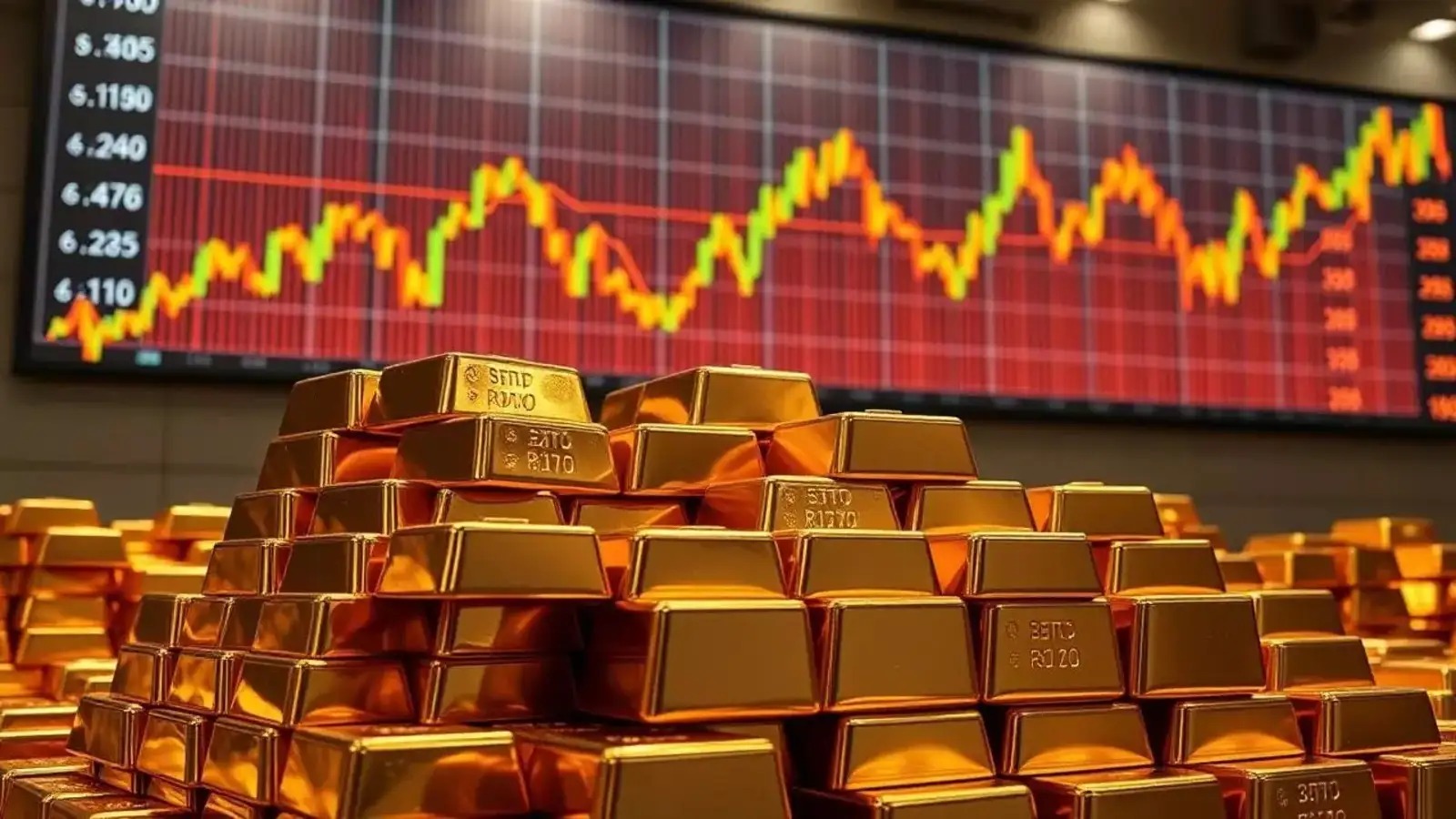
Gold prices retreated on July 8, 2026, as escalated U.S.-Iran tensions drove a surge in oil prices and the U.S. dollar, weighing on bullion. Investors are now awaiting the FOMC meeting minutes for clarity on future interest rate hikes, as inflation concerns continue to shape global market sentiment.
Bullion retreats as U.S.-Iran conflict stirs inflation concerns and strengthens the dollar ahead of the Federal Reserve’s June meeting minutes.
NEW YORK — Gold prices experienced a decline on Wednesday, July 8, 2026, as renewed military strikes between the United States and Iran pushed oil prices higher and bolstered the U.S. dollar. The precious metal, often sought as a safe-haven asset, faced downward pressure as market participants recalibrated their expectations for interest rates in anticipation of the Federal Open Market Committee (FOMC) meeting minutes.
Spot gold slipped to approximately $4,100 per ounce during the session, marking its lowest level since early July. The market’s reaction underscores a shift in investor sentiment: while geopolitical uncertainty typically favors gold, the concurrent rise in energy costs and expectations for a "higher-for-longer" interest rate environment have dampened the appeal of non-yielding bullion.
Geopolitical Tensions and Inflationary Pressures
The escalation follows comments from U.S. officials declaring that the interim peace framework—often referred to in diplomatic circles—is no longer viable. This development triggered a rapid jump in global oil prices, as traders priced in potential supply disruptions in the Strait of Hormuz.
The rising cost of energy has heightened fears that inflation may remain sticky, potentially forcing the Federal Reserve to maintain or even increase interest rates. "The inflation scare has caused bonds to dip and the dollar to strengthen," noted market analysts, explaining that the strengthening greenback makes gold more expensive for holders of foreign currencies, thereby curbing demand.
Markets Await Fed Policy Clues
Investors are now turning their attention to the release of the FOMC minutes from the June 16–17 meeting, scheduled for 2:00 p.m. ET today. The document is expected to provide critical insight into the committee’s internal debate regarding the current interest rate trajectory under Fed Chair Kevin Warsh.
Recent data suggests a split within the committee, with members divided on whether to pursue further rate hikes in 2026. According to the CME FedWatch tool, market expectations for a potential rate hike in September have risen to over 60 percent, reflecting growing concern that the central bank may prioritize inflation control over growth as geopolitical pressures mount.
Economic Implications
For investors, the current environment presents a complex challenge. While long-term risks—such as the erosion of purchasing power and geopolitical fracturing—remain supportive of gold, the immediate outlook is dominated by the Federal Reserve's policy stance. If the upcoming minutes reveal a hawkish consensus, analysts suggest that gold could face further technical pressure. Conversely, any indication that the Fed is focused on managing business-cycle risks over immediate inflation shocks could provide a floor for bullion prices.
Official Sources
Federal Reserve (FOMC): Official meeting minutes and monetary policy statements.
[suspicious link removed]: Diplomatic updates regarding ongoing international frameworks.
CME Group: FedWatch tool data regarding interest rate probability and market sentiment.
Why It Matters
The current market volatility highlights the delicate balance between geopolitical risk and macroeconomic policy. For consumers and businesses, the rise in oil prices combined with a strong dollar could lead to elevated operational costs and sustained inflationary pressure. For gold holders, the price movement illustrates how quickly safe-haven assets can be sidelined when interest rate expectations take center stage.
Key Facts at a Glance
Gold Performance: Spot gold fell to approximately $4,100 per ounce, nearing weekly lows.
Primary Trigger: Renewed U.S.-Iran hostilities have driven up oil prices and the U.S. dollar.
Market Focus: Investors are closely monitoring the FOMC minutes for signals on potential September rate hikes.
Inflation Outlook: Elevated energy costs are stoking fears that the Federal Reserve will maintain high interest rates.
FAQ
Why is gold falling despite rising geopolitical tensions?
While gold is a traditional safe haven, rising tensions have driven up oil prices and the dollar. This fuels inflation expectations, leading markets to bet on higher interest rates, which increases the opportunity cost of holding non-yielding assets like gold.
What are markets looking for in the FOMC minutes?
Investors are searching for clues about whether Federal Reserve officials are leaning toward another rate hike in September and how they view the balance between inflation risks and economic growth.
How do higher interest rates affect gold?
Because gold does not pay interest or dividends, it becomes less attractive to investors when interest rates on assets like U.S. Treasuries rise.
Source: Federal Reserve, [suspicious link removed], CME Group