Indian Prime Minister Narendra Modi welcomed the historic peace agreement between the United States and Iran to end the West Asian war and reopen the Strait of Hormuz. Brokered by Pakistan and Qatar, the deal halts regional hostilities, lifts naval blockades, and restores critical global maritime energy commerce.
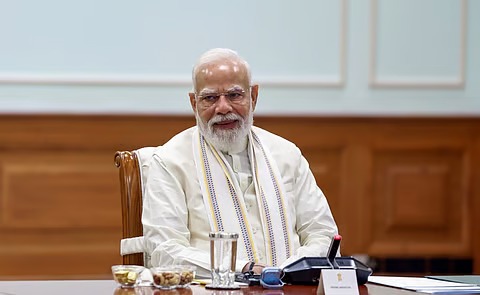
Indian Prime Minister Narendra Modi on Monday formally welcomed the comprehensive understanding reached between the United States and Iran to permanently terminate hostilities and reopen the strategically vital Strait of Hormuz. Speaking from Bratislava during an official tour of Europe, Modi stated that the multi-month conflict in West Asia had exacted a severe toll on the global economy, destabilizing commercial supply chains and causing widespread loss of life. The diplomatic breakthrough, announced hours earlier by Washington and Tehran, establishes an immediate framework to end the regional war and completely lift maritime blockades that have frozen critical energy corridors since early 2026.
Easing Pressures on Global Energy and Commerce
The conflict, which erupted on February 28, 2026, following coordinated military strikes by the United States and Israel, had driven international oil and gas prices to volatile heights. Iran’s subsequent closure and mining of the Strait of Hormuz—the world’s most important energy chokepoint—effectively halted one-fifth of the global petroleum trade, severely disrupting primary consumers like India.
Under the terms of the newly finalized Memorandum of Understanding (MoU), mediated primarily by Pakistan and Qatar, both nations have agreed to an immediate and permanent cessation of military operations across all active fronts, including regional theaters in Lebanon.
US President Donald Trump confirmed via his Truth Social platform that the deal with the Islamic Republic of Iran is complete, authorizing the immediate removal of the US naval blockade on Iranian ports. Concurrently, Iranian forces will begin a systematic, 30-day mine-clearing operation to ensure safe, toll-free passage for international merchant vessels traversing the strait.
India’s Strategic Stakes in West Asian Stability
For New Delhi, the stabilization of the Persian Gulf corridor carries immediate domestic economic implications. India relies on West Asian imports for over 80 percent of its crude oil requirements, making its domestic inflation parameters and fiscal deficits highly sensitive to maritime disruptions in the region.
Core Terms of the US-Iran De-escalation Framework
Military Stance: Immediate and permanent termination of hostilities on all regional fronts.
Maritime Access: Full, toll-free reopening of the Strait of Hormuz following a 30-day de-mining phase.
Sanctions Relief: Gradual unfreezing of up to $24 billion in overseas Iranian assets tied to nuclear verification.
Nuclear Supervision: On-site dilution of enriched uranium under strict IAEA monitoring protocols.
Beyond securing crude oil shipments, Indian policymakers have monitored the impact of regional hostilities on the country's expatriate workforce. Millions of non-resident Indians live and work across the Gulf Cooperation Council (GCC) states. A prolonged regional war threatened both the safety of these communities and the steady inflow of foreign remittances, which form a cornerstone of India's external economic balance.
Phased Implementation and Nuclear Verification
The implementation of the agreement will follow a strict, verified timeline. Iranian Deputy Foreign Minister Kazem Gharibabadi confirmed that the formal signing ceremony is scheduled to take place in Switzerland on Friday, June 19, 2026. Following the signing, a 60-day technical negotiation period will commence to address long-term regional security parameters and the status of Iran’s nuclear program.
Financial and intelligence briefers indicate that the US will grant a temporary waiver allowing Iran to resume commercial oil sales for the duration of the 60-day negotiation window. Additionally, reports from the region indicate that approximately $12 billion of the $24 billion in total frozen Iranian assets will be released prior to the start of the technical talks.
In return, Tehran has reaffirmed its commitment not to develop or procure nuclear weapons, agreeing to dilute its existing stock of highly enriched uranium on site under the direct supervision of the International Atomic Energy Agency (IAEA).
Official Sources Section
The statements, structural components, and diplomatic timelines detailed in this report have been verified through official social media broadcasts by the Office of the Prime Minister of India, executive announcements released by the White House, and official press publications from the Ministry of Foreign Affairs of Pakistan and the Islamic Republic of Iran Broadcasting (IRIB) network.
Quote Section
"I welcome the understanding reached between the United States and Iran on ending the conflict in West Asia, which has caused serious economic disruption across the world and led to loss of life in many countries," Prime Minister Narendra Modi published via an official statement on X.
"India hopes that the implementation of this understanding will help restore peace and stability in the region and ensure the freedom of navigation and commerce. We look forward to deliberations on the remaining issues reaching a sustainable final agreement."
Why It Matters
The reopening of the Strait of Hormuz will provide immediate deflationary relief to global markets by reducing the steep war-risk insurance premiums that have burdened merchant shipping lines since March. For developing economies, the resumption of regular maritime transit through the Gulf stabilizes fuel prices, protects manufacturing supply lines, and prevents systemic disruptions to global agricultural and industrial trade routes.
Key Facts at a Glance
Diplomatic Milestone: The United States and Iran have finalized an MoU ending more than three months of direct regional war.
Maritime Action: The US naval blockade will be dismantled as Iran initiates a 30-day operation to clear mines from the Strait of Hormuz.
Signing Schedule: The official peace deal is scheduled to be signed in Geneva, Switzerland, on Friday, June 19, 2026.
Nuclear Mandate: Iran will dilute its enriched uranium stockpiles under the direct oversight of the IAEA.
Financial Terms: A phased release of $24 billion in frozen Iranian assets is tied directly to verified compliance markers.
FAQ Section
When will the Strait of Hormuz officially reopen to international shipping?
According to statements from US and Iranian officials, the toll-free opening of the waterway will begin immediately following the official signing of the agreement on Friday. Iranian maritime teams will use the first 30 days of the ceasefire extension to actively detect and clear underwater mines.
Which nations acted as the primary mediators to broker this peace deal?
The diplomatic breakthrough was achieved following intensive mediation efforts led by Pakistan and Qatar. Officials from Saudi Arabia and Turkey also provided vital diplomatic assistance during the final 15-hour multi-party negotiation session held in Tehran.
How does this international agreement affect global energy markets?
The resolution of the conflict eliminates the immediate threat of attacks on Gulf energy infrastructure. The removal of the US naval blockade and the issuance of oil export waivers will allow regular crude oil flows to resume, bringing down global fuel prices.
Sources:
Diplomatic Transcripts and Official Communications from the Office of the Prime Minister of India.
Press Briefings and Executive Bulletins issued by the Ministry of Foreign Affairs, Government of Pakistan.
Statutory Security Reports from the Supreme National Security Council (SNSC) of Iran.