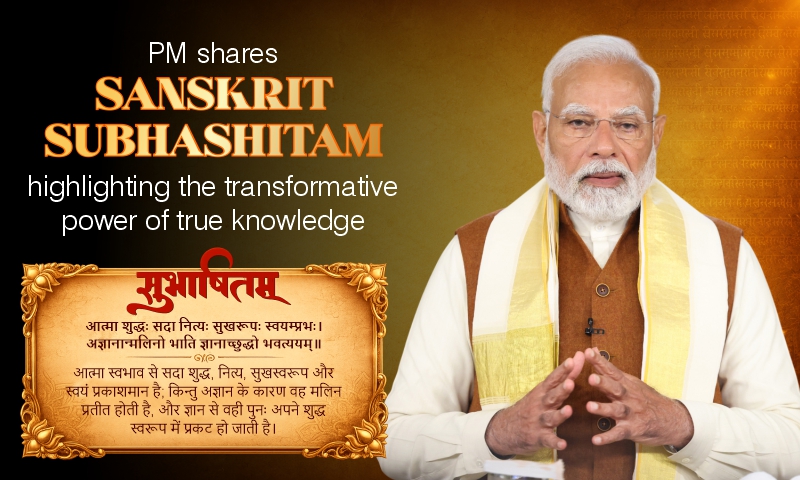
Prime Minister Narendra Modi shared a Sanskrit Subhashitam on August 12, 2026, emphasizing the power of winning hearts through vision, thoughts, words, and actions. The message highlighted the central role of India's youth in national progress, blending classical heritage with modern civic responsibility and cultural promotion.
NEW DELHI — Prime Minister Narendra Modi shared a Sanskrit Subhashitam on August 12, 2026, highlighting the transformative potential of winning hearts through vision, thoughts, words, and actions. Issued via official communications from the Prime Minister's Office and amplified by the Ministry of Tourism, the statement underscores India’s vibrant youth demographic as a cornerstone of both national development and international cultural diplomacy. The announcement highlights the administration's continued reliance on classical Indian philosophy and Sanskrit literature to foster social harmony, civic responsibility, and cultural pride among citizens and global audiences.
Classical Sanskrit Wisdom Highlights Youth Leadership
The verse shared by the Prime Minister—“चक्षुषा मनसा वाचा कर्मणा च चतुर्विधम्। प्रसादयति यो लोकं तं लोकोऽनुप्रसीदति।।”—translates to the principle that an individual who pleases and serves society through four dimensions—vision, mind, speech, and action—earns enduring trust, goodwill, and respect in return.
Accompanying the ancient verse, Prime Minister Modi paid tribute to the dedication and capability of young citizens across India. He noted that India’s youth represent not merely the future of the nation, but its most potent driving force today. According to official releases from the Press Information Bureau (PIB), the Prime Minister emphasized that young Indians have established a distinct identity globally through their empathy, spirit of service, and capability.
This post forms part of an ongoing series of educational and inspirational social media messages in which the Prime Minister regularly introduces Sanskrit Subhashitams—traditional verses containing ethical principles and practical wisdom—to make ancient Indian philosophy accessible to modern youth. Previous messages have focused on themes of patience, thoughtful decision-making, discipline, self-confidence, and public duty.
Cultural Heritage and National Youth Empowerment Initiatives
The integration of ancient epigrams into contemporary public governance aligns with broader government campaigns aimed at promoting Indian heritage, linguistic preservation, and youth engagement. Government ministries, including the Ministry of Tourism and the Ministry of Culture, have increasingly utilized these messaging frameworks to project India’s soft power and promote domestic cultural tourism.
By linking classical Sanskrit teachings to modern civic behavior, the initiative encourages young professionals, students, and community leaders to ground their everyday actions in ethical conduct, empathy, and constructive dialogue. Tourism and heritage experts note that highlighting traditional values enhances visitor engagement by presenting India's rich literary history alongside its modern technological and economic achievements.
Furthermore, national youth programs supported by various ministries continue to focus on skill building, entrepreneurship, and voluntary social service. The emphasis on fourfold integrity—aligning internal thoughts, outward vision, spoken communication, and tangible actions—serves as a behavioral model for social enterprises, community development projects, and public administration.
Broader Impact on Citizens, Tourism, and Social Cohesion
The public sharing of traditional wisdom carries practical implications for multiple cross-sections of society:
Youth and Students: Provides actionable ethical frameworks that emphasize character building, self-discipline, and social responsibility alongside academic and professional achievements.
Cultural Tourism Sector: Strengthens branding around India’s spiritual and literary heritage, providing context for international tourists and domestic travelers exploring historical sites and cultural circuits.
Community Leaders and Businesses: Reinforces principles of ethical leadership, transparent communication, and corporate social responsibility in institutional management.
Global Diaspora and International Observers: Serves as a bridge connecting modern governance objectives with traditional Indian philosophy on the world stage.
Official Sources Section
According to official releases published by the Press Information Bureau (PIB Delhi) and statements issued by the Prime Minister's Office, the message was transmitted directly via official government communication channels and social media on August 12, 2026. Additional cultural context and heritage promotion frameworks are maintained by the Ministry of Tourism.
Quote Section
Reflecting on the role of Indian youth and classical values, Prime Minister Narendra Modi stated:
"Our young companions are not only the future of the country, but also the greatest strength of the present. They have created a distinct identity worldwide through their sensitivity, spirit of service, and capability."
He further elaborated on the meaning of the Sanskrit verse:
"A person who wins people's hearts through his vision, thoughts, words, and actions earns, in return, their trust, respect, and goodwill."
Why It Matters
In an era of rapid technological change and social transformation, the active promotion of classical ethical principles offers a stabilizing foundation for community cohesion and civic engagement. For young citizens entering the workforce, the emphasis on holistic integrity—uniting thought, speech, and action—provides a timeless framework for personal development and public service. For the tourism and cultural sectors, integrating ancient literary wisdom into contemporary statecraft highlights India's rich civilizational identity to international audiences.
Key Facts at a Glance
Event Date: August 12, 2026.
Core Theme: The fourfold power of winning goodwill through vision, thoughts, words, and actions (Chakshusha Mansa Vacha Karmana).
Target Audience: Indian youth, civic leaders, cultural enthusiasts, and international observers.
Official Publisher: Released by the Prime Minister's Office and distributed via PIB Delhi and government portal channels.
FAQ Section
What is the meaning of the Sanskrit Subhashitam shared by PM Modi?
The verse emphasizes that individuals who cultivate goodwill and harmony through four dimensions—their vision, thoughts, speech, and actions—naturally earn the respect, trust, and affection of society in return.
Why does the Prime Minister regularly share Sanskrit Subhashitams?
The Prime Minister shares classical verses to connect young citizens with traditional Indian philosophy, promoting timeless values like perseverance, integrity, wisdom, and social responsibility in daily life.
How does this release relate to the Ministry of Tourism and cultural policy?
The promotion of classical Sanskrit literature aligns with national efforts to showcase India’s civilizational heritage, supporting cultural tourism and soft power projection both domestically and internationally.
Where can citizens access official updates regarding these announcements?
Official text and translations of the Prime Minister's statements are published on the Press Information Bureau website and the official PM India portal.
Sources: Press Information Bureau, Prime Minister's Office (PMINDIA), Ministry of Tourism