Prime Minister Narendra Modi arrived in Tashkent on the first leg of a four-day, two-nation tour of Uzbekistan and Kyrgyzstan. Received warmly by President Shavkat Mirziyoyev, Modi will hold high-level talks on defense and trade before heading to Bishkek for the 26th Shanghai Cooperation Organisation Summit.
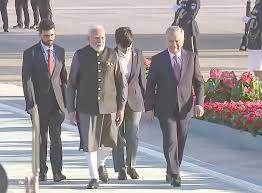
TASHKENT — Prime Minister Narendra Modi arrived in Tashkent on Saturday for the first leg of a four-day, two-nation official visit to Uzbekistan and the Kyrgyz Republic.
In a notable diplomatic gesture, Uzbek President Shavkat Mirziyoyev personally greeted Prime Minister Modi upon his arrival at the airport. The visit marks Modi's fourth trip to Uzbekistan and focuses on reviewing bilateral cooperation across trade, investment, energy, digital connectivity, and defense. Following their arrival, both leaders visited Yangi Uzbekistan Park to lay a wreath at the Independence Monument.
Bilateral Agenda and Regional Cooperation
The agenda for the Tashkent summit centers on aligning long-term national development goals, specifically connecting India’s "Viksit Bharat" vision with Uzbekistan's "Yangi Uzbekistan" strategy. Delegations from both nations are scheduled to review ongoing joint military exercises like 'Dustlik', expand energy partnerships, and scale up bilateral trade to cement India's position among Uzbekistan's top economic partners.
In addition to formal state talks, Prime Minister Modi's itinerary includes cultural engagements at the Tashkent State University of Oriental Studies, where he will visit the Shastri Memorial and the Mahatma Gandhi Centre. From Uzbekistan, Modi will travel to Bishkek, Kyrgyzstan, to attend the 26th Shanghai Cooperation Organisation (SCO) Summit, which marks the bloc's 25th anniversary.
According to official Ministry of External Affairs (MEA) releases, government statements, and diplomatic briefs:
State Visit Focus: Delegation-level talks in Tashkent covering defence, energy, trade, and digital corridors.
Strategic Milestone: Marking Modi's fourth official visit to Uzbekistan to deepen regional integration.
Multilateral Engagement: Transitioning to Bishkek for the 26th SCO Summit to advocate regional security and connectivity.
Cultural Diplomacy: Visits scheduled for the Shastri Memorial and Mahatma Gandhi Centre in Tashkent.
Official Sources Section
Ministry of External Affairs (MEA) India Portal: Official diplomatic statements, bilateral agreements, and Prime Minister itinerary disclosures.
Embassy of India, Tashkent Official Releases: Regional cooperation reports, trade statistics, and community interaction updates.
Quote Section
"According to official statements released by the Prime Minister's Office and the Ministry of External Affairs, the visit seeks to advance bilateral cooperation in trade, investment, defence, and digital connectivity while driving regional stability across Central Asia."
Why It Matters
For regional trade, geopolitical stability, and energy security, strengthening diplomatic ties across Central Asia reinforces India's extended neighborhood strategy. Deepening defense and economic frameworks with Uzbekistan and participating in the SCO summit allow New Delhi to coordinate counter-terrorism policies and secure critical supply chains.
Key Facts at a Glance
First Leg: Tashkent, Uzbekistan (August 29–30).
Second Leg: Bishkek, Kyrgyz Republic (August 31 – September 1).
Key Hosts: Uzbek President Shavkat Mirziyoyev and Kyrgyz President Sadyr Zhaparov.
Core Focus: Security, economic connectivity, and anti-terrorism cooperation through the SCO.
FAQ Section
What is the primary objective of Prime Minister Modi's visit to Uzbekistan?
The visit aims to review and expand bilateral strategic partnerships, focusing on trade, investment, defence, energy, and digital connectivity.
Which nations are included in this Central Asia tour?
The four-day diplomatic tour covers Uzbekistan and the Kyrgyz Republic.
What is the agenda for the upcoming summit in Kyrgyzstan?
PM Modi will participate in the 26th Shanghai Cooperation Organisation (SCO) Summit in Bishkek, emphasizing regional security, connectivity, and anti-terrorism frameworks.
Where can citizens review official diplomatic briefings on the tour?
Comprehensive updates and policy statements are published directly through the Ministry of External Affairs India Portal.
Source: Ministry of External Affairs India, Embassy of India Tashkent, ANI News Reports, Economic Times International Desk