The first phase of the Special Intensive Revision (SIR) has officially started in Punjab, sending over 24,000 Booth Level Officers on a statewide house-to-house voter enumeration drive until July 24, 2026. The mandatory verification campaign covers over 21 million electors to deliver an error-free final voter list by October 1.
CHANDIGARH — The state of Punjab officially commenced the first phase of its house-to-house voter enumeration exercise on Thursday, June 25, 2026. Operating under the directive of the Election Commission of India (ECI), the initiative forms the core of the Special Intensive Revision (SIR) of electoral rolls. The massive ground campaign aims to update the state's democratic databases by physically verifying over 21.4 million registered electors across all 117 assembly constituencies.
Deployment of Booth Level Officers Across Punjab
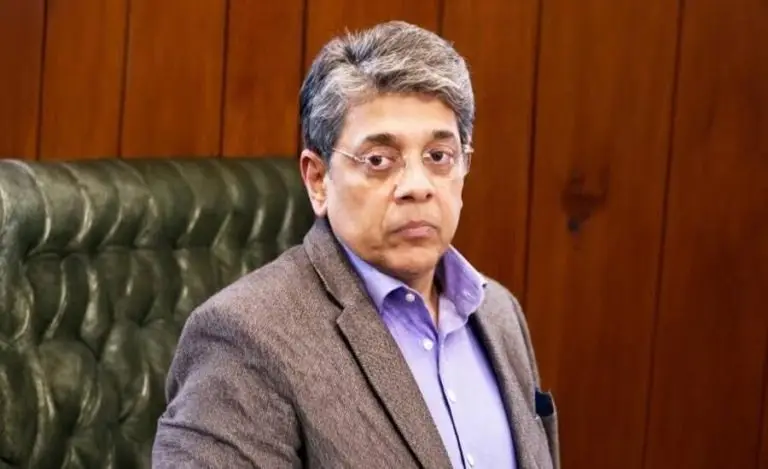
Punjab Chief Electoral Officer (CEO) Anindita Mitra confirmed that all logistical arrangements have been finalized for the month-long field operation, which runs from June 25 to July 24, 2026. The state election department has deployed a workforce of 24,453 Booth Level Officers (BLOs) to visit residential premises across 14,664 distinct polling locations.
During this initial window, BLOs are tasked with distributing pre-printed enumeration forms directly to citizens. The officers will assist residents in updating family records, filling out missing parameters, and collecting the completed documentation. State authorities emphasize that the completion and submission of these specific enumeration forms are entirely mandatory for a citizen’s details to be sustained or added to the upcoming draft electoral roll.
Tracking Metrics, Household Protocols, and Timeline
To ensure maximum administrative saturation and prevent eligible citizens from being left behind, the Punjab election office has instituted strict visitation protocols. If a household is vacant during the initial visit, the designated BLO must make up to three distinct return attempts. If data collection remains incomplete after the third attempt, the officer will affix an official tracking sticker to the exterior of the residence, which notes the timestamp and details of the regulatory visit.
Prior to the rollout of the field campaign, the state had already successfully completed digital voter mapping for 1,84,61,581 electors, representing roughly 86.02% of Punjab's entire voting population. The active phase focuses heavily on resolving unmapped entries and clearing duplicates.
Political Impact, Civic Accountability, and E-E-A-T Compliance
The execution of the Special Intensive Revision comes amid heightened democratic tracking as political parties prepare for the Punjab Assembly elections in 2027. CEO Anindita Mitra held a comprehensive briefing at Punjab Bhawan with representatives from major political organizations, including the Aam Aadmi Party (AAP), Indian National Congress (INC), Bharatiya Janata Party (BJP), Shiromani Akali Dal (SAD), and the Bahujan Samaj Party (BSP).
The state shared lists of unmapped voters with these political bodies to boost ground-level coordination through local Booth Level Agents (BLAs). For citizens and local residents, this exercise ensures the total sanitization of localized voter rolls by permanently purging entries belonging to deceased individuals, permanently shifted residents, and duplicate registrations.
Official Sources Section
The operational directives, structural training outlines, and statutory timeline schedules for this statewide initiative have been formally issued via gazette announcements by the Election Commission of India and public press updates from the Office of the Chief Electoral Officer, Punjab.
Quote Section
"The house-to-house enumeration exercise will continue till July 24. Filling and submitting the enumeration form is mandatory for inclusion of a voter's name in the draft electoral roll," stated Punjab Chief Electoral Officer Anindita Mitra during a media briefing at Punjab Bhawan.
"According to officials, the intensive revision process is an essential statutory step toward establishing zero-error electoral infrastructure ahead of future legislative polls."
Why It Matters
The implementation of the Special Intensive Revision (SIR) provides a verified baseline that prevents institutional voter suppression while eliminating systemic electoral fraud. By physically auditing residential addresses, the ECI ensures that regional demographics match local constituency boundaries, maintaining equal voting power across rural and urban sectors.
Key Facts at a Glance
The Operation: Punjab has launched Phase 1 of its door-to-door voter enumeration campaign under the Special Intensive Revision (SIR) framework.
The Scale: A total of 24,453 Booth Level Officers are covering 21,461,043 total electors across 23 districts.
Strict Rules: BLOs must visit a residence up to three times before placing an tracking sticker if data collection fails.
Final Target: Following a dedicated claims and objections window in August, the finalized, clean voter list will be published on October 1, 2026.
FAQ Section
Is it mandatory to fill out the form if I am already a registered voter in Punjab? Yes. According to the state election office, submitting the pre-printed enumeration form provided by your BLO is mandatory to ensure your details carry over accurately into the updated draft rolls.
What happens if I am not at home when the Booth Level Officer visits? The BLO is required by law to visit your residence up to three times. If you are still unavailable, they will leave an official tracking sticker on your property with information on how to complete your verification.
When will the updated, finalized voter list be made public? The draft electoral roll will be visible on August 3, 2026, for public review. Following the resolution of any disputes, the final error-free list will be published on October 1, 2026.
Source: Election Commission of India (ECI), Chief Electoral Officer, Punjab, The Tribune